

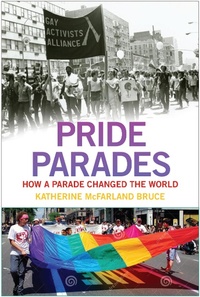
Pride Parades
How a Parade Changed the World
1. Auflage
Erschienen am 4. Oktober 2016
277 Seiten
978-1-4798-1778-8 (ISBN)
Beschreibung

On June 28, 1970, two thousand gay and lesbian activists in New York, Los Angeles, and Chicago paraded down the streets of their cities in a new kind of social protest, one marked by celebration, fun, and unashamed declaration of a stigmatized identity. Forty-five years later, over six million people annually participate in 115 Pride parades across the United States. They march with church congregations and college gay-straight alliance groups, perform dance routines and marching band numbers, and gather with friends to cheer from the sidelines.
With vivid imagery, and showcasing the voices of these participants, Pride Parades tells the story of Pride from its beginning in 1970 to 2010. Though often dismissed as frivolous spectacles, the author builds a convincing case for the importance of Pride parades as cultural protests at the heart of lesbian, gay, bisexual, and transgender (LGBT) community. Weaving together interviews, archival reports, quantitative data, and ethnographic observations at six diverse contemporary parades in New York City, Salt Lake City, San Diego, Burlington, Fargo, and Atlanta, Bruce describes how Pride parades are a venue for participants to challenge the everyday cultural stigma of being queer in America, all with a flair and sense of fun absent from typical protests. Unlike these political protests that aim to change government laws and policies, Pride parades are coordinated, concerted attempts to improve the standing of LGBT people in American culture.
With vivid imagery, and showcasing the voices of these participants, Pride Parades tells the story of Pride from its beginning in 1970 to 2010. Though often dismissed as frivolous spectacles, the author builds a convincing case for the importance of Pride parades as cultural protests at the heart of lesbian, gay, bisexual, and transgender (LGBT) community. Weaving together interviews, archival reports, quantitative data, and ethnographic observations at six diverse contemporary parades in New York City, Salt Lake City, San Diego, Burlington, Fargo, and Atlanta, Bruce describes how Pride parades are a venue for participants to challenge the everyday cultural stigma of being queer in America, all with a flair and sense of fun absent from typical protests. Unlike these political protests that aim to change government laws and policies, Pride parades are coordinated, concerted attempts to improve the standing of LGBT people in American culture.
Rezensionen / Stimmen
"[A]n important study." (Bay Area Reporter) "Over the past three decades, Pride parades have become annual rituals for making LGBT identity visible in cities and towns across the United States. Scholars of social movements have fiercely debated the significance of cultural protest.In this meticulously researched and engagingly written book, Bruce sheds light on this debate by demonstrating that cultural protest can take place both alongside and apart from political activism.Pride parades culturally anchor LGBT communities through performances such as gay marching bands and choruses, drag shows, dyke parades, and queer weddings.But, as Bruces analysis reveals, they have had lasting impact by challenging cultural meanings and public attitudes toward LGBT people" - Verta Taylor,Co-author of Drag Queens at the 801 Cabaret "LGBT pride parades are many things at oncecultural protests, solidarity parties, visibility tools, commercial opportunitiesand Pride Parades offers a useful tour through their complexities, impact, and pleasures." - Joshua Gamson,author of Modern Families: Extraordinary Journeys to Kinship "Pride is at the heart of most social movements, and nothing embodies it better than a joyous public parade. This is a charming, stirring book, one of the best yet about the modern LGBT movement." - James M. Jasper,author of Protest: A Cultural Introduction to Social Movements "Bruce not only provides an entertaining and informative history of gay pride parades which have become standard fare worldwide, but in doing so has employed a new and effective prism through which to view and explain the subtle and complicated aspects of the history of the lesbian and gay rights movement in the US." (Choice) "The account is extremely interesting. It is McFarland Bruces in-depth interviews with some of the first organizers, who detail their struggles to find the frameworks that would move public opinion and their efforts to undercut and destroy laws discriminating LGBT people that make the book fascinating." (Mobilization)Weitere Details
Sprache
Englisch
Verlagsort
New York
USA
Zielgruppe
Für Beruf und Forschung
Dateigröße
6,05 MB
ISBN-13
978-1-4798-1778-8 (9781479817788)
Copyright in bibliographic data and cover images is held by Nielsen Book Services Limited or by the publishers or by their respective licensors: all rights reserved.
Schweitzer Klassifikation
Weitere Ausgaben
Andere Ausgaben
Buch
10/2016
New York University Press
117,53 €
Versand in 10-20 Tagen
Person
Katherine McFarland Bruce is Assistant Professor of Sociology at Salem College in Winston-Salem, North Carolina.
Inhalt
- Cover
- PRIDE PARADES
- Title
- Copyright
- Dedication
- CONTENTS
- Acknowledgments
- Map of Pride Parades in the U.S., 2015
- Introduction: Changing the World with Pride
- PART I. PRIDE THEN
- 1. From "Gay Is Good" to "Unapologetically Gay": Pride Beginnings
- 2. "Unity in Diversity": Pride Growth
- PART II. PRIDE NOW
- 3. "We're Here, We're Queer, Get Used to It!": Cultural Contestation at Pride
- 4. "Pride Comes in Many Colors": Variation among Parades
- 5. "We Are Family": Building Community at Pride
- Conclusion: The Future of Pride
- Appendix A: Studying Pride
- Appendix B: Descriptions of 1970 Pride Participants
- Appendix C: The Spread of Pride from 1975 to 2010
- Notes
- References
- Index
- About the Author
