

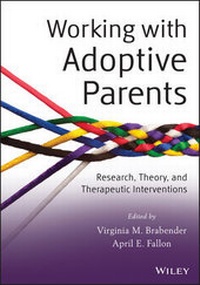
Working with Adoptive Parents
Research, Theory, and Therapeutic Interventions
Erschienen am 15. Mai 2013
320 Seiten
978-1-118-41615-0 (ISBN)
Beschreibung

Practical techniques for guiding parents through the stagesof adoption and beyond
"This book makes a significant contribution to both a greaterunderstanding of adoption and its complex dynamic constellations aswell as to serving those who are or come across adoption families,many of whom count on us adoption-informed mental healthprofessionals to clarify and facilitate the challenges theyface."
--From the Foreword by Henri Parens, MD, Professor ofPsychiatry, Thomas Jefferson University, Training and SupervisingAnalyst, Psychoanalytic Center of Philadelphia
"What most people don't know about adoption could fill abook--and this is the book. Finally sorting myth from science,Working with Adoptive Parents will give therapists, andquite a few nonprofessionals considering adoption, the real storyof what it means to make this momentous choice. Better yet, it doesso without letting the data speak in place of the parentsthemselves, in all their fear, doubt, and joy."
--Jesse Green, author of The Velveteen Father: An UnexpectedJourney to Parenthood
Editors Virginia Brabender and April Fallon are clinicalpsychologists and also adoptive parents whose families areacquainted with both the uncertainty and joy of adoption. InWorking with Adoptive Parents, they offer an in-depthtreatment of the distinctive needs, feelings, impulses,expectations, and conflicts that adoptive parents experiencethrough the stages of adoption and beyond. This volume offers acomprehensive picture of adoption through an exploration of theexperiences and developmental processes of the adoptive parent.
Featuring contributions from mental health professionals whosecareers have focused on work with families through the adoptionprocess, this unique book:
* Covers the theory, research, and practice of adoptive parentingthroughout the life cycle
* Explores the issues unique to the adoptive mother and adoptivefather as they traverse the stages of parenting
* Offers a close look at families with special needschildren
* Acknowledges and explores the great diversity among adoptivefamilies and the kinship networks in which they are embedded
* Examines attachment issues between adoptive parent andchild
Providing a framework for therapists to conceptualize their workwith adoptive parents, Working with Adoptive Parentsclarifies and facilitates the journey that many of these familiesface.
Rezensionen / Stimmen
"This book makes a significant contribution to both a greaterunderstanding of adoption and its complex dynamic constellations aswell as to serving those who are or come across adoption families,many of whom count on us adoption-informed mental healthprofessionals to clarify and facilitate the challenges theyface." --From the Foreword by Henri Parens, MD, Professor ofPsychiatry, Thomas Jefferson University, Training & SupervisingAnalyst, Psychoanalytic Center of Philadelphia "What most people don't know about adoption could fill a book- and this is the book. Finally sorting myth from science,Working with Adoptive Parents will give therapists, and quite a fewnonprofessionals considering adoption, the real story of what itmeans to make this momentous choice. Better yet, it does so withoutletting the data speak in place of the parents themselves, in alltheir fear, doubt, and joy." --Jesse Green, author of The Velveteen Father: AnUnexpected Journey to Parenthood "With adoption, including those that across internationalboundaries, on the rise, the salutary impact of human kindness aswell the tragic potential for developmental complications hasgreatly increased. Brabender and Fallon, the editors of thiswell-organized volume, are keenly aware of this. They have casttheir net wide and brought together the perspectives of attachmenttheory, empirical research, and clinical experiences to deepen ourunderstanding of the challenges faced by adoptive parents.Conceptually rich and yet unabashedly pragmatic, their bookaddresses the issues of parent-child bonding, the subjectivedilemmas of adoptive mothers, the role of adoptive fathers, andparenting children with special health care needs. Attention isalso given to the specific tasks involving the adoption of veryyoung children as well as to the resurgence of difficulties duringadopted children's adolescence. This wide-ranging discourseconsistently maintains a tone of respect, concern, and sharedhumanity of all of us. A most impressive contribution to theadoption literature indeed!" --Salman Akhtar, MD, Professor of Psychiatry, JeffersonMedical College, Training and Supervising Analyst, PsychoanalyticCenter of Philadelphia "This book is a tour de force, a must read for all involved inthe world of adoption. A comprehensive history of adoption,including current controversies, sets the stage. Every chapter is agem, but contributions on research to inform best practices, therole of the adoptive father, diversity, and adoption of childrenwith special health care needs, help fill significant gaps in theadoption literature. Rich clinical material and the practicalpoints summarized throughout, demonstrate the wisdom of seasonedpractitioners." --Jennifer Bonovitz, PhD, Supervising and TrainingAnalyst, Psychoanalytic Center of Philadelphia "This volume is a major contribution to our understanding ofadoptive parenting. The book is thorough, full of helpful insights,case studies, and perspectives on the complicated dance involvedfor adoptive parents and their children. The portrait of adoptiveparenting is both hopeful and realistic, and is framed withthoughtful attention to what we actually know from carefulresearch. This book should be a helpful guide and resource for bothmental health professionals and adoptive parents." --Sam Osherson, PhD, Professor of Psychology, FieldingGraduate University, Cambridge, MAWeitere Details
Weitere Ausgaben
Andere Ausgaben
Virginia M. Brabender | April E. Fallon
Working with Adoptive Parents
Research, Theory, and Therapeutic Interventions
Buch
07/2013
Wiley
68,00 €
Versand in 15-20 Tagen
Personen
VIRGINIA M. BRABENDER, PhD, diplomate in clinicalpsychology (ABPP) and APA Fellow, is a professor at the Institutefor Graduate Clinical Psychology at Widener University. She is thepast president of the Society for Personality Assessment.
APRIL E. FALLON, PhD, is a member of the psychologyfaculty at Fielding Graduate University and an associate professorin the Department of Psychiatry at Drexel University College ofMedicine. She has received numerous awards for her teaching ofpsychiatric medical residents and was awarded the 2012 PsychiatricEducator Award by the Philadelphia Psychiatric Society.
Inhalt
- Intro
- Working With Adoptive Parents: Research, Theory, and Therapeutic Interventions
- Copyright
- Contents
- Foreword
- Preface
- Our Own Journey
- The Importance of the Subject Matter
- The Influence of the Parent on the Child
- The Adoptive Parent's Relational Context
- The Well-Being of the Adoptive Parent
- Intended Audience of This Book
- Organization of the Book
- Acknowledgments
- About the Editors
- Contributors
- Chapter 1: Setting the Stage: The Adoptive Parent in Context
- Characteristics of Adoptive Parents
- Psychological Characteristics
- Motivation for Adopting
- Use of Treatment
- Serving the Needs of Adoptive Parents
- History of Adoption
- European History
- Adoption in America
- Contemporary Controversies
- The Openness Dilemma
- Transracial Adoption
- Gay Adoptive Parenting
- Practical Points
- Conclusions
- Notes
- Chapter 2: Theoretical Contributions to the Understanding of Parent-Child Bonding in Adoption
- Before the Family Becomes a Unit: Daniel Stern and Intrapsychic Reorganization
- The Case of Dora
- Bowlby and the Importance of Secure Attachment in Healthy Development
- The Parallel Caregiving System: Contributions of George and Solomon
- Ego Psychology and the Significance of Adaptation
- Contributions of D. W. Winnicott
- The Good Enough Mother
- Holding to Provide Good Enough Maternal Care
- Holding Adopted Children
- The Importance of the Transitional Object With Adoptive Children
- Holding and Surviving Hateful Feelings
- The Role of Mirroring
- Kohut and the Development of Self-Esteem
- Mentalization: Holding the Adopted Child in Mind
- Separation-Individuation and the Contributions of Margaret Mahler
- Practical Points
- Conclusions
- Notes
- Chapter 3: Using Research to Inform Best Practices in Working With Adoptive Families
- The History of Research on Attachment and Parent-Child Interactions
- Bowlby and the Observational Method
- Early Measurement Issues in Attachment Research
- Parent/Child Interactions as Predictors of Child Adjustment
- Helping Children by Studying Attachment in Adults
- Research on Adoption
- Age at Adoption
- General Outcomes for Adopted Children
- Research on Cognitive and Psychomotor Development
- Research on Behavioral and Emotional Adjustment
- Comparing International Adoptees With Country-of-Origin Peer Groups
- Longitudinal Studies of Adoption
- Attachment-Based Interventions for Use in Adoption
- The Circle of Security
- Toddler-Parent Psychotherapy
- Dyadic Developmental Psychotherapy
- Practical Points
- Conclusion
- Chapter 4: The Adoptive Mother
- The Eras of Adoptive Motherhood
- Before the Baby Arrives
- Transition
- Nesting
- Establishing the Rhythms of Daily Living
- Early Childhood Years
- Later Childhood Years (5-12 Years)
- Adolescence
- Mothering Adolescent Daughters
- Mothering the Adolescent Son
- Searching
- Reculturation
- Practical Points
- Conclusion
- Notes
- Chapter 5: The Adoptive Father
- Important Role Functions of the Father
- Early Support of the Mother
- The ``Second Other´´
- An Alternative Attachment Figure
- Introduction to the External World With Encouragement of Self-Determination
- Promotion of Separation and Individuation
- Development of Gender Identity
- Development of Social Competence
- The Adoptive Father's Centrality in the Child's Psychic Formation and Psychosocial Life
- Becoming and Being an Adoptive Father
- Wish to Become a Father
- Effects of Infertility
- Working Through Psychological Effects of Infertility
- Contemplating Adoption
- Waiting for the Child and Transition
- Establishing New Rhythms
- The Adoptive Father in the Early Childhood Years
- Fathering During Adolescence
- Practical Points
- Conclusion
- Notes
- Chapter 6: Recognizing Diversity in Adoptive Families
- Identity Variables Within the Addressing Framework
- Age and Generational Influences
- Disability Status of the Adoptive Parent
- Religion and Spiritual Orientation
- Ethnicity, Race, and Culture
- Socioeconomic Status
- Sexual Orientation
- Gender
- Family Structure
- Single-Parent Families
- Sibling Constellations
- Practical Points
- Conclusion
- Notes
- Chapter 7: Adoption of Children With Special Health Care Needs
- Three Approach Classes
- Problems in the Research About Adopted Children With Special Health Care Needs
- Comparison to Children in the General Population
- Disruption of Adoption for Children With SHCN
- Who Are the Families Who Adopt These Children?
- Commitment
- Commitment and Approach Classes
- The Case of Priscilla: Approach Class 1
- The Case of Mindy: Approach Classes 2 and 3
- Preparation
- Preparation in Approach Classes 1 and 2
- Across the Approach Classes
- Coping and Stress
- Learning From the Broader Pediatric Literature
- Existential Issues
- Posttraumatic Stress
- Ambiguous Loss
- Posttraumatic Growth
- Marital Satisfaction
- Practical Points
- For Therapists/Counselors and Other Helping Professionals
- For Adoptive Parents of Children With SHCN
- Conclusion
- Chapter 8: Parenting the Young Child
- Ghosts in Adoptive Families
- Pre-Adoptive Parent Ghosts
- Postadoption Ghosts
- Children's Ghosts
- Intervention With Adoptive Families: Developmental Guidance, Parent-Child Groups, and Parent-Child Therapy
- Developmental Guidance
- Parent-Child Groups: Education for Adoptive Parenting
- Parent-Child Psychotherapy
- Parenting Cornerstones for Adoptive Families
- Attachment and Emotional Connection
- Object Constancy: Consolidating New Relationships
- Two Stages at One Time
- Attachment Disorder
- Temperament and Personality
- Roadblocks to Object Constancy
- Enhancing the Parent-Child Relationship in Adoptive Families: Developing an Adoption Dialogue
- Limit Setting and Discipline
- Dealing With Loss and Grief in Adoption
- Practical Points
- Conclusion
- Notes
- Chapter 9: Adoptive Parenting of Teenagers and Young Adults
- Developmental Themes of Adolescence and Early Adulthood
- The Development of Identity
- Individuation and Independence
- Identity Development and Individuation in Adopted Adolescents and Young Adults
- Family Memories and Adoption Stories
- Sense of Belonging
- Case Study-"Aaron"
- Individuation, Independence, and the Adoptive Parent-Child Relationship
- Case Study-"Rosa"
- The Unique Perspective of Adoptive Parents of Adolescents
- Insights for Parents and Therapists
- Need for Information About Birth Families
- Identity Formation in International, Transcultural, and Transracial Adoptees
- The Adoption Narrative
- Effective Teatment of Trauma in the Lives of Adopted Children
- Supporting Adolescents´ Natural Desire for Autonomy
- Creating a Sense of Belonging and Purpose
- Practical Points
- Conclusions
- Chapter 10: Therapeutic Interventions With Adopted Children and Adoptive Parents: A Psychoanalytic Developmental Approach
- Introduction
- Development of the Human Mind
- Therapeutic Intervention in a Psychoanalytic Developmental Approach
- Parent Problems and Child Problems in the Context of a Psychoanalytic Developmental Approach
- The Missing Link-Between Parent and Child
- Intergenerational Transmission of the Human Mind-The Missing Link
- Evaluating the Parent-Child Dyad
- Adoption: Irregularities in the Context of Development
- Adoption: Challenges to the Developing Child
- Practical Points
- Conclusion
- Notes
- Chapter 11: Adoptive Parent as Consultant, Educator, and Advocator
- The Roots of Problems Facing Adoptive Parents
- Lack of Knowledge and Overgeneralization
- Micro-Aggressions
- Action Implications
- Family, Friends, and Members of the Community
- School
- The Workplace
- The Broader Society
- Challenges to Parents´ Assumption of Advocacy, Consultative, and Educational Roles
- Practical Points
- Conclusions
- Notes
- Chapter 12: Meeting the Needs of Adoptive Parents: Practice, Training, and Research
- Practice
- Vignette 1
- Analysis of Vignette 1
- Vignette 2
- Analysis of Vignette 2
- Vignette 3
- Analysis of Vignette 3
- Vignette 4
- Analysis of Vignette 4
- Vignette 5
- Analysis of Vignette 5
- Training
- Becoming Knowledgeable Adoption Practitioners
- Research
- Practical Points
- Conclusions
- Notes
- References
- Author Index
- Subject Index
