

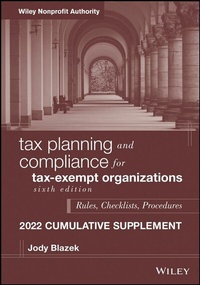
Tax Planning and Compliance for Tax-Exempt Organizations
Beschreibung

This book is an indispensable guide to navigating the complex maze of nonprofit tax rules and regulations. A clear and fully cited description of the requirements for the various categories of tax-exempt entities from public charities, private foundations, civic associations, business leagues, and social clubs to title-holding companies and governmental entities can be found. Practical guidance on potential for income tax on revenue-producing enterprises along with explanations of many exceptions to taxability is provided. Issues raised by Internet activity, advertising, publishing, providing services, and much more are explained.
This useful annual supplement for 2022 will cover any and all changes and updates to the law within the previous 12 month period and will keep accountants, attorneys, and others up-to-date for the year ahead.
* Features a variety of sample documents for private foundations, including penalty abatement requests and sharing space agreements
* Provides helpful practice aids, such as a comparison of the differences between public and private charities, charts reflecting lobbying limits for different types of entities, and listings of rulings and cases that illustrate permissible activity for each type of organizations compared to impermissible activity
Weitere Details
Weitere Ausgaben
Andere Ausgaben
Inhalt
Preface
Part I QUALIFICATIONS OF TAX-EXEMPT ORGANIZATIONS
Chapter 1 Distinguishing Characteristics of Tax-Exempt Organizations
§ 1.4 Role of the Internal Revenue Service
§ 1.8 Developments Responding to COVID-19
Chapter 2 Qualifying Under IRC § 501(c)(3)
§ 2.2 Operational Test
Chapter 3 Religious Organizations
§ 3.2 Churches
Chapter 4 Charitable Organizations
§ 4.1 Relief of the Poor
§ 4.3 Lessening the Burdens of Government
§ 4.5 Advancement of Education and Science
§ 4.6 Promotion of Health
Chapter 5 Educational, Scientific, and Literary Purposes and Prevention of Cruelty to Children and Animals
§ 5.1 Educational Purposes
Chapter 6 Civic Leagues and Local Associations of Employees: § 501(c)(4)
§ 6.2 Qualifying and Nonqualifying Civic Organizations
Chapter 9 Social Clubs: § 501(c)(7)
§ 9.1 Organizational Requirements and Characteristics
§ 9.4 Revenue Tests
Chapter 10 Instrumentalities of Government and Title-Holding Corporations
§ 10.6 Requirements for IRC §501(c)(8) and (c)(10)
Chapter 11 Public Charities
§ 11.2 "Inherently Public Activity" and Broad Public Support: § 509(a)(1)
§ 11.5 Difference Between § 509(a)(1) and § 509(a)(2)
§ 11.9 Supporting Organization: §509(a)(3)
Part II STANDARDS FOR PRIVATE FOUNDATIONS
Chapter 12 Private Foundations-General Concepts
§ 12.4 Termination of Private Foundation Status
Chapter 13 Excise Tax Based on Investment Income: IRC §4940
§ 13.2 Capital Gains
Chapter 14 Self-Dealing: IRC § 4941
§ 14.2 Sale, Exchange, or Lease of Property
§ 14.5 Transactions That Benefit Disqualified Persons
Chapter 15 Minimum Distribution Requirements: IRC § 4942
§ 15.1 Assets Used to Calculate Minimum Investment Return
§ 15.2 Measuring Fair Market Value
§ 15.4 Qualifying Distributions
Chapter 16 Excess Business Holdings and Jeopardizing Investments: IRC §§ 4943 and 4944
§ 16.1 Excess Business Holdings
§ 16.2 Jeopardizing Investments
Chapter 17 Taxable Expenditures: IRC § 4945
§ 17.3 Grants to Individuals
§ 17.4 Grants to Public Charities
Part III OBTAINING AND MAINTAINING TAX-EXEMPT STATUS
Chapter 18 IRS Filings, Procedures, and Policies
§ 18.1 IRS Determination Process
§ 18.2 Annual Filing of Form 990
§ 18.3 Reporting Organizational Changes to the IRS
§ 18.4 Weathering an IRS Examination
Chapter 19 Maintaining Exempt Status
§ 19.1 Checklists
Chapter 20 Private Inurement and Intermediate Sanctions
§ 20.2 Salaries and Other Compensation
§ 20.10 Intermediate Sanctions
§ 20.11 New § 4960 Excise Tax on Excess Compensation
Chapter 21 Unrelated Business Income
§ 21.4 Definition of Trade or Business
§ 21.8 Unrelated Activities
§ 21.10 Income Modifications
§ 21.11 Calculating and Minimizing Taxable Income
Chapter 23 Electioneering and Lobbying
§ 23.3 Tax on Political Expenditures
Chapter 24 Deductibility and Disclosures
§ 24.1 Overview of Deductibility
§ 24.2 The Substantiation and Quid Pro Quo Rules
§ 24.3 Valuing Donor Benefits
Chapter 25 Employment Taxes
§ 25.1 Distinctions Between Employees and Independent Contractors
§ 25.3 Reporting Requirements
Chapter 27 Cryptocurrency
§ 27.1 What Is Cryptocurrency?
§ 27.2 What Are the Various Kinds of Cryptocurrency?
§ 27.3 Should Nonprofits Be Involved in Cryptocurrency?
§ 27.4 Cryptocurrencies and the Internal Revenue Service
Index
