

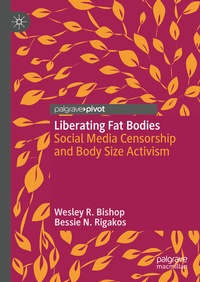
Liberating Fat Bodies
Beschreibung

Using a multidisciplinary and intersectional approach, this book explores the social factors that influence the ways in which societal norms police fat bodies. Chapters examine the racist and colonial constructions of Western beauty norms as well as the evolution of anti-fat bias and fat liberation, before delving into the relationship between social media and body size activism, with a particular emphasis on social media companies censoring fat people. The authors draw on first-person narratives of artists, activists, and fat social media users to unpack how, these mostly women, have used their bodies to transform the negative social perceptions of fat people.
This book will be of interest to scholars and students in Sociology, Gender Studies, History, and Media Studies who research body size activism and beauty norms.
Rezensionen / Stimmen
"Activists like Aubrey Gordon, Denarii Grace, and Charlotte Cooper swing the sword of the fat liberation movement; Bishop and Rigakos wield the shield. The potency of Liberating Fat Bodies lies in lending the movement much-needed protective scholarly sobriety-by grounding it in history, academic inquiry, archival research, and original interviews with content creators and advocates. This is a vital study in the fight for fat liberation." (Ricardo Quintana-Vallejo, Rhode Island College, USA)
Weitere Details
Weitere Ausgaben
Andere Ausgaben
Personen
Wesley R. Bishop is an Assistant Professor of History in the Department of History and Foreign Languages at Jacksonville State University, USA. He has written on the topic of social movements and political thought, and has conducted research on American Populism, the creation of the New Deal Era, and the body size activism movement.
Bessie N. Rigakos, Ph.D is a Vice President and Dean at Marian University's Saint Joseph's College, Indianapolis IN, USA. Her scholarly activity focuses on the policing and self-policing of women's bodies through beauty norms and body work, and she has conducted research on the attitudes towards women's body hair removal from public and private areas and the methods of depilation used.
Inhalt
1: Liberating Fat Bodies and Online Censorship.- 2: Working while Fat in the Age of the Internet.- 3: Media and the Ideal Body.- 4: Fatness and the Need for a Public.- 5: Social Media as Tool and Hinderance.- 6: The 26 Words that Created the Internet and the Future of Online Art and Activism.
