

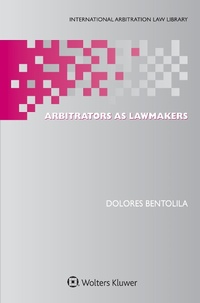
Arbitrators as Lawmakers
Erschienen am 5. April 2017
362 Seiten
978-90-411-8356-9 (ISBN)
Beschreibung
This book analyses how arbitrators make rules that guide, constrain, and define the process and substance of international arbitration.
Providing a thorough and multidisciplinary analysis of the actors, process, and outcome of arbitral lawmaking, the study shows how arbitrators create principles of law through consistent arbitral decision-making and through interacting with other members of the arbitral community.
This book investigates and responds to the following questions:
- - What is the relationship between international arbitration and the law and courts of the seat?
- - What is the role of international tribunals in assisting and controlling investment arbitration?
- - What is the scope of arbitrators' freedom in decision-making?
- - What constraints limit arbitrators' decision-making and contribute to consistency?
- - Is international arbitration capable of paying deference to past arbitral decisions?
- - Which rules have arbitrators created in procedural and substantive matters?
- - What is the role and status of consistent arbitral decisions?
- - Is there an arbitral legal system?
The answers to these questions are drawn from actual arbitral decisions made available to the public, clarifying important issues about jurisdiction, procedure, applicable law, interpretation of substantive rules and instruments, and remedies.
This is the first overarching study of whether and to what extent international commercial, and investment arbitrators create norms and even generate a legal system. As such, it will be of immeasurable and lasting value to arbitrators, practitioners, scholars, arbitral institutions, and international organizations worldwide, for all of whom it will not only clarify our understanding of arbitral decision-making and arbitrator-made rules, but also foster transparency and accountability in arbitral decision-making
Providing a thorough and multidisciplinary analysis of the actors, process, and outcome of arbitral lawmaking, the study shows how arbitrators create principles of law through consistent arbitral decision-making and through interacting with other members of the arbitral community.
This book investigates and responds to the following questions:
- - What is the relationship between international arbitration and the law and courts of the seat?
- - What is the role of international tribunals in assisting and controlling investment arbitration?
- - What is the scope of arbitrators' freedom in decision-making?
- - What constraints limit arbitrators' decision-making and contribute to consistency?
- - Is international arbitration capable of paying deference to past arbitral decisions?
- - Which rules have arbitrators created in procedural and substantive matters?
- - What is the role and status of consistent arbitral decisions?
- - Is there an arbitral legal system?
The answers to these questions are drawn from actual arbitral decisions made available to the public, clarifying important issues about jurisdiction, procedure, applicable law, interpretation of substantive rules and instruments, and remedies.
This is the first overarching study of whether and to what extent international commercial, and investment arbitrators create norms and even generate a legal system. As such, it will be of immeasurable and lasting value to arbitrators, practitioners, scholars, arbitral institutions, and international organizations worldwide, for all of whom it will not only clarify our understanding of arbitral decision-making and arbitrator-made rules, but also foster transparency and accountability in arbitral decision-making
