

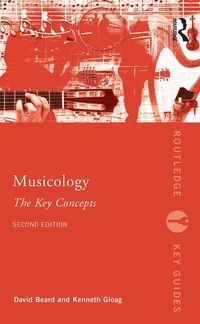
Musicology: The Key Concepts
2. Auflage
Erschienen am 22. Januar 2016
376 Seiten
978-1-317-29808-3 (ISBN)
Beschreibung
Now in an updated 2nd edition, Musicology: The Key Concepts is a handy A-Z reference guide to the terms and concepts associated with contemporary musicology. Drawing on critical theory with a focus on new musicology, this updated edition contains over 35 new entries including:
Autobiography
Music and Conflict
Deconstruction
Postcolonialism
Disability
Music after 9/11
Masculinity
Gay Musicology
Aesthetics
Ethnicity
Interpretation
Subjectivity
With all entries updated, and suggestions for further reading throughout, this text is an essential resource for all students of music, musicology, and wider performance related humanities disciplines.
Autobiography
Music and Conflict
Deconstruction
Postcolonialism
Disability
Music after 9/11
Masculinity
Gay Musicology
Aesthetics
Ethnicity
Interpretation
Subjectivity
With all entries updated, and suggestions for further reading throughout, this text is an essential resource for all students of music, musicology, and wider performance related humanities disciplines.
Weitere Details
Reihe
Auflage
2nd edition
Sprache
Englisch
Verlagsort
London
Großbritannien
Verlagsgruppe
Taylor & Francis Ltd
Zielgruppe
Für höhere Schule und Studium
Editions-Typ
Überarbeitete Ausgabe
Produkt-Hinweis
Reflowable
Dateigröße
1,89 MB
ISBN-13
978-1-317-29808-3 (9781317298083)
Copyright in bibliographic data and cover images is held by Nielsen Book Services Limited or by the publishers or by their respective licensors: all rights reserved.
Schweitzer Klassifikation
Weitere Ausgaben
Personen
David Beard is Senior Lecturer in Music at Cardiff University, UK. He has published widely in peer-reviewed journals, including Cambridge Opera Journal, Music Analysis, and Twentieth-Century Music, and is the author of Harrison Birtwistle's Operas and Music Theatre (2012). He co-edited Harrison Birtwistle Studies (2015) and has contributed chapters to Ancient Drama in Music for the Modern Stage (2010) and Peter Maxwell Davies Studies (2009). He sits on the editorial board of the journal Music & Letters.
Kenneth Gloag is Professor of Music at Cardiff University, UK. His publications include books on Tippett's A Child of Our Time (1999) and Nicolas Maw's Odyssey (2008). He is author of Postmodernism in Music (2012), and has co-edited and contributed chapters to Peter Maxwell Davies Studies (2009), The Cambridge Companion to Michael Tippett (2013), and Harrison Birtwistle Studies (2015). He was inaugural reviews editor of the journal Twentieth-Century Music (2004-12).
Kenneth Gloag is Professor of Music at Cardiff University, UK. His publications include books on Tippett's A Child of Our Time (1999) and Nicolas Maw's Odyssey (2008). He is author of Postmodernism in Music (2012), and has co-edited and contributed chapters to Peter Maxwell Davies Studies (2009), The Cambridge Companion to Michael Tippett (2013), and Harrison Birtwistle Studies (2015). He was inaugural reviews editor of the journal Twentieth-Century Music (2004-12).
Inhalt
Introduction A-Z Key Concepts Bibliography Index
