

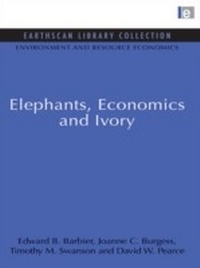
Elephants, Economics and Ivory
1. Auflage
Erschienen am 5. November 2013
178 Seiten
978-1-134-04734-5 (ISBN)
Beschreibung

Ivory is big business, and in some parts of Africa elephants have been hunted almost to extinction in the quest for it. The losses to African economies have been catastrophic. Now there is an international ban on the trade and conservation is. the principal goal. This should be a matter for rejoicing, but nothing is quite so simple.
The authors of this book have looked at the overall statistics, including those for countries where the elephant population is stable. They have considered the multiplicity of economic and social functions fulfilled by ensuring that elephant herds survive, tourism, a variety of ecological purpose. and, finally, as a source of ivory. They show how the careful management of elephants as a resource can best serve African interests. This book is at the cutting edge of economic thinking and provides a model for the consideration of the difficult relationship between people and wildlife.
Originally published in 19990
The authors of this book have looked at the overall statistics, including those for countries where the elephant population is stable. They have considered the multiplicity of economic and social functions fulfilled by ensuring that elephant herds survive, tourism, a variety of ecological purpose. and, finally, as a source of ivory. They show how the careful management of elephants as a resource can best serve African interests. This book is at the cutting edge of economic thinking and provides a model for the consideration of the difficult relationship between people and wildlife.
Originally published in 19990
Weitere Details
Reihe
Sprache
Englisch
Verlagsort
London
Großbritannien
Verlagsgruppe
Taylor & Francis Ltd
Zielgruppe
Für höhere Schule und Studium
Dateigröße
3,41 MB
ISBN-13
978-1-134-04734-5 (9781134047345)
Copyright in bibliographic data and cover images is held by Nielsen Book Services Limited or by the publishers or by their respective licensors: all rights reserved.
Schweitzer Klassifikation
Weitere Ausgaben
Andere Ausgaben
Edward B. Barbier | Joanne C. Burgess | Timothy M. Swanson
Elephants, Economics and Ivory
Buch
03/2013
1. Auflage
Routledge
70,90 €
Versand in 15-20 Tagen
Edward B. Barbier | Joanne C. Burgess | Timothy M. Swanson
Elephants, Economics and Ivory
Buch
10/2009
1. Auflage
Earthscan Ltd
214,82 €
Versand in 3-4 Wochen
Personen
Timothy M. Swanson, Edward B. Barbier, Joanne C. Burgess, David W. Pearce
Inhalt
List of Tables
List of Figures
List of Acronyms and Abbreviations
Preface
Acknowledgements
1. Elephants in Decline
Introduction
The Decline of the African Elephant
The Role of the Ivory Trade
The Economics of the Decline in Elephant Populations
Further Issues in the Decline of Elephant Populations
Economic Incentives for Conservation
Current Situation
Appendix 1.1: A bioeconomic Model of Elephant Decline
2. African Exports: Quantity and Value
Introduction
Background to Africa's Ivory Trade
Estimating African Ivory Exports: 1950-88
The Value of African Ivory Exports: 1979-88
Intra-Africa Trade and the African Carving Industry
Appendix 2.1: An approach to Estimating African Ivory Exports, 1950-88
Appendix 2.2: Estimating the Value of African Ivory Exports, 1979-88
3. The Ivory Trade Flow: Worked and Unworked
Intermediate and Final Demand
Difficulties in Tracing Ivory Trade Flows
Trade Flows and Final Demand: Hong Kong and Japan
Trade Flows and Final Demand: Europe
Trade Flows and Final Demand: USA
Trade Flows and Final Demand: China
Trade Flows and Final
Trade Flows and Final
Conclusion
Appendix 3.1: Worked
4. Demand Analysis: J
Introduction
Japan analysis
Hong Kong analysis
Conclusion
Appendix 4.1: The Raw
Appendix 4.2: The Raw
Demand: India
Demand: other Countries
Ivory Trade Database
Japan and Hong Kong
Ivory Demand Model: Japan
Ivory Demand Model: Hong Kong
5. Policies for the Regulation of the Ivory Trade
Introduction
Regulation in the Range States
Previous Attempts at International Regulation
International Regulation and the African Elephant
Alternative Mechanisms for International Regulation
Conclusion
6. Looking to the Future: Policy Options to Save the Elephant
Current Cites Regulation: The Appendix I Listing
The Impact of an Ivory Trade Ban
A Proposal for the International Regulation of the Trade
Domestic Reform: the Importance of Local Ownership
Conclusion: The Future of the African Elephant
Index
List of Figures
List of Acronyms and Abbreviations
Preface
Acknowledgements
1. Elephants in Decline
Introduction
The Decline of the African Elephant
The Role of the Ivory Trade
The Economics of the Decline in Elephant Populations
Further Issues in the Decline of Elephant Populations
Economic Incentives for Conservation
Current Situation
Appendix 1.1: A bioeconomic Model of Elephant Decline
2. African Exports: Quantity and Value
Introduction
Background to Africa's Ivory Trade
Estimating African Ivory Exports: 1950-88
The Value of African Ivory Exports: 1979-88
Intra-Africa Trade and the African Carving Industry
Appendix 2.1: An approach to Estimating African Ivory Exports, 1950-88
Appendix 2.2: Estimating the Value of African Ivory Exports, 1979-88
3. The Ivory Trade Flow: Worked and Unworked
Intermediate and Final Demand
Difficulties in Tracing Ivory Trade Flows
Trade Flows and Final Demand: Hong Kong and Japan
Trade Flows and Final Demand: Europe
Trade Flows and Final Demand: USA
Trade Flows and Final Demand: China
Trade Flows and Final
Trade Flows and Final
Conclusion
Appendix 3.1: Worked
4. Demand Analysis: J
Introduction
Japan analysis
Hong Kong analysis
Conclusion
Appendix 4.1: The Raw
Appendix 4.2: The Raw
Demand: India
Demand: other Countries
Ivory Trade Database
Japan and Hong Kong
Ivory Demand Model: Japan
Ivory Demand Model: Hong Kong
5. Policies for the Regulation of the Ivory Trade
Introduction
Regulation in the Range States
Previous Attempts at International Regulation
International Regulation and the African Elephant
Alternative Mechanisms for International Regulation
Conclusion
6. Looking to the Future: Policy Options to Save the Elephant
Current Cites Regulation: The Appendix I Listing
The Impact of an Ivory Trade Ban
A Proposal for the International Regulation of the Trade
Domestic Reform: the Importance of Local Ownership
Conclusion: The Future of the African Elephant
Index
