

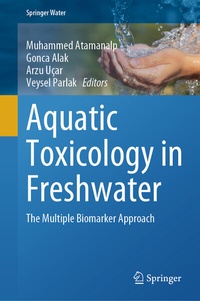
Aquatic Toxicology in Freshwater
Beschreibung

This book will provide an important source of practical information on the history of toxicology, the ways in which pollutants reach model organisms used in toxicology, sampling methods for research, mechanisms of toxicity and responses of aquatic organisms to toxic agents, as well as the use of therapeutic agents in current approaches. Determining the importance of environmentally friendly substances on antioxidant defense is an obvious area of future research.
The combined use of a biomarkers range that can indicate exposure to pollutants and measure their effects on living organisms enables a more comprehensive and integrative assessment of indicator organisms in the aquatic environment, both biochemically and cellularly. In conclusion, the multiple biomarker approach had received great interest in ecotoxicological research and had recently been adapted to both field and laboratory studies.
Weitere Details
Weitere Ausgaben
Andere Ausgaben
Personen
Dr. Muhammed ATAMANALP is a professor at
Atatürk University Fisheries Faculty since 2009, has nearly 90 SCI paper most of them on aquatic toxicology. Specialist about water pollution, fish physiology, toxic effects of new synthesized compounds on aquatic organisms.
Prof. Dr. Gonca ALAK is at the same faculty, working on seafood processing and aquatic toxicology with dozens of researches. Her research area of specialization is seafood processing technology and aquatic toxicology.
Arzu UÇAR and Veysel PARLAK are Assoc. Professors at Ataturk University Fisheries Faculty, Department of Aquaculture, Erzurum, TURKIYE. Their PhD subjects and research areas are Aquatic Toxicology.
Inhalt
1. History of Aquatic Toxicology.- 2. Introduction to Aquatic Toxicology.- 3. Model Organisms Used in Aquatic Toxicology.- 4. Freshwater toxicity tests and experimental environment procedures.- 5. LC50 Determination and Probit Analysis.- 6. Sampling Methods in Aquatic Toxicology.- 7. Classification of Pollution and Their Entry Rotues into Aquatic Ecosystems.- 8. Toxicology Mechanisms of Pollutants.- 9. Nanotoxicology.- 10. Experimental Animal Preference in Aquatic Toxicology.
