

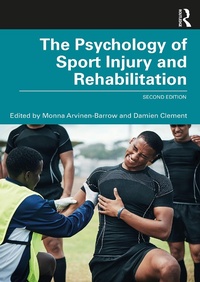
The Psychology of Sport Injury and Rehabilitation
2. Auflage
Erschienen am 22. Januar 2024
348 Seiten
978-1-000-98500-9 (ISBN)
Beschreibung

Written by internationally known experts The Psychology of Sport Injury and Rehabilitation draws on the latest research in sport psychology and sports medicine. Using case studies to augment the reader's experience, this new edition emphasizes the importance of a holistic, interprofessional approach to sport injury management and care. By doing so, the book provides injured individuals, their families, and healthcare professionals a thorough overview of how psychology plays a role in sport injury prevention, rehabilitation, and return to participation process.
Athletes routinely use psychological skills and interventions for performance enhancement but, perhaps surprisingly, not always to assist in recovery from injury. This book demonstrates the ways in which athletes and practitioners can transfer psychological skills to an injury and rehabilitation setting to enhance recovery and the well-being of the athlete.
Psychology of injury is an integral part of sport injury prevention, rehabilitation, and return to participation process. The second edition of The Psychology of Sport Injury and Rehabilitation is a comprehensive text grounded in biopsychosocial theory and scientific evidence.
The fully revised second edition is an important resource for students, academic scholars, and applied practitioners working in sport psychology, sports medicine, sports coaching, and other related healthcare professions.
Athletes routinely use psychological skills and interventions for performance enhancement but, perhaps surprisingly, not always to assist in recovery from injury. This book demonstrates the ways in which athletes and practitioners can transfer psychological skills to an injury and rehabilitation setting to enhance recovery and the well-being of the athlete.
Psychology of injury is an integral part of sport injury prevention, rehabilitation, and return to participation process. The second edition of The Psychology of Sport Injury and Rehabilitation is a comprehensive text grounded in biopsychosocial theory and scientific evidence.
The fully revised second edition is an important resource for students, academic scholars, and applied practitioners working in sport psychology, sports medicine, sports coaching, and other related healthcare professions.
Weitere Details
Auflage
2nd edition
Sprache
Englisch
Verlagsort
London
Großbritannien
Verlagsgruppe
Taylor & Francis Ltd
Zielgruppe
Für höhere Schule und Studium
Für Beruf und Forschung
Produkt-Hinweis
Reflowable
Illustrationen
22 Tables, black and white; 25 Line drawings, black and white; 3 Halftones, black and white; 28 Illustrations, black and white
ISBN-13
978-1-000-98500-9 (9781000985009)
Copyright in bibliographic data and cover images is held by Nielsen Book Services Limited or by the publishers or by their respective licensors: all rights reserved.
Schweitzer Klassifikation
Weitere Ausgaben
Andere Ausgaben
Monna Arvinen-Barrow | Damien Clement
The Psychology of Sport Injury and Rehabilitation
Buch
01/2024
2. Auflage
Routledge
222,90 €
Versand in 10-20 Tagen
Monna Arvinen-Barrow | Damien Clement
The Psychology of Sport Injury and Rehabilitation
Buch
01/2024
2. Auflage
Routledge
47,50 €
Sofort lieferbar
Personen
Monna Arvinen-Barrow is Associate Professor in the School of Rehabilitation Sciences and Technology at the University of Wisconsin-Milwaukee, USA; an online contributing faculty at the University of St. Augustine for Health Sciences, USA; and the Establishing Editor-in-Chief of the Journal for Advancing Sport Psychology in Research. She is a Chartered Psychologist (CPsychol) and an associate fellow (AFBPsS) of the British Psychological Society, a Certified Mental Performance Consultant (CMPC (R)), a fellow (FAASP) of the Association for Applied Sport Psychology, and a Certified Mental Performance Coach and Exercise Practitioner (UPV sert.) of the Finnish Psychological Association. Monna is the lead editor of two textbooks: The Psychology of Sport Injury and Rehabilitation (2013) and The Psychology of Sport and Performance Injury: An Interprofessional Case-Based Approach (2019).
Damien Clement is Associate Dean of the Honors College and a professor of sport, exercise, and performance psychology at West Virginia University, USA. He is a certified athletic trainer, a national certified counsellor, and a Certified Mental Performance Consultant (CMPC (R)) and fellow (FAASP) of the Association for Applied Sport Psychology. In 2014, Damien was the recipient of the Dorothy V. Harris Award by the Association for Applied Sport Psychology for his distinguished contributions in the field of sport and exercise psychology as a scholar/practitioner. He is the co-editor of the 2019 book The Psychology of Sport and Performance Injury: An Interprofessional Case-Based Approach.
Damien Clement is Associate Dean of the Honors College and a professor of sport, exercise, and performance psychology at West Virginia University, USA. He is a certified athletic trainer, a national certified counsellor, and a Certified Mental Performance Consultant (CMPC (R)) and fellow (FAASP) of the Association for Applied Sport Psychology. In 2014, Damien was the recipient of the Dorothy V. Harris Award by the Association for Applied Sport Psychology for his distinguished contributions in the field of sport and exercise psychology as a scholar/practitioner. He is the co-editor of the 2019 book The Psychology of Sport and Performance Injury: An Interprofessional Case-Based Approach.
Inhalt
Part I: Biopsychosocial Approach to Sport Injury
1. Introduction to Sport Injury Psychology
2. Biopsychosocial Risk Factors of Sport Injury
3. Biopsychosocial Understanding of Sport Injury
4. Cultural, Institutional, and Relational Understanding of Sport Injury
5. Psychosocial Understanding of Sport-related Concussion
6. Psychosocial Understanding of Patellofemoral Pain
Part II: Professional Practice in Sport Injury and Rehabilitation
7. Professional Practice Models in Sport Injury and Rehabilitation
8. Ethical Issues in Sport Injury and Rehabilitation
9. Counselling Skills in Sport Injury and Rehabilitation
10. Psychosocial Assessment and Referral in Sport Injury and Rehabilitation
11. Multicultural Considerations in Sport Injury and Rehabilitation
Part III: Psychosocial Strategies in Sport Injury and Rehabilitation
12. Coping with Sport Injury and Rehabilitation
13. Patient Education in Sport Injury and Rehabilitation
14. Goal Setting in Sport Injury and Rehabilitation
15. Self-talk in Sport Injury and Rehabilitation
16. Relaxation Techniques in Sport Injury and Rehabilitation
17. Imagery in Sport Injury and Rehabilitation
18. Social Support in Sport Injury and Rehabilitation
Part IV: Return to Participation and Transition Out of Sport
19. Return to Sport Participation
20. Transition Out of Sport
21. From Present to Future: Calls for New Paths in Sport Injury Psychology Research
1. Introduction to Sport Injury Psychology
2. Biopsychosocial Risk Factors of Sport Injury
3. Biopsychosocial Understanding of Sport Injury
4. Cultural, Institutional, and Relational Understanding of Sport Injury
5. Psychosocial Understanding of Sport-related Concussion
6. Psychosocial Understanding of Patellofemoral Pain
Part II: Professional Practice in Sport Injury and Rehabilitation
7. Professional Practice Models in Sport Injury and Rehabilitation
8. Ethical Issues in Sport Injury and Rehabilitation
9. Counselling Skills in Sport Injury and Rehabilitation
10. Psychosocial Assessment and Referral in Sport Injury and Rehabilitation
11. Multicultural Considerations in Sport Injury and Rehabilitation
Part III: Psychosocial Strategies in Sport Injury and Rehabilitation
12. Coping with Sport Injury and Rehabilitation
13. Patient Education in Sport Injury and Rehabilitation
14. Goal Setting in Sport Injury and Rehabilitation
15. Self-talk in Sport Injury and Rehabilitation
16. Relaxation Techniques in Sport Injury and Rehabilitation
17. Imagery in Sport Injury and Rehabilitation
18. Social Support in Sport Injury and Rehabilitation
Part IV: Return to Participation and Transition Out of Sport
19. Return to Sport Participation
20. Transition Out of Sport
21. From Present to Future: Calls for New Paths in Sport Injury Psychology Research
