

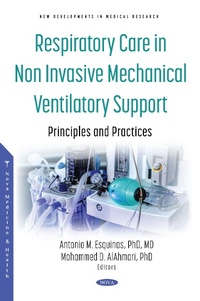
Respiratory Care in Non Invasive Mechanical Ventilatory Support: Principles and Practice
Erschienen am 7. Juli 2021
607 Seiten
978-1-5361-9902-4 (ISBN)
Beschreibung

Non-invasive ventilation refers to the use of breathing support administered through a face mask, nasal mask, or helmet. This form of ventilatory support is useful in the treatment of respiratory illnesses including SARS, MERS, PH1N1, and COVID-19. Consisting of 63 chapters, this book provides a detailed, holistic overview of the principles and practice of non-invasive mechanical ventilatory support.
Weitere Details
Weitere Ausgaben
Andere Ausgaben
Antonio M. Esquinas
Respiratory Care in Non Invasive Mechanical Ventilatory Support
Principles and Practice
Buch
07/2021
Nova Science Publishers Inc
427,64 €
Versand in 15-20 Tagen
Inhalt
- Intro
- Contents
- Preface
- Chapter 1
- Respiratory Muscular Function and Anatomy. Implications for Respiratory Care
- Abstract
- Introduction
- Respiratory Muscles
- Process of Inspiration
- Process of Active Inspiration
- Process of Passive Expiration
- Process of Active Expiration
- Anatomy of Respiratory Muscles
- Diaphragm
- External Intercostal Muscles
- Scalene muscle
- Anterior Scalene Muscle
- Middle Scalene Muscle
- Posterior Scalene Muscle
- Sternocleidomastoid
- Pectoralis Major Muscle
- Pectoralis Minor Muscle
- Serratus Anterior
- Latissimus Dorsi
- Rectus Abdominis Muscle
- Internal Intercostal Muscles
- Innervation of Respiratory Muscles
- Respiratory Muscles in Stress
- References
- Chapter 2
- Gas Exchange During Non-Invasive Ventilation
- Abstract
- Introduction
- The Good
- The Bad
- The Ugly
- Alterations of the Arterial Alveolus Gradient
- Shunt
- Ventilation / Perfusion Disturbance
- Limitation of Diffusion
- Dead Space
- Alveolar Hypoventilation
- Benefits of Non-Invasive Mechanical Ventilation in the Exchange of Gases
- References
- Chapter 3
- Spontaneous Ventilation Determinants: Lung Compliance and Airway Resistance
- Abstract
- Lungs' Elastic Recoil
- Recoil of the Lung Forces
- Action of Surfactant
- Time Dependence of Pulmonary Elastic Behavior
- Thoracic Cage Elastic Recoil
- Lung Plus Thoracic Cage Pressure/Volume Relationships
- Respiratory System Resistance
- Gas Flow and Resistance Physical Principles
- Laminar Flow
- Turbulent Flow
- Airway Resistance
- Inertance and Respiratory System Resistance
- References
- Chapter 4
- Pulmonary Function Monitoring. Implications for Respiratory Care in Non-Invasive Mechanical Ventilation
- Abstract
- Introduction
- Physiological and Ventilatory Indicators During VMNI
- Pulse Oximetry (SpO2)
- Arterial Gasometry (ABG)
- Transcutaneous CO2 Measurement (tcpCO2)
- End-Tidal CO2 (ETCO2)
- Respiratory Rate (RR)
- Expiratory Tidal Volume (VTE)
- I/E Ratio
- Leaks
- Positive Intrinsic Epiratory Pressure (PEEPi)
- Waveforms
- Patient-Ventilator Interaction
- Alarms
- Monitoring Categories / Monitoring Scales
- Technological Advances in Monitoring Systems
- Key Messages
- References
- Chapter 5
- Waveform Analysis during Noninvasive Ventilation
- Abstract
- Abbreviations
- Introduction
- General Concepts
- Scalar Graphics
- Flow-Time (F-T)
- Rise Time
- Airway Obstruction
- Air Trapping
- Volume-Time (V-T)
- Air Leak
- Changes in Pulmonary Mechanics
- Pressure-Time (P-T)
- Patient-Initiated Breath
- Loops
- Pressure-Volume Loop (PVL)
- Changes in Pulmonary Mechanics
- Air Leak
- Flow-Volume Loop (FVL)
- /H3/Air Leak
- /H1/Ventilator Mode Recognition
- BIPAP
- Conclusion
- Key Messages
- References
- Chapter 6
- Noninvasive Ventilatory Support. Technology, Devices, Classification and General Indications
- Abstract
- Introduction
- Goals of Noninvasive Ventilation
- Noninvasive Ventilation Technology
- Driving Power/Energy
- Control System and Sensors
- Control and Phase Variables
- Circuit
- Patient Interface
- Filters
- Humidification
- Display and Control Panel
- Oxygen Inlet and Blender Systems
- Electric Supply and Battery Backup
- Devices and Classification of Noninvasive Ventilation
- General Indications and Contraindications for Noninvasive Ventilation
- Contraindications for Noninvasive Ventilation
- Complications of Noninvasive Ventilation
- Success of Noninvasive Ventilation
- References
- Chapter 7
- Equıpment for Nonınvasıve Ventılatıon Physıcs and Prıncıples
- Abstract
- Abbrevıatıons
- 1. Introductıon
- 2. Methodology
- 2.1. Heating and Humidifying the Air Used During Noninvasive Mechanical Ventilation
- 2.2. Complications Related to Equipment
- 3. About Our Research
- 3.1. Learning Points
- 3.2. Critical Points
- Conclusıon
- References
- Chapter 8
- Nasal High Flow Oxygen. Technology and Devices
- Abstract
- Abbreviations
- Nasal Interface
- Flow Generator
- Humidifying Devices
- Inspiratory Limb
- Conclusion
- Key Messages
- References
- Chapter 9
- Nasal High Flow Oxygen. Clinical Indications and Basic Respiratory Care
- Abstract
- Introduction
- High Flow Nasal Cannula Mechanics Overview
- Physiological Dead Space Washout and Increased Tidal Volume
- Decreased Respiratory Rate
- Positive End-Expiratory Pressure
- Increased End-Expiratory Volume
- Clinical Significance
- Initial Settings and Adjustments
- Where to Start
- Flow Rate
- FiO2
- Humidification
- Making Adjustments
- Contraindications
- Conclusion
- References
- Chapter 10
- CPAP High Flow Oxygen Devices
- Abstract
- Introduction
- Benefits
- Constant Delivered FiO2
- Positive End-Expiratory Pressure Generation
- Fraction of Inspired Oxygen
- Aerosol Therapy
- Disadvantages of Using HFNC
- References
- Chapter 11
- Mask Interface in Non Invasive Mechanical Ventilation(
- Abstract
- Introduction
- Non-Invasive Interfaces
- Oral Mask
- Indications
- Advantages
- Disadvantages
- Absolute Contraindications
- Oral Mouthpiece
- Indications
- Advantages
- Disadvantages
- Absolute Contraindications
- Nasal Mask
- Indications
- Advantages
- Disadvantages
- Absolute Contraindications
- Nasal Pillows
- Indications
- Advantages
- Disadvantages
- Absolute Contraindications
- Oronasal Mask (Full Face Mask)
- Indications
- Advantages
- Disadvantages
- Absolute Contraindications
- Total Face Mask
- Indications
- Advantages
- Disadvantages
- Absolute Contraindications
- Helmet
- Indications
- Advantages
- Disadvantages
- Absolute Contraindications
- Troubleshooting
- Air Leaks
- Negative Effects
- Solutions
- Dead Space
- Negative Effects
- Solutions
- Challenges with Pediatric Interfaces
- Negative Effects
- Solutions
- Skin Breakdown
- Negative Effects
- Solutions
- Conclusion
- References
- Chapter 12
- Noninvasive Positive Pressure Ventilation Modes
- Abstract
- CPAP - Continuos Positive Airway Pressure
- Bi-Level Modes Pressure
- Pressure Support Ventilation (PSV)
- Spontaneous Mode (S)
- Spontaneous/Timed Mode (S/T)
- Pressure Controlled Ventilation (PCV)
- Timed Mode (T)
- Proportional-Assist Ventilation (PAV)
- Volume-Targeted Modes
- Volume-Assured Pressure Support (VAPS)
- Volume-Controlled Ventilation (VCV)
- Conclusion
- References
- Chapter 13
- Continuous Positive Airway Pressure (CPAP)
- Abstract
- Introduction
- Concept and Physiopathology
- Indications
- CPAP Systems
- Conclusion
- References
- Chapter 14
- Bi-Level Positive Airway Pressure-BiPAP
- Abstract
- Introduction
- Main Points
- Conclusion
- References
- Chapter 15
- Hybrid Ventilatory Modes AVAPS and NAVA
- Abstract
- Introduction
- AVAPS
- Setting of AVAPS
- Indications of AVAPS
- Advantages of AVAPS
- NIV-NAVA
- Setting of NAVA
- Indications of NAVA
- Advantages of NAVA
- Key Messages
- References
- Chapter 16
- Continuous Non-Invasive Ventilatory Support
- Abstract
- Introduction
- Non-Invasive Ventilatory Support and Respiratory Mechanics
- Chest Compliance
- Resistances in Upper Airways
- Use of Continuous Non-Invasive Ventilation and Choice of Mask Interface
- Oronasal Masks
- Nasal Masks
- Mouthpiece
- Factors that Assist in Adherence to Continuous Noninvasive Ventilatory Support in Neuromuscular Diseases - the Choice of Ventilators
- Types of NIV Ventilators
- Auxiliary Equipment - Mechanical Insufflation-Exsufflation Device
- Pulmonary Insufflation Exercises
- Impact of Noninvasive Ventilation on Oral Communication in Neuromuscular Diseases
- Correlation between Lung Capacity and Speech Function
- Noninvasive Ventilation and Swallowing in Neuromuscular Diseases
- The Impact of Mask Interface on Speech and Swallowing Functions
- Conclusion
- Key Messages
- References
- Chapter 17
- Methodology of Non Invasive Ventilation. Ventilator Settings and Withdrawal Protocols
- Abstract
- Introduction
- High-Flow Nasal Cannula Oxygen Settings
- Non-Invasive Mechanical Ventilation Settings
- Prescription of Therapy
- Weaning for Non-Invasive Mechanical Ventilation
- Introduction
- Weaning of Ventilation
- Acknowledgments
- References
- Chapter 18
- Asynchrony Non Invasive Ventilation. Implications for Respiratory Therapist
- Abstract
- Abbreviations
- Introduction
- Importance of Patient-Ventilator Interaction
- NIV Asynchrony
- NIV Failure
- Leak Compensation
- Improvement of NIV Synchronization
- NIV Monitoring
- Conclusion
- References
- Chapter 19
- Non Invasive Mechanical Ventilation Complementary Technology for Non Invasive Ventilation Therapy. Humidification Devices
- Abstract
- Abbreviations
- Introduction
- Discussion and Analysis Main Topic
- Normal Humidification
- Humidification in NIV
- Indications of Use
- Contraindications of and Adverse Effects
- Types of Humidifiers
- Conclusion
- Key Messages
- References
- Chapter 20
- Management of Airway Secretions - Airway Clearance Therapy
- Abstract
- Introduction
- Airway Clearance Therapy (ACT)
- Postural Drainage and Breathing Exercises
- Conclusion
- References
- Chapter 21
- Respiratory Care and Non Invasive Ventilation. Aırway Secretıons Devıces
- Abstract
- Introduction
- High Frequency Chest Wall Oscillation
- Contraindications
- Relative Contraindications
- Intrapulmonary Percussive Ventilation
- References
- Chapter 22
- Airway Secretions Devices: Mechanical Insufflator-Exsufflator- Cough Assisted
- Abstract
- Cough
- Peak Cough Flow
- Lung Volume Recruitment Techniques - Assisted Cough
- Mechanical Insufflation-Exsufflation
- Mechanical Insufflation-Exsufflation in Neuromuscular Diseases
- Therapy Modes and Standard Treatment Procedures - Coughtassist( T70/E70 (Philips Respironics)
- General Therapy Description [9-14]
- Manual
- Automatic
- Cough-Trak
- Oscillation
- Adapting to the Patient - How to Start? [9-14]
- References
- Chapter 23
- Aerosol Therapy Evidence in NIV-Nasal High Flow Aerosols- and Pharmacology
- Abstract
- 1. Introduction
- 2. Physiological Rationale and Mechanism of Actions
- 2.1. Technical Features and Oxygenation Effect
- 2.2. Airways Ventilation Support
- 2.3. Humidification and Comfort
- 2.4. Mucociliary Clearance
- 3. Factors Affecting Aerosol Delivery During Non-Invasive Ventilation and High Flow Therapy
- 3.1. Airway Anatomy and Lung Disease Injury
- 3.2. Aerosol Generator Type in the Circuit
- 3.2.1. Nebulizers
- 3.2.2. pMDIs
- 3.3. Mode of Nebulizers
- 3.4. Aerosol Generator Type and Its Location within the Circuit
- 3.5. Nebulizer Dead Volume
- 3.6. Humidification and Heat of the Circuit
- 3.7. Gas Flow Rate
- 3.8. Gas Density
- 3.9. Interfaces
- 3.10. Aerosol Aerodynamic Effect
- 3.11. Patient Position
- 3.12. Ventilator-Associated Factors Affecting Aerosol Delivery
- 4. Current Clinical and Pharmacological Aerosol Therapy Applications During Ventilation Using NIV and HFT
- 4.1. Acute Hypoxemic Respiratory Distress
- 4.2. Acute COPD Exacerbations
- 4.3. Immunocompromised Patients with ARF
- 4.4. Cardiogenic Pulmonary Edema
- 4.5. Post-Extubation
- 4.6. Palliative Care
- 5. Patient Selection
- 6. Complications
- 7. Discontinuation
- 8. Prediction of NIV and HFT Failure
- References
- Chapter 24
- Complications Noninvasive Ventilation. How Respiratory Therapists Act
- Abstract
- Introduction
- Complications of Noninvasive Ventilation
- Minor Complications [7, 8, 9, 10]
- Subjective Mask Discomfort
- Claustrophobia
- Intolerance of the Technique
- Skin Lesions
- Acneiform Skin Rash
- Necrosis of the Skin
- Oral and Nasal Dryness
- Nasal Congestion and Obstruction
- Conjunctival Irritation
- Major Complications [7, 8, 9, 10]
- Air Leaks
- Patient-Ventilator Dyssynchrony (PVD)
- Hypercapnia
- Gastric Insufflation
- Barotrauma
- Hemodynamic Alterations
- Aspiration
- Key Messages
- References
- Chapter 25
- Aerosol Therapy during Non-Invasive Ventilation
- Abstract
- Introduction
- Factors Affecting Aerosol Delivery druring NIV
- Types of Aerosol Devices and Delivery Technique
- Position of Aerosol Devices
- Ventilator Modes and Parameters
- Position of the Leak Port
- Type of Exhalation Valve
- Humidification
- Type of Interface
- Enhanced Condensational Growth
- Conclusion
- Key Messages
- References
- Chapter 26
- Respiratory Care. Non Invasive Mechanical Ventilation and Use of Thoracic Ultrasound
- Abstract
- Introduction
- Ultrasound Technique and Examination
- Clinical Use of Ultrasound
- Conclusion
- References
- Chapter 27
- Non Invasive Mechanical Ventilation in Acute Cardiac Pulmonary Edema
- Abstract
- 1. Introduction
- 2. Pathophysiology of Acute Heart Failure and Acute Cardiogenic Pulmonary Edema [6]
- 3. Benefit of Positive Airway Pressure in CPE: Pathophysiology
- 4. NPPV in ACPE: Current Evidence
- 4.1. NPPV in ACPE and Risk of Acute Myocardial Infarction (AMI)
- 5. Current Recommendations on NPPV for ACPE from International Societies
- 6. Risk Factors of Non-Invasive Ventilation Failure in Patients with ACPE
- 6.1. Consider ETI in ACPE, in Case of [5]
- 7. How to Program NPPV in ACPE [6]
- 7.1. Device Settings
- 7.2. Monitoring
- Key Messages
- References
- Chapter 28
- Non Invasive Ventilation in the Treatment of Pneumonia and Adult Respiratory Distress Syndrome
- Abstract
- Introduction
- Patient Selection
- Initiating NIV
- Predictive Factors for NIV Failure
- Discussion
- References
- Chapter 29
- Non Invasive Mechanical Ventilation in Multiple Trauma - Blunt Chest Injury
- Abstract
- 1. Introduction
- 2. Pathophysiology and Clinical Features
- 2.1. Rib Fractures and Flail Chest
- 2.1.1. Flail Chest
- 2.2. Lung Contusion
- 2.3. Pneumothorax
- 2.4. NIV and Blunt Thoracic Trauma (BTT)
- 2.4.1. Benefits of NIV in BTT Patients
- 2.4.2. Contraindications to NIV in BTT Patients
- 2.4.3. Indication for NIV in BTT Patients
- 2.4.4. Failure of NIV in BTT Patients
- 2.4.5. Comparison of Deferent Modes of NIV in BTT Patients
- 2.4.6. Side Effects of NIV in BTT Patients
- Conclusion
- Key Messages
- References
- Chapter 30
- Non-Invasive Mechanical Ventilation in Immunocompromised Patients. Key Respiratory Care Issues
- Abstract
- Introduction
- Current Evidence
- Non-Invasive Ventilation
- High Flow Nasal Therapy
- Non-Invasive Ventilation versus Invase Ventilation
- Conclusion
- References
- Chapter 31
- Non Invasive Mechanical Ventilation in High-Risk Infections - Respiratory Care- SARS, MERS, pH1N1, Coronavirus
- Abstract
- Introduction
- Management of Adults Hypoxemic Respiratory Failure Conditions in High Risk Infection- Options Available
- NIPPV vs HFNO - A Balance between Advantages and Disadvantages
- Some Particularities in Management of High-Risk Infections
- Key Messages
- References
- Chapter 32
- Respiratory Care in Non Invasive Ventilation Approach in Obstetrics
- Abstract
- Introduction
- Respiratory Physiological Changes to Consider in Pregnancy
- Upper Airway
- Chest Wall
- Respiratory Muscle
- Static Lung Function
- Spirometry
- Airway Resistance and Conductance
- Closing Volume
- Diffusing Capacity
- Minute Ventilation
- Dead Space
- Hyperventilation and Dyspnea
- Oxygen Consumption and Production
- Oxygen Tension
- Arterial Blood Values
- Principal Changes in Labor, Delivery and Postpartum
- Causes of Respiratory Failure in Pregnancy
- Non Invasive Ventilatory Management in the Pregnant Patient
- Other Reasons to Take Into Account at the Moment to Use NIV in Pregnancy
- Contraindications of NIV and Predictor of NIV Failure in Pregnancy
- References
- Chapter 33
- Cardiothoracic and Neurologic Surgery
- Abstract
- 1. Introduction
- 2. Physiologic Effects of NIV on Cardiopulmonary and Neurologic System
- 2.1. Heart and Circulation Effects
- 2.2. Central Nervous System (CNS)
- 3. Specific Sights of Surgery Impact on Patient
- 3.1. Cardiothoracic
- 3.2. CNS
- 3.3. Risk Factors for Postoperative Pulmonary Complications - ARF
- 4. Types of NIV
- 5. Benefits of NIV
- 6. Indications of NIV in Perioperative Period
- 7. Contraindications to NIV
- 8. NIV Failure
- 9. Complications of NIV
- 10. Patient Care
- 11. Perioperative NIV
- 11.1. Pre-Operative NIV
- 11.2. Intraoperative NIV
- 11.2.1. Cardiac Surgery
- 11.2.2. Thoracic Surgery
- 11.2.3. Neurosurgery
- 11.3. Postoperative NIV
- 11.3.1. Thoracic Surgery
- 11.3.2. Cardiac Surgery
- 11.3.3. Cranial Surgery
- Conclusion
- Key Messages
- References
- Chapter 34
- Weaning/Extubation Respiratory Failure
- Abstract
- Introduction
- Techniques of Respiratory Support after Extubation
- Oxygen
- Non-Invasive Ventilation
- High-Flow nasal Therapy
- Postextubation Ventilatory Support in Critically Ill Medical Patients
- Preventive Strategy
- Non-Invasive Ventilation vs Conventional Oxygen Therapy
- High-Flow Nasal Therapy vs Conventional Oxygen Therapy
- Non-Invasive Ventilation vs High-Flow Nasal Therapy
- Facilitative Strategy
- Therapeutic Strategy
- Conclusion
- References
- Chapter 35
- Tracheostomy Decannulation and Non Invasive Ventilation: Role of Respiratory Therapist
- Abstract
- Introduction
- Clinical Stability
- Airway Patency
- Swallowing Assessment
- Conscience Level
- Coughing Effort
- Management of Secretions
- References
- Chapter 36
- Non Invasive Ventilation in Chronic Obstructive Pulmonary Disease
- Abstract
- Abbreviations
- 1. Introduction
- 2. Physiological Alterations in COPD Relevant to Ventilator Support
- 3. Indications of NIV in COPD
- 3.1. NIV in Acute Exacerbation
- 3.2. Long Term NIV in COPD
- 3.3. Home NIV for COPD
- 3.4. NIV to Facilitate Weaning in COPD
- 3.5. Non-Invasive Ventilation as an Addition to Pulmonary Rehabilitation in Severe Stable COPD
- 4. When to Stop NIV in COPD Patients
- Conclusion
- References
- Chapter 37
- Respıratory Care in Non Invasıve Mechanıcal Ventılatory Support: Cystıc Fıbrosıs (CF) Populatıon
- Abstract
- Introduction
- Acute Exacerbation
- Airway Clearance and Improvement in Quality of Life
- Chronic Maintenance Therapy/Bridge to Transplantation
- Conclusion
- References
- Chapter 38
- Non Invasive Mechanical Ventilation in Asthma Exacerbation
- Abstract
- Introduction
- Risk Factors Associated to Asthma Exacerbation
- Pathophisiology of Asthma Exacerbations
- Benefits of NIV
- Selecting the Patient
- Programming NIV
- Discontinuation
- Conclusion
- References
- Chapter 39
- Neuromuscular Disorders
- Abstract
- Definition and Classification of Neuromuscular Disorders
- Pathophysiology of NMD
- Epidemiology of NMD
- Impact of Neuromuscular Diseases on the Respiratory System
- Respiratory Muscle Strength
- Cough Function Abnormalities
- Sleep Abnormalities
- Reduction in Respiratory System Compliance
- Methods of Assessment
- Spirometry
- Mouth Pressures and Sniff-Nasal Inspiratory Pressure
- Peak Cough Flow
- Sleep Studies
- Blood Gases
- Imaging
- Monitoring
- Treatment Options
- Non-Invasive Ventilation
- Assisted Coughing
- Long Term Oxygen Therapy e Bronchodilators
- Sialorrhea Management
- Neurogenic Dysphagia Management
- References
- Chapter 40
- Noninvasive Mechanical Ventilation in Chest Wall Respiratory Disorders. Respiratory Care
- Abstract
- Introduction
- Pathophysiology of Chest Wall Abnormalities and Respiratory Failure
- Mechanism and Benefits of NIV in Chest Wall Disorders
- Patient Selection
- High Risk Patients for Respiratory Failure
- Therapy in Patients with Installed Respiratory Failure
- Contraindications
- Initiation and Monitoring of NIV
- Key Messages
- References
- Chapter 41
- Non Invasive Ventilation for Patients with Obesity Hypoventilation and Acute Hypercapnic Respiratory Failure
- Abstract
- Introduction
- Review Method
- Management of Acute-on-Chronic Exacerbation in Patients with OHS
- Oxygen Therapy
- Positive Airway Pressure Therapy
- Noninvasive Ventilation in Acute-On-Chronic Exacerbation of OHS
- Other Ventilatory Modes
- Dedicated NIV versus ICU Ventilators
- Predictors of Failure of NIV
- Conclusion
- Acknowledgments
- References
- Chapter 42
- Non Invasive Mechanical Ventilation in Sleep Breath-ing Disorders
- Abstract
- Introduction
- Choosing, Initiation and Titration of Non Invasive Ventilation (NIV) in Sleep Disorders
- Sleep Apnoea (Obstructive or Central)
- Obstructive Sleep Apnoea (OSA)
- Central Sleep Apnoea (CSAS)
- Sleep-Related Hypoventilation (Obesity or Neuromuscular Disorders)
- Obesity-Hypoventilation Syndrome
- Neuromuscular Diseases
- Sleep-Breathing Disorders Associated with Chronic Respiratory Disorders
- Conclusion
- Key Messages
- References
- Chapter 43
- Non Invasive Mechanical Ventilation: Neuropsychiatric Disorders and Respiratory Care in Elderly People
- Abstract
- Introduction
- Delirium
- Dementia
- The Management of Behavioral Disorders
- Drug Therapy
- Delirium Treatment
- Drug Therapy of Behavioral Disorders in the Person with Dementia (BPSD)
- Treatment of Affective Symptoms
- Treatment of Neuro-Vegetative Symptoms
- Disorders of Sexual Behavior
- Eating Disorders
- Treatment of Specific Behaviors
- Recommendations of the Italian Medicines Agency (AIFA) on the Pharmacological Management of BPSD
- Physical Restraint
- References
- Chapter 44
- Non Invasive Mechanical Ventilation and Respiratory Physiotherapy and Pulmonary Rehabilitation
- Abstract
- Respiratory Physiotherapy
- Manual Techniques and Exercises
- Mechanical Techniques and Devices
- Mobilization
- Weaning and Decannullation
- Pulmonary Rehabilitation
- References
- Chapter 45
- Non Invasive Ventilation in Bronchoscopy and Sedation. Implications for Respiratory Therapist
- Abstract
- History of Bronchoscopy
- Sedation for the Bronchoscopy Patient
- Moderate Sedation
- Deep Sedation
- Indications for Bronchoscopy
- Contraindications for Bronchoscopy
- Bronchoscopes
- Standard Practice for Bronchoscopy Procedures
- Complications of Bronchoscopy
- Workflow Chart
- References
- Chapter 46
- Non Invasive Ventilation in Non-Bronchoscopy Sedation (Cardiology - Gastroenterology, Catheter Insertion). Implications for Respiratory Therapist
- Abstract
- 1. Introduction
- 2. Types of NIV
- 3. NIV Mask Selection
- 4. Benefits of NIV
- 5. Indications for NIV in Sedation Procedures
- 6. Contraindications to NIV in Sedation Procedures
- 7. Side Effects of NIV
- 8. Failure Criteria for NIV
- 9. Patient Care
- 10. Recent Findings
- 10.1. NIV in Gastroenterology
- 10.2. NIV in Cardiology
- Conclusion
- Key Messages
- References
- Chapter 47
- Nasal High Flow Use in COPD
- Abstract
- Introduction
- Indications
- References
- Chapter 48
- Hospital Discharge Program to Home Care Non-Invasive Ventilation
- Abstract
- 1. Introduction
- 2. Objectives
- 3. Methodology
- 3.1. Clinical Situations
- 3.2. Criteria
- 3.3. Voluntary Participation
- 4. Process
- 4.1. Process of Equipping the Patient's Home
- 4.2. NIV Process of Installation at Home
- 4.3. Monitoring Process
- 4.4. Personnel Evaluation Process
- 5. Adverse Effects
- 6. Contraindications to Home Mechanical Non-Invasive Ventilation (Hnmv)
- 7. Benefits of Home Mechanical Home Ventilation
- Conclusion
- Key Messages
- References
- Chapter 49
- Home Non Invasive Mechanical Ventilation in Chronic Obstructive Pulmonary Disorders. Role of Respiratory Therapist
- Abstract
- Introduction
- Physiopathological Basis
- Indications of Non-Invasive Home Mechanical Ventilation in Stable EPOC
- Other Factors Related to the Effectiveness of Home Noninvasive Mechanical Ventilation
- Key Messages
- References
- Chapter 50
- Home Non Invasive Mechanical Ventilation in Neuromuscular Disorders: Implications for Respiratory Therapist
- Abstract
- 1. Introduction
- 2. Pathophysiology of NIV in Patients with Neuromuscular Diseases
- 3. Indications and Contraindications
- 4. Equipment and Modalities of Home Noninvasive Ventilation
- 4.1. CPAP (Continuous Positive Airway Pressure)
- 4.2. BiPAP (Bilevel Positive Airway Pressure)
- 5. Home NIV and the Pediatric Patient
- 6. Home NIV in Adult Patients
- 7. When to Institute Home NIV
- 8. Care in Home Care
- Conclusion
- References
- Chapter 51
- The Use of Non-Invasive Ventilation in Prolonged Mechanical Ventilation and Respiratory Care
- Abstract
- Introduction to Prolonged Mechanical Ventilation
- Using NIV on Specialty Weaning Units
- Conclusion
- References
- Chapter 52
- Respiratory Care and Non Invasive Ventilation in Neonatology
- Abstract
- Abbreviations
- Introduction
- Nasal Continuous Positive Airway Pressure (NCPAP)
- Physiological Effects
- Indications
- Application Methods and Systems
- Methods for Providing NCPAP
- Failure of CPAP
- Nasal Intermittent Positive Pressure Ventilation (NIPPV)
- Physiological Effects
- Devices
- Optimal Parameters
- NCPAP/NIPPV Removal
- Non-Invasive High-Frequency Oscillatory Ventilation (NHFOV)
- Complications of NIV
- Nasal Injury: Nasal Mucosa/Nasal Septum
- References
- Chapter 53
- Assessment of Pain/Distress During Non Invasive Ventilation in Pediatric and Respiratory Care
- Abstract
- MeSH Terms
- Nasal Injuries: Effect of NIV Interface
- Causes of Pain in ICU
- Barriers to Effective Pain Management in the ICU
- Phase of Life with Psychological Responses to Pain and Distress
- How to Assess Pain in Conscious Children Receiving NIV?
- How to Assess Pain in Sedated Children Receiving NIV?
- Long Term Negative Effects of Acute Postoperative Pain
- Pain in ICU Should Be Treated Properly
- References
- Chapter 54
- Aspects of Psychological Support for Children During Respiratory Care (Non-Invasive Ventilation)
- Abstract
- Introduction
- Claustrophobia
- Agitation and Delirium
- Anxiety
- Dyspnea During NIMV
- Dependence and Autonomy
- Post-Traumatic Stress Syndromes
- Management
- References
- Chapter 55
- Counseling of Parents, Ethical Aspects, Consent, or Ascent for Children for Preparing the Family Members for Shifting Care from Ward to Home: Educational and Training Aspects for Respiratory Therapist
- Abstract
- Introduction
- Respiratory Care: From Hospital to Home
- Home NIV: Obstacles and Ways to Overcome Them
- Training of the Affected Child
- Importance of Understanding the Psychology of the Child
- Training of the Caregiver
- Ethical Aspect: 'Consent' or 'Assent' and Implication of Age
- Counselling of Parents
- End-of-Life Care, Palliative Care, and 'Comfort Measures Only'
- References
- Chapter 56
- Respiratory Care in Intrahospital and Prehospital Patients with Non Invasive Ventilator Support
- Abstract
- Abbreviations
- Introduction
- Intra-Hospital Transport and NIV
- Selection of Candidates for Intra-Hospital NIV Transport
- Provision Resources
- Equipment Required during NIV Transport
- Control and Monitoring
- Pre-Hospital Transport and NIV
- NIV Indications and Selection of Patients to Be Transported on NIV
- Provision Resources
- Control and Monitoring
- Conclusion
- Key Messages
- References
- Chapter 57
- Non Invasive Ventilation in Critical Care. General Aspects for Respiratory Therapists
- Abstract
- Introduction
- Before Starting NIV
- Patient Selection
- COPD Exacerbations
- Acute Cardiogenic Pulmonary Edema (ACPE)
- Asthma
- Postextubation
- Other Diseases
- Interface Selection
- Humidification
- Practical Guidelines
- COPD Exacerbation
- Acute Cardiogenic Pulmonary Edema
- Asthma
- Conclusion
- References
- Chapter 58
- Non-Invasive Ventilation-Respiratory Care. Organization in Critical Care Unit
- Abstract
- Introduction
- Equipment
- Caregiver's Training
- Organization
- Advantages And Disadvantages
- Management of NIMV in ICU
- References
- Chapter 59
- Respiratory Care in Anesthesiology Pre-Intubation and Upper Airways Procedure
- Abstract
- Introduction
- Physiologic Basis of Preoxygenation and Apneic Oxygenation
- High-Risk Patients of Hypoxemia
- Elderly Patients
- Morbid Obesity
- Pulmonary Disease
- Critically Ill Patients
- Modalities of Preoxygenation and Apneic Oxygenation in Patient at High Risk of Hypoxemia
- High-Flow Nasal Oxygen (HFNO)
- Noninvasive Ventilation (NIV)
- Preoxygenation in the Patient at High Risk of Hypoxemia. Recommendations
- Noninvasive Ventilation in Procedures Involving the Airway
- References
- Chapter 60
- Respiratory Care and Non Invasive Ventilation. Anesthesiology and Postoperative Medicine
- Abstract
- Introduction
- Who Will Need NIMV? [5]
- Contraindications for NIMV in the Postoperative Period [5]
- What Goals of Therapy Can Be Achieved with NIMV in the Postoperative Patient with ARF? [6]
- Patients Who May Benefit from Postoperative Use of NIMV [7]
- NIMV in the Postoperative Period of Abdominal Surgery
- NIMV in the Postoperative Period of Bariatric Surgery
- NIMV in the Postoperative Period of Thoracic Surgery
- NIMV in the Postoperative Period of Lung Transplant
- NIMV in the Postoperative Period of Liver Trasplant
- Evidence on Postoperative Use of NIMV [11]
- Key Messages
- References
- Chapter 61
- Respiratory Care in Non Invasive Ventilation in Ward
- Abstract
- Introduction
- Conclusion
- References
- Chapter 62
- Respiratory Care in Noninvasive Ventilation-Post-Intensive Care Step Down Unit
- Abstract
- Introduction
- History of Noninvasive Ventilation and Step Down Units
- Step Down Unit Clinical Outcomes
- Step Down Units and Clinical Deterioration
- References
- Chapter 63
- Respiratory Therapist Education, Policies, and Protocols. Key Recommendations
- Abstract
- Introduction
- ADDIE
- Policies and Procedures
- References
- About the Editors
- Index
- Blank Page
