

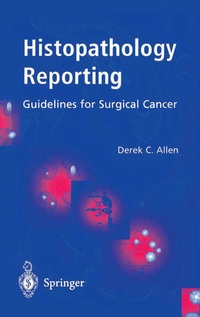
Histopathology Reporting
Guidelines for Surgical Cancer
1. Auflage
Erschienen am 29. Juni 2013
XXIX, 384 Seiten
978-1-4471-3671-2 (ISBN)
Beschreibung

Histopathology Reporting: Guidelines for Surgical Cancer
provides an easily comprehensible and practicable framework for standardised histopathology reports in surgical cancer. The book details the gross description, histological classification, tumour differentiation, extent of local tumour spread, involvement of lymphovascular channels, lymph nodes and excision margins of the common carcinomas and also summarises non-carcinomatous malignancies. The 5th edition TNM classification of cancers is incorporated, with comments on any associated pathology, diagnostic clues and prognostic criteria. Staging information is supplemented visually by line diagrams. The aim of Histopathology Reporting: Guidelines for Surgical Cancer is to be educative and applied. The book: * emphasises those gross and histological features that are relevant to clinical management and prognosis. * uses a systematic and analytical approach to the description of surgical pathology specimens resulting in focused histopathology reports. * acts as a companion or aide-memoire for routine reporting of the common cancers and also lists diagnostic options and summary features of rarer cancers. * facilitates audit of specimen type and quality and gives guidance for pathological, surgical and oncological practice. Derek Allen is Honorary Senior Lecturer and Consultant in Histopathology and Cytology at the Belfast City Hospital, Belfast, UK
Rezensionen / Stimmen
From reviews of the 1st edition: "... Derek Allen has set out to systematically collate all of the requirements necessary to formulate a comprehensive report for organ specific tumours across the whole range of malignant disease. This he achieves admirably. The result is a clear and concise handbook, which is very easy to use. ... a well-conceived and succinctly executed book." (Ashley Graham, ACP News. Spring 2002:40-41) "The author . has provided an easy-to-understand 'framework' for pathologists in their reporting of common surgical cancers. Tumours are grouped according to site and are dealt with in order of importance under the following headings: gross description, histological type, extent of local tumour spread, lymphovascular invasion, lymph nodes, excision margins, other pathology and other malignancy. As a pathologist I found this method useful, as it not only provides a step-by-step approach to the reporting of theses cases, but also continually reminds one of the ever-increasing number of facts required to do this task correctly. This is of particular value to the generalist having to deal with tumours outside of his or her field of knowledge." (John Davies, South African Journal of Surgery. 2002;40(2):82) "With the advent of multi-disciplinary groups and the increased use of novel immunohistochemical and molecular techniques that provide more accurate information about prognosis and response to treatment, not only has histopathological reporting become increasingly more complex, but there is an increasing need to standardize reporting to enable the clinician to select appropriate treatment and recruit patients to randomized clinical trials.The publication of this book is therefore timely. . It runs to almost 400 pages yet fits into the pocket of a white coat.This is an excellent book containing a wealth of information, clearly and thoughtfully laid out. It should appeal to awide range of trainee and established clinicians and pathologists. No surgical unit dealing with the management of cancer and no department of pathology should be without a copy." (CS McArdle, Annals of Oncology. 2001;12:1194) "Whether or not you are a box ticker and welcome the advent of the minimal data set proformas, prefer entirely free text, but need prompting to ensure you include all the essential parameters or favour standard outline template reports into which you insert the details of each particular case, you will find this book helpful. The wealth of information the book contains certainly justifies the price and the author is to be congratulated fro bringing together so much of practical relevance into such a handy volume." (Journal of Pathology. 2001;194(1):138-139) " The overall product is an extremely valuable guide to reporting cancers in histopathology laboratories. It is a particularly valuable resource in those sites where national organizations have not yet produced their own minimum data sets and guidelines. This book is the sort of invaluable reference that should be available in every histopathology laboratory and is likely to need regular replacement as it will experience accelerated wear due to the frequency with which it is referred to." (S Cross, Histopathology. 2001;38(3):276) From the reviews of the second edition: "This book remains a succinct and easily navigable workplace guide to histopathology cancer reporting. From a practical point of view, the paper used is of a suitably high quality and has a firm shiny feel, which should stand up well to prolonged daily use. . As a concise, but thorough, aide-memoire for the general pathologist it achieves its aim exceedingly well. It is also an ideal starting point for trainees wishing to develop systems for reporting specific tumours, or for handling cancer specimens in general." (Dr Mike Biggs, The Bulletin of the Royal College ofPathologists, 2008)Weitere Details
Weitere Ausgaben
Nachauflagen
E-Book
01/2007
2. Auflage
Springer
128,39 €
Als Download verfügbar
Andere Ausgaben
Buch
08/2000
Springer
85,59 €
Artikel ist vergriffen; siehe Neuauflage
Person
Inhalt
Gastrointestinal Cancer.- 1. Oesophageal Carcinoma.- 2. Gastric Carcinoma.- 3. Ampulla of Vater and Head of Pancreas Carcinoma.- 4. Small Intestinal Carcinoma.- 5. Colorectal Carcinoma.- 6. Vermiform Appendix Tumours.- 7. Anal Canal Carcinoma.- 8. Gall Bladder Carcinoma.- 9. Extrahepatic Bile Duct Carcinoma.- 10. Liver Carcinoma.- Head and Neck Cancer.- 11. Lip and Oral Cavity Carcinoma.- 12. Oropharyngeal Carcinoma (with comments on nasopharynx and hypopharynx).- 13. Paranasal Sinus Carcinoma.- 14. Laryngeal Carcinoma.- 15. Salivary Gland Tumours.- 16. Thyroid Gland Tumours.- Respiratory and Mediastinal Cancer.- 17. Lung Carcinoma.- 18. Malignant Mesothelioma.- 19. Mediastinal Cancer.- Skin Cancer.- 20. Non-Melanocytic Skin Carcinoma.- 21. Malignant Melanoma.- Breast cancer.- 22. Breast Carcinoma.- Gynaecological Cancer.- 23. Ovarian Carcinoma (with comments on fallopian tube carcinoma).- 24. Endometrial Carcinoma.- 25. Cervical Carcinoma.- 26. Vaginal Carcinoma.- 27. Vulval Carcinoma.- 28. Gestational Trophoblastic Tumours.- Urological Cancer.- 29. Renal Cell and Renal Pelvis/Ureter Carcinoma.- 30. Bladder Carcinoma.- 31. Prostate Carcinoma.- 32. Urethral Carcinoma.- 33. Testicular Cancer.- 34. Penile Carcinoma.- Lymph Node Cancer.- 35. Nodal Malignant Lymphoma (with comments on extranodal lymphoma and metastatic cancer).- Bone and Soft Tissue Cancer.- 36. Sarcoma.- Ophthalmic Cancer.- 37. Intraocular Malignancy.- 38. Extraocular Maligancy.
