

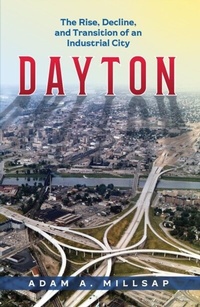
Dayton
The Rise, Decline, and Transition of an Industrial City
1. Auflage
Erschienen am 6. November 2019
196 Seiten
978-0-8142-7737-9 (ISBN)
Beschreibung

The Rust Belt was once the crown of American manufacturing, a symbol of the country's economic prowess. But now it is named for what it has become: a deteriorating stretch of industrial cities left behind by a post-industrial world. In Dayton: The Rise, Decline, and Transition of an Industrial City, Adam A. Millsap turns his focus to his hometown, an archetypal Rust Belt city, to examine its history and discuss its future.
Thoroughly researched and engagingly written, Millsap's book explores the economic background of the region made famous by J. D. Vance's Hillbilly Elegy. From early twentieth-century optimism, through the Great Depression and post-WWII manufacturing decline, to Dayton now, with its labor-force problems and opioid crisis, Millsap tracks the underlying forces driving the city's trajectory. Race relations, interstates, suburbanization, climate, crime, geography, and government policies all come into play as Millsap develops a picture of the city, past and present. By examining the past, Millsap proposes a plan for the future, claiming that there is hope for Dayton to thrive again. And if Dayton can rise from its industrial ashes, then perhaps the Rust Belt can shed its stigma and once again become the backbone of American innovation.
Weitere Details
Weitere Ausgaben
Andere Ausgaben
Buch
11/2019
Ohio State University Press
23,40 €
Versand in 15-20 Tagen
Inhalt
- Dayton: The Rise, Decline, and Transition of an Industrial City, by Adam A. Millsap
- Half Title Page
- Title Page
- Copyright Page
- Dedication Page
- Contents
- List of Illustrations
- INTRODUCTION
- National Population Shifts
- CHAPTER 1: Why Do Big Cities Exist
- CHAPTER 2: Dayton from the Turn of the Twentieth Century to 1930: A Period of Optimism
- John H. Patterson
- Edward A. Deeds and Charles Kettering
- The Wright Brothers
- Culture of Innovation
- The Great Dayton Flood
- Industry in Dayton
- The City Manager in Dayton
- CHAPTER 3: Dayton from 1930 to 1960: The Beginning of Decline
- Manufacturing in Decline
- Segregation in Dayton
- Signaling Dissatisfaction with Local Government: Vote or Leave?
- PHOTO GALLERY
- CHAPTER 4: Dayton from 1960 to 2010: Decline and Stagnation
- Southern Migration and White Flight
- The Interstate Highway System, Housing Policies, and Suburbanization
- The Importance of Human Capital and the Decline of Manufacturing
- The Decline of Manufacturing
- Crime in Dayton
- Dayton's Decline Summarized
- The Aftermath
- How Other Ohio Cities Have Fared and Lessons for Dayton
- CHAPTER 5: Dayton's Finances and Public-Sector Unions
- Public-Sector Unions in Dayton
- CHAPTER 6: Dayton's Economy Today and What It Can Do to Thrive Again
- Joblessness and Opioids in Dayton
- How Dayton Can Thrive Again
- Tax Policy
- Business Climate and Regulation
- Historic Districts
- Immigrants and Cities
- Other Suggestions
- CHAPTER 7: Conclusion
- Acknowledgments
- Bibliography
- Index
- About the Author
