


Non-Financial Performance Measurement and Management Practices in Manufacturing Firms
A Comparative International Analysis
1. Auflage
Erschienen am 2. August 2007
366 Seiten
978-0-08-055000-8 (ISBN)
Beschreibung

In order to be successful in today's world wide competitive environment, companies must be capable of manufacturing products of high quality at low cost and providing a first-class customer service. Many companies have responded to these competitive demands by implementing Advanced Manufacturing Technologies (AMTs) and Innovative Managerial Practices (IMPs) as well as emphasizing quality, delivery, innovation and flexibility to meet customer needs in their corporate objectives. The adoption of such practices and technologies and the redesign of work processes has altered the stakes of corporate well being over the past two decades. This study provides a framework for exploring the relationships between the measurement of non-financial performance at the shop-floor of manufacturing firms across four different countries (UK, Italy, Japan, and Canada) and a range of twenty-eight contingent factors incorporating technological, managerial, organisational and environmental factors. In particular, the book examines whether these twenty-eight contingent factors are associated with the existence and importance of 19 non-financial performance measures used at shop-floor level for each country. The book also aims to develop models for each of the four countries which will determine the amount of change in the use and existence of each shop-floor non-financial performance measure that is associated with levels of the contingent factors. A better understanding of non-financial performance measures at shop-floor level in manufacturing firms will contribute to a more effective management of manufacturing enterprises in the four countries. It also will enhance organisations knowledge about the use of non-financial measures in performance measurement systems.
Weitere Details
Reihe
Sprache
Englisch
Verlagsort
London
Großbritannien
Verlagsgruppe
Elsevier Science & Technology
Zielgruppe
Für Beruf und Forschung
Dateigröße
2,41 MB
ISBN-13
978-0-08-055000-8 (9780080550008)
Copyright in bibliographic data and cover images is held by Nielsen Book Services Limited or by the publishers or by their respective licensors: all rights reserved.
Schweitzer Klassifikation
Weitere Ausgaben
Andere Ausgaben
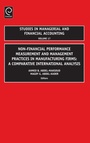
Ahmed B. Abdel-Maksoud | Magdy G. Abdel-Kader | Marc J. Epstein
Non-Financial Performance Measurement and Management Practices in Manufacturing Firms
A Comparative International Analysis
Buch
08/2007
JAI Press Inc.
168,70 €
Versand in 15-20 Tagen
Inhalt
- Front cover
- Non-Financial Performance Measurement and Management Practices in Manufacturing Firms: A Comparative International Analysis
- Copyright page
- Contents
- List of Contributors
- Preface
- List of Abbreviations
- Part I: Introduction and Framework
- Chapter 1. Non-Financial Performancemeasures - An Overview
- Introduction
- The use of Non-Financial Performance Measures in Manufacturing Firms
- Research Problem and Objectives
- Research Importance
- Summary and Outline of the Book
- References
- Chapter 2. Performance Measurement Systems at Operational Level
- 1. Introduction
- 2. The Role of Performance Measurement Systems
- 3. Performance Measurement and Organisational Strategies and Objectives
- 4. Financial and Non-Financial Performance Measures
- 5. Non-Financial and Financial Performance Measures: A Complementary Perspective
- 6. Non-Financial Performance Measures at Operational Level in Manufacturing Firms
- 7. Summary
- Notes
- References
- Appendix. The Balanced Scorecard
- Chapter 3. Shop-Floor Non-Financial Performance Measures and the Contingent Variables
- Introduction
- A Contingency Approach to Factors Affecting Performance Measurement
- Managerial and Technological Factors and Shop-Floor Performance Measurement
- The Importance of the Role of Shop-Floor Staff in IMPs/AMTs
- SFNFPMs and IMPs/AMTs
- Contemporary Management Accounting Practices and Performance Measurement
- Competitive Environment and Shop-Floor Performance Measures
- Summary
- Notes
- References
- Part II: Data Collection and Analysis
- Chapter 4. Methodology and Hypotheses Development
- Introduction
- Research Methodology
- Determination of the Research Topic and Objectives
- Formulation of Hypotheses
- Data Collection and Questionnaire Design
- Variable Measurement and Final Questionnaire Design
- Summary
- Notes
- References
- Appendix. The Questionnaire form used in Data Collection
- Definitions
- Chapter 5. Non-Financial Performance Measures in the UK Manufacturing Firms
- Introduction
- Research Method and Data Collection
- Descriptive Analyses of Responses
- Relationships Among the Importance of SFNFPMs and the Level/Extent of Application of the Contingent Variables
- Summary
- Notes
- References
- Chapter 6. Non-Financial Performance Measures in the Italian Manufacturing Firms
- Introduction
- Research Method and Data Collection
- Descriptive Analysis of Responses
- Relationships Among the Level of Importance of SFNFPMs of the Five Evaluation Categories and the Level/Extent of Application of the Contingent Variables
- Conclusions
- Notes
- References
- Chapter 7. Non-Financial Performance Measures in Japanese Manufacturing Firms
- Introduction and Literature Review
- Research Method and Data Collection
- Descriptive Analysis of Responses
- Relationships Among the Levels of Importance of SFNFPMs and the Contingent Variables
- Summary
- Notes
- References
- Chapter 8. Non-Financial Performance Measures in Canadian Manufacturing Firms
- Introduction
- Literature
- Research Method and Data Collection
- Descriptive Analysis of Responses
- Relationships Among the Level of Importance of SFNFPMs of the Five Categories and the Level/Extent of Application of the Contingent Variables
- Summary and conclusion
- Notes
- References
- Part III: International Comparison
- Chapter 9. Non-Financial Performance Measures: A Cross-Countries Comparison
- Introduction
- Descriptive Statistics
- Relationships Between SFNFPMs and the Contingent Variables
- The Relationship Between the use of SFNFPMs and Countries
- The Relationship Between the use of SFNFPMs and Industry Sectors
- Limitations of the Study
- Notes
- References
- Appendix A. The Assumptions of Multiple Regression
- Chapter 10. The Design and Application of Shop floor Non-Financial Performance Measures 'Scorecards'
- Introduction
- Path Analysis Technique
- The Proposed SFNFPMs Scorecard
- The Application of the Proposed SFNFPMs Scorecards
- Summary and Conclusions
- Notes
- References
- Appendix A. Examining for Spurious Relationships
- Part IV: Further Developments and Conclusions
- Chapter 11. Advanced Management Accounting Practices and Competition in Manufacturing Firms
- Introduction
- Survey Results
- The Perception of Competition in the Three Countries Within the Context of National Competitive Advantage and Culture
- Competition and the Adoption of Advance Management Accounting Techniques
- Conclusion
- Notes
- References
- Chapter 12. Performance Measurement and Organisational Change Management
- Introduction
- Performance Measurement and Organisational Change
- Cyclical Process Model and Organisational Change
- Summary and Conclusions
- Note
- References
- Chapter 13. Where to Go: An Institutional Theory Framework for the Role of Performance Measurement Systems in Manufacturing Firms
- Introduction
- Literature Review
- The Proposed Institutional Framework
- Conclusion
- Reference
- Chapter 14. Summary and Conclusions
- Research Summary
- Levels of Importance of SFNFPMS and Application of the Contingent Variables in the Four Countries (Research Objective 1)
- Testing for Associations Between the use of SFNFPMS and the Contingent Variables (Research Objective 2)
- The Development of SFNFPMS Scorecards in Manufacturing firms in the Four Countries (Research Objective 3)
- Further Developments and Suggestions for Future Research
- Research Limitations
- Note
