

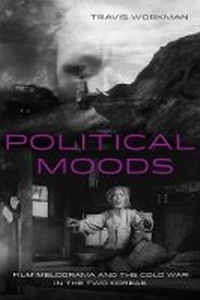
Political Moods
Film Melodrama and the Cold War in the Two Koreas
1. Auflage
Erschienen am 24. Oktober 2023
Buch
Softcover
272 Seiten
978-0-520-39569-5 (ISBN)
Beschreibung
A free ebook version of this title is available through Luminos, University of California Press's Open Access publishing program. Visit www.luminosoa.org to learn more.
Melodrama films dominated the North and South Korean industries in the period between liberation from Japanese colonial rule in 1945 and the hardening of dictatorship in the 1970s. The films of each industry are often read as direct reflections of Cold War and Korean War political ideologies and national historical experiences, and therefore as aesthetically and politically opposed to each other. However, Political Moods develops a comparative analysis across the Cold War divide, analyzing how films in both North and South Korea convey political and moral ideas through the sentimentality of the melodramatic mode. Travis Workman reveals that the melancholic moods of film melodrama express the somatic and social conflicts between political ideologies and excesses of affect, meaning, and historical references. These moods dramatize the tension between the language of Cold War politics and the negative affects that connect cinema to what it cannot fully represent. The result is a new way of historicizing the cinema of the two Koreas in relation to colonialism, postcolonialism, war, and nation building.
Melodrama films dominated the North and South Korean industries in the period between liberation from Japanese colonial rule in 1945 and the hardening of dictatorship in the 1970s. The films of each industry are often read as direct reflections of Cold War and Korean War political ideologies and national historical experiences, and therefore as aesthetically and politically opposed to each other. However, Political Moods develops a comparative analysis across the Cold War divide, analyzing how films in both North and South Korea convey political and moral ideas through the sentimentality of the melodramatic mode. Travis Workman reveals that the melancholic moods of film melodrama express the somatic and social conflicts between political ideologies and excesses of affect, meaning, and historical references. These moods dramatize the tension between the language of Cold War politics and the negative affects that connect cinema to what it cannot fully represent. The result is a new way of historicizing the cinema of the two Koreas in relation to colonialism, postcolonialism, war, and nation building.
Rezensionen / Stimmen
"As Workman argues, melodrama signifies transnationality, with traces evident in both Koreas' cinemas, thus serving as a cinematic bridge between them. In this way, he highlights more similarities between selected films from both sides rather than emphasizing differences." * Seoul Journal of Korean Studies *Weitere Details
Reihe
Auflage
First Edition
Sprache
Englisch
Verlagsort
Berkerley
USA
Zielgruppe
Für Beruf und Forschung
Produkt-Hinweis
Broschur/Paperback
Illustrationen
25 b-w illustrations
Maße
Höhe: 229 mm
Breite: 152 mm
Dicke: 23 mm
Gewicht
408 gr
ISBN-13
978-0-520-39569-5 (9780520395695)
Copyright in bibliographic data and cover images is held by Nielsen Book Services Limited or by the publishers or by their respective licensors: all rights reserved.
Schweitzer Klassifikation
Weitere Ausgaben
Andere Ausgaben
E-Book
10/2023
1. Auflage
Naval Institute Press
12,49 €
Als Download verfügbar
Person
Travis Workman is Associate Professor of Asian and Middle Eastern Studies at the University of Minnesota, Twin Cities.