

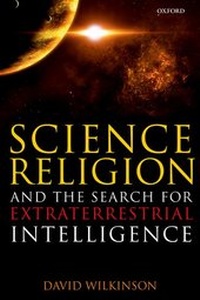
Science, Religion, and the Search for Extraterrestrial Intelligence
Erschienen am 1. August 2013
Buch
Hardcover
240 Seiten
978-0-19-968020-7 (ISBN)
Beschreibung
If the discovery of life elsewhere in the universe is just around the corner, what would be the consequences for religion? Would it represent another major conflict between science and religion, even leading to the death of faith? Some would suggest that the discovery of any suggestion of extraterrestrial life would have a greater impact than even the Copernican and Darwinian revolutions.
It is now over 50 years since the first modern scientific papers were published on the search for extraterrestrial intelligence (SETI). Yet the religious implications of this search and possible discovery have never been systematically addressed in the scientific or theological arena. SETI is now entering its most important era of scientific development. New observation techniques are leading to the discovery of extra-solar planets daily, and the Kepler mission has already collected over 1000 planetary candidates. This deluge of data is transforming the scientific and popular view of the existence of extraterrestrial intelligence. Earth-like planets outside of our solar system can now be identified and searched for signs of life.
Now is a crucial time to assess the scientific and theological questions behind this search. This book sets out the scientific arguments undergirding SETI, with particular attention to the uncertainties in arguments and the strength of the data already assembled. It assesses not only the discovery of planets but other areas such as the Fermi paradox, the origin and evolution of intelligent life, and current SETI strategies. In all of this it reflects on how these questions are shaped by history and pop culture and their relationship with religion, especially Christian theology. It is argued that theologians need to take seriously SETI and to examine some central doctrines such as creation, incarnation, revelation, and salvation in the light of the possibility of extraterrestrial life.
It is now over 50 years since the first modern scientific papers were published on the search for extraterrestrial intelligence (SETI). Yet the religious implications of this search and possible discovery have never been systematically addressed in the scientific or theological arena. SETI is now entering its most important era of scientific development. New observation techniques are leading to the discovery of extra-solar planets daily, and the Kepler mission has already collected over 1000 planetary candidates. This deluge of data is transforming the scientific and popular view of the existence of extraterrestrial intelligence. Earth-like planets outside of our solar system can now be identified and searched for signs of life.
Now is a crucial time to assess the scientific and theological questions behind this search. This book sets out the scientific arguments undergirding SETI, with particular attention to the uncertainties in arguments and the strength of the data already assembled. It assesses not only the discovery of planets but other areas such as the Fermi paradox, the origin and evolution of intelligent life, and current SETI strategies. In all of this it reflects on how these questions are shaped by history and pop culture and their relationship with religion, especially Christian theology. It is argued that theologians need to take seriously SETI and to examine some central doctrines such as creation, incarnation, revelation, and salvation in the light of the possibility of extraterrestrial life.
Rezensionen / Stimmen
It should be in every school and college library, as an outstanding example of how science and theology can interact in positive ways. * Theology * [An] excellent book ... would be ideal for anyone interested in the possibility of intelligent life elsewhere in the universe, I will be buying it for someone myself. * Colin John Humphreys, Chemistry World * the book is a fascinating read and is recommended for those pondering the place of humanity in our vast universe. * Achintya Rao, Cern * Among the new books dealing with astrotheology, this is the most delicious so far. * Theology and Science * The overview of the theological terrain, ancient and modern, given by David Wilkinson [...] is particularly useful, simply because it is infrequently summarized. * Mark Vernon, Times Literary Supplement * This is a masterful study of the subject and I can think of no better guide to all the ramifications of the possibility of SETI than David Wilkinson. * Third Way * Wilkinson's background makes him an authority, and the perfect person to give insight into this complex topic. A brilliant analysis of the possibility that there may be other intelligent beings not easily recognised by us, for which one day evidence may be found through SETI. David Wilkinson has read widely and thought deeply about what the implications would be for belief in God. This is the science-religion dialogue as it should be. * Andrew Briggs, Professor of Nanomaterials at the University of Oxford * The church is fortunate to have someone of David Wilkinson's wide knowledge of both Science and Theology, and soundly based judgement to act as a guide. * Sir Arnold Wolfendale, FRS, 14th Astronomer Royal * A very readable and scientifically informed account of SETI and the intriguing issues it raises for theology. A superb example of the ways in which theology and contemporary science can interact in a positive way. * Professor Keith Ward * The question of whether there is intelligent extraterrestrial life is both intriguing and challenging. David Wilkinson's book provides a detailed and comprehensive discussion of the issues involved, physical, biological and theological, which many will find very illuminating. * Rev Dr John Polkinghorne, KBE, FRS *Weitere Details
Sprache
Englisch
Verlagsort
Oxford
Großbritannien
Zielgruppe
Für höhere Schule und Studium
Interested general readers. Students and academics in sciences and philosophy. Theologians and church leaders.
Maße
Höhe: 235 mm
Breite: 162 mm
Dicke: 21 mm
Gewicht
514 gr
ISBN-13
978-0-19-968020-7 (9780199680207)
Copyright in bibliographic data and cover images is held by Nielsen Book Services Limited or by the publishers or by their respective licensors: all rights reserved.
Schweitzer Klassifikation
Weitere Ausgaben
Andere Ausgaben
Buch
02/2017
Oxford University Press
28,50 €
Versand in 15-20 Tagen
E-Book
08/2013
1. Auflage
OUP eBook
19,49 €
Als Download verfügbar
E-Book
08/2013
1. Auflage
OUP eBook
19,49 €
Als Download verfügbar
Person
David Wilkinson is Principal of St John's College, Durham University. He is also Professor in the Department of Theology and Religion.
His background is research in theoretical astrophysics, where he gained a PhD in the study of star formation, the chemical evolution of galaxies and terrestrial mass extinctions. He is a Fellow of the Royal Astronomical Society. After this research he trained for the Methodist ministry, serving in a variety of appointments. His current work at Durham University involves the relationship of the Christian faith to contemporary culture, from science to pop-culture. He also holds a PhD in Systematic Theology where he explored the future of the physical universe.
His most recent book is Christian Eschatology and the Physical Universe (T&T Clark, 2010) and he also co-edited Reading Genesis After Darwin (OUP, 2009).
He is well known as a broadcaster and lecturer. He is regular contributor to BBC Radio 4's Thought for the Day.
His background is research in theoretical astrophysics, where he gained a PhD in the study of star formation, the chemical evolution of galaxies and terrestrial mass extinctions. He is a Fellow of the Royal Astronomical Society. After this research he trained for the Methodist ministry, serving in a variety of appointments. His current work at Durham University involves the relationship of the Christian faith to contemporary culture, from science to pop-culture. He also holds a PhD in Systematic Theology where he explored the future of the physical universe.
His most recent book is Christian Eschatology and the Physical Universe (T&T Clark, 2010) and he also co-edited Reading Genesis After Darwin (OUP, 2009).
He is well known as a broadcaster and lecturer. He is regular contributor to BBC Radio 4's Thought for the Day.
Inhalt
1. Cinema, cults and meteorites: Searching for something more ; 2. Speculating about a plurality of worlds: The historical context of science, religion and SETI ; 3. Hubble and Drake: SETI and cosmology ; 4. The Daily Planet ; 5. Genesis 2.0? SETI and biology ; 6. Looking for a needle in a haystack: Current SETI strategies ; 7. Fermi's Paradox ; 8. The 'myths' of SETI and religion ; 9. SETI and the Christian understanding of creation ; 10. SETI and the Christian understanding of redemption ; 11. Be not so positive