

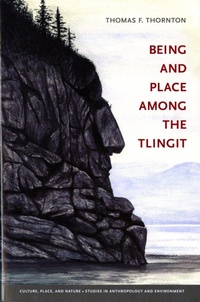
Being and Place Among the Tlingit
Erschienen am 21. November 2007
Buch
Softcover
280 Seiten
978-0-295-98749-1 (ISBN)
Beschreibung
In Being and Place among the Tlingit, anthropologist Thomas F. Thornton examines the concept of place in the language, social structure, economy, and ritual of southeast Alaska's Tlingit Indians. Place signifies not only a specific geographical location but also reveals the ways in which individuals and social groups define themselves.
The notion of place consists of three dimensions - space, time, and experience - which are culturally and environmentally structured. Thornton examines each in detail to show how individual and collective Tlingit notions of place, being, and identity are formed. As he observes, despite cultural and environmental changes over time, particularly in the post-contact era since the late eighteenth century, Tlingits continue to bind themselves and their culture to places and landscapes in distinctive ways. He offers insight into how Tlingits in particular, and humans in general, conceptualize their relationship to the lands they inhabit, arguing for a study of place that considers all aspects of human interaction with landscape.
In Tlingit, it is difficult even to introduce oneself without referencing places in Lingit Aani (Tlingit Country). Geographic references are embedded in personal names, clan names, house names, and, most obviously, in k-waan names, which define regions of dwelling. To say one is Sheet'ka K-waan defines one as a member of the Tlingit community that inhabits Sheet'ka (Sitka).
Being and Place among the Tlingit makes a substantive contribution to the literature on the Tlingit, the Northwest Coast cultural area, Native American and indigenous studies, and to the growing social scientific and humanistic literature on space, place, and landscape.
The notion of place consists of three dimensions - space, time, and experience - which are culturally and environmentally structured. Thornton examines each in detail to show how individual and collective Tlingit notions of place, being, and identity are formed. As he observes, despite cultural and environmental changes over time, particularly in the post-contact era since the late eighteenth century, Tlingits continue to bind themselves and their culture to places and landscapes in distinctive ways. He offers insight into how Tlingits in particular, and humans in general, conceptualize their relationship to the lands they inhabit, arguing for a study of place that considers all aspects of human interaction with landscape.
In Tlingit, it is difficult even to introduce oneself without referencing places in Lingit Aani (Tlingit Country). Geographic references are embedded in personal names, clan names, house names, and, most obviously, in k-waan names, which define regions of dwelling. To say one is Sheet'ka K-waan defines one as a member of the Tlingit community that inhabits Sheet'ka (Sitka).
Being and Place among the Tlingit makes a substantive contribution to the literature on the Tlingit, the Northwest Coast cultural area, Native American and indigenous studies, and to the growing social scientific and humanistic literature on space, place, and landscape.
Rezensionen / Stimmen
"Being and Place Among the Tlingit provides an excellent grounding in indigenous environmental values and how they operate in society. The book will almost certainly become a standard text for Northwest Coast anthropologists, human geographers, even archaeologists, for whom Thornton's discussion of material symbols, such as Chilkat blankets, will serve as a useful reminder of the ways artifacts can actively reference people and places. Finally, because it is a well written book, brimming with helpful examples of the politics of place-making, it will interest scholars studying human-landscape interactions in diverse regions of the globe."(The Northern Review) "This thoroughly researched, well-organized, and well-written book is a pioneering study of the ethnography of the indigenous peoples of the Northwest Coast. Its methods and many of its conclusions could fruitfully be used in studying the toponymy of the Aboriginal nations of coastal British Columbia, Washington, and Oregon. It would work well as a text in upper-level undergraduate and graduate courses in anthropology and First Nations studies. It will also be an invaluable resource for the Tlingit people themselves."
(BC Studies) "Thomas Thornton takes the reader on a rich journey into the physical and social landscape of Southeast Alaska. . . . a solid work of ethnography grounded in serious scholarship but written in a language that will also be accessible to most readers."
(Alaska History) "This book is about the meaning of place among the Tlingit, but it is also a comprehensive, scholarly essay on the ideal of place in Western philosophy and social science theory."
(Journal of Anthropological Research)
Weitere Details
Reihe
Sprache
Englisch
Verlagsort
Seattle
USA
Zielgruppe
Für Beruf und Forschung
Produkt-Hinweis
Broschur/Paperback
Illustrationen
7 bw photos, 2 maps, 1 tables
Maße
Höhe: 229 mm
Breite: 160 mm
Dicke: 17 mm
Gewicht
354 gr
ISBN-13
978-0-295-98749-1 (9780295987491)
Copyright in bibliographic data and cover images is held by Nielsen Book Services Limited or by the publishers or by their respective licensors: all rights reserved.
Schweitzer Klassifikation
Weitere Ausgaben
Andere Ausgaben
Thomas F. Thornton
Being and Place among the Tlingit
E-Book
07/2011
1. Auflage
University of Washington Press
24,49 €
Als Download verfügbar
Personen
Thomas F. Thornton is associate professor of anthropology at Portland State University in Oregon.
Inhalt
Tlingit Spelling and Pronunciation Guide
Preface
1. Introduction: Place and Tlingit Senses of Being
2. Know Your Place: The Social Organization of Geographic Knowledge
3. What's in a Name? Place and Cognition
4. Production and Place: "It was easy for me to put up fish there"
5. Ritual as Emplacement: The Potlatch / Ku.eex'
6. Conclusion: Toward an Anthropology of Place
Appendix: Tlingit Resources with Seasonality
Notes
Bibliography
Index
Preface
1. Introduction: Place and Tlingit Senses of Being
2. Know Your Place: The Social Organization of Geographic Knowledge
3. What's in a Name? Place and Cognition
4. Production and Place: "It was easy for me to put up fish there"
5. Ritual as Emplacement: The Potlatch / Ku.eex'
6. Conclusion: Toward an Anthropology of Place
Appendix: Tlingit Resources with Seasonality
Notes
Bibliography
Index