


Engine Tribology
Erschienen im August 1993
Buch
Hardcover
310 Seiten
978-0-444-89755-8 (ISBN)
Beschreibung
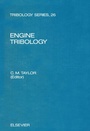
Customer expectations and international competition are obliging car and commercial vehicle manufacturers to procuce more efficient and cleaner products in shorter product cycle times. The consideration of engine tribology has a leading role to play in helping to achieve these goals. Specific areas of interdisciplinary interest include: design influences on fuel economy and emissions; new materials (ceramics, steels, coatings, lubricants, additives); low viscosity lubricants; and low heat rejection (adiabatic) engines. This volume gives a detailed and current review on some basic features of tribology particularly associated with internal combustion engines such as: lubrication analysis relevant to plain bearings, Hertzian contact theory and elastohydrodynamic lubrication associated with cams and followers, and friction and wear in a general context. Several chapters examine engine bearings, valve trains, (cams and followers) and piston assemblies. For each machine element a background introduction is followed by design interpretations and a consideration of future developments. The important topic of materials, solids and lubricants is focused upon in the concluding chapters.
The work will be of interest to engineers and researchers in the automobile, automotive products, petroleum and associated industries.
Customer expectations and international competition are obliging car and commercial vehicle manufacturers to procuce more efficient and cleaner products in shorter product cycle times. The consideration of engine tribology has a leading role to play in helping to achieve these goals. Specific areas of interdisciplinary interest include: design influences on fuel economy and emissions; new materials (ceramics, steels, coatings, lubricants, additives); low viscosity lubricants; and low heat rejection (adiabatic) engines. This volume gives a detailed and current review on some basic features of tribology particularly associated with internal combustion engines such as: lubrication analysis relevant to plain bearings, Hertzian contact theory and elastohydrodynamic lubrication associated with cams and followers, and friction and wear in a general context. Several chapters examine engine bearings, valve trains, (cams and followers) and piston assemblies. For each machine element a background introduction is followed by design interpretations and a consideration of future developments. The important topic of materials, solids and lubricants is focused upon in the concluding chapters.
The work will be of interest to engineers and researchers in the automobile, automotive products, petroleum and associated industries.
The work will be of interest to engineers and researchers in the automobile, automotive products, petroleum and associated industries.
Customer expectations and international competition are obliging car and commercial vehicle manufacturers to procuce more efficient and cleaner products in shorter product cycle times. The consideration of engine tribology has a leading role to play in helping to achieve these goals. Specific areas of interdisciplinary interest include: design influences on fuel economy and emissions; new materials (ceramics, steels, coatings, lubricants, additives); low viscosity lubricants; and low heat rejection (adiabatic) engines. This volume gives a detailed and current review on some basic features of tribology particularly associated with internal combustion engines such as: lubrication analysis relevant to plain bearings, Hertzian contact theory and elastohydrodynamic lubrication associated with cams and followers, and friction and wear in a general context. Several chapters examine engine bearings, valve trains, (cams and followers) and piston assemblies. For each machine element a background introduction is followed by design interpretations and a consideration of future developments. The important topic of materials, solids and lubricants is focused upon in the concluding chapters.
The work will be of interest to engineers and researchers in the automobile, automotive products, petroleum and associated industries.
Weitere Details
Reihe
Sprache
Englisch
Verlagsort
Oxford
Großbritannien
Verlagsgruppe
Elsevier Science & Technology
Zielgruppe
Für höhere Schule und Studium
Für Beruf und Forschung
Maße
Höhe: 230 mm
ISBN-13
978-0-444-89755-8 (9780444897558)
Copyright in bibliographic data is held by Nielsen Book Services Limited or its licensors: all rights reserved.
Schweitzer Klassifikation
Weitere Ausgaben
Andere Ausgaben
Inhalt
Short journal bearing lubrication theory, D.A. Jones; elastohydrodynamic lubrication theory, D.A. Jones; dry and boundary lubricated sliding friction and wear for engine component materials, T.H.C. Childs; lubrication regimes and the internal combustion engine, C.M. Taylor; engine bearings - background and lubrication analysis, C.M. Taylor; engine bearing design - design studies, wider aspects and future developments, F.A. Martin; valve train - cam and follower - background and lubrication analysis, C.M. Taylor; valve trains - design studies, wider aspects and future developemnts, G. Zhu; piston assemblies - background and lubrication analysis, D. Dowson; analysis of the piston assembly, bore distortion and future developments, R.J. Chittenden and M. Priest; solid materials, K. Holmes; engine lubricants, J.C. Bell.