

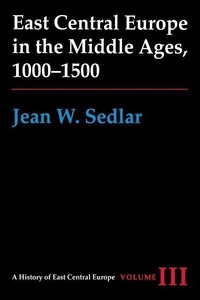
Vol. IIIEast Central Europe in the Middle Ages, 1000-1500
Vol. III
Erschienen am 1. März 2013
Buch
Softcover
569 Seiten
978-0-295-97291-6 (ISBN)
Beschreibung
Although the Middle Ages saw brilliant achievements in the diverse nations of East Central Europe, this period has been almost totally neglected in Western historical scholarship. East Central Europe in the Middle Ages provides a much-needed overview of the history of the region from the time when the present nationalities established their state structures and adopted Christianity up to the Ottoman conquest. Jean Sedlar's excellent synthesis clarifies what was going on in Europe between the Elbe and the Ukraine during the Middle Ages, making available for the first time in a single volume information necessary to a fuller understanding of the early history of present-day Poland, the Czech Republic, Slovakia, Hungary, Romania, Bulgaria, Albania, and the former Yugoslavia.
Sedlar writes clearly and fluently, drawing upon publications in numerous languages to craft a masterful study that is accessible and valuable to the general reader and the expert alike. The book is organized thematically; within this framework Sedlar has sought to integrate nationalities and to draw comparisons. Topics covered include early migrations, state formation, monarchies, classes (nobles, landholders, peasants, herders, serfs, and slaves), towns, religion, war, governments, laws and justice, commerce and money, foreign affairs, ethnicity and nationalism, languages and literature, and education and literacy.
After the Middle Ages these nations were subsumed by the Ottoman, Habsburg, Russian, and Prussian-German empires. This loss of independence means that their history prior to foreign conquest has acquired exceptional importance in today's national consciousness, and the medieval period remains a major point of reference and a source of national pride and ethnic identity. This book is a substantial and timely contribution to our knowledge of the history of East Central Europe.
Sedlar writes clearly and fluently, drawing upon publications in numerous languages to craft a masterful study that is accessible and valuable to the general reader and the expert alike. The book is organized thematically; within this framework Sedlar has sought to integrate nationalities and to draw comparisons. Topics covered include early migrations, state formation, monarchies, classes (nobles, landholders, peasants, herders, serfs, and slaves), towns, religion, war, governments, laws and justice, commerce and money, foreign affairs, ethnicity and nationalism, languages and literature, and education and literacy.
After the Middle Ages these nations were subsumed by the Ottoman, Habsburg, Russian, and Prussian-German empires. This loss of independence means that their history prior to foreign conquest has acquired exceptional importance in today's national consciousness, and the medieval period remains a major point of reference and a source of national pride and ethnic identity. This book is a substantial and timely contribution to our knowledge of the history of East Central Europe.
Weitere Details
Reihe
Sprache
Englisch
Verlagsort
Seattle
USA
Zielgruppe
Für Beruf und Forschung
Produkt-Hinweis
Broschur/Paperback
Maße
Höhe: 225 mm
Breite: 151 mm
Dicke: 33 mm
Gewicht
810 gr
ISBN-13
978-0-295-97291-6 (9780295972916)
Copyright in bibliographic data and cover images is held by Nielsen Book Services Limited or by the publishers or by their respective licensors: all rights reserved.
Schweitzer Klassifikation
Weitere Ausgaben
Andere Ausgaben
Jean W. Sedlar
East Central Europe in the Middle Ages, 1000-1500
E-Book
03/2013
1. Auflage
University of Washington Press
43,99 €
Als Download verfügbar
Person
Jean W. Sedlar
Inhalt
Maps
Foreword
Preface
Note on Pronunciation
1) Early Migrations
2) State Formation
3) Monarchies
4) Nobles and Landholders
5) Peasants, Herders, Serfs, and Slaves
6) Towns and Townspeople
7) Religion and the Churches
8) The Art and Practice of War
9) Governments
10) Laws and Justice
11) Commerce and Money
12) Foreign Affairs
13) Ethnicity and Nationalism
14) Languages and Literatures
15) Education and Literacy
Appendix 1, Chronology
Appendix 2, List of Monarchs
Appendix 3, Place Name Equivalents for Towns and Cities
Bibliographical Essay
Index
Foreword
Preface
Note on Pronunciation
1) Early Migrations
2) State Formation
3) Monarchies
4) Nobles and Landholders
5) Peasants, Herders, Serfs, and Slaves
6) Towns and Townspeople
7) Religion and the Churches
8) The Art and Practice of War
9) Governments
10) Laws and Justice
11) Commerce and Money
12) Foreign Affairs
13) Ethnicity and Nationalism
14) Languages and Literatures
15) Education and Literacy
Appendix 1, Chronology
Appendix 2, List of Monarchs
Appendix 3, Place Name Equivalents for Towns and Cities
Bibliographical Essay
Index