

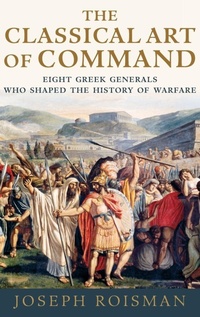
The Classical Art of Command
Eight Greek Generals Who Shaped the History of Warfare
Erschienen am 30. März 2017
Buch
Hardcover
416 Seiten
978-0-19-998582-1 (ISBN)
Beschreibung
This book uniquely looks at the many facets of Greek generalship through the individual careers of some of the best-known Greek commanders. They include the Spartan king Leonidas, who embodied his countrymen's heroic ethos in the battle of Thermopylae against the Persian invader; the Athenian leader Themistocles, credited as the architect of Athens' naval power and of the Greek victory over the Persians; the famous democratic leader, Pericles, who prepared Athens and directed its conflict with Sparta, known as the Peloponnesian War; the Athenian general Demosthenes, who deviated from contemporary conventions of warfare with his innovative approach; the Spartan general Lysander, who won the Peloponnesian War for Sparta; Dionysius I of Syracuse, Sicily, arguably the most innovative and best skilled of the eight generals discussed in this book; and Epaminondas and Pelopidas who together transformed their city, Thebes, into an hegemonic power. The book describes the nature of these leaders' command and the mark they left on Greek history and warfare. It draws attention to the important role that personality played in their leadership, which justifies investigating Greek generalship through the individual careers of commanders. The book discusses how these generals designed and executed military campaigns and strategy, and to what degree they were responsible for the results. The book also looks at how far the Greek art of command changed during the Classical Age, and how adaptable it was to different military challenges. Other questions involve the extent to which a general was a mere leader of the charge, a battle director or a strategist, and what made both ancient and modern authorities regard the aforementioned generals outstanding shapers of Greek military history. The book will appeal to readers who are new to, but interested in, ancient warfare and generalship. Original observations and analyses, in addition to informative notes and bibliography, should make the book attractive to experts too.
Rezensionen / Stimmen
This is an important book, accessible to students, scholars, and the lay reader. The writing style is clear and focused, and in each chapter Roisman blends ancient evidence with scholarly perception, reaching compelling and thought-provoking conclusions. This will become a standard work in the study of ancient warfare and military leadership. * Journal of Military History * The book is written in a flowing, easy style which makes it pleasure to read and accessible to undergraduates, and at the same time it contains insights which are valuable for modern scholarly discussions, some of which have been singled out above. Roisman succeeds in stressing the versatility expected from classical Greek generals and the importance of their personalities for the course of history. * Pavel Nyvlt, Institute of Philosophy, Czech Academy of Sciences, Listy Filologicke * [Roisman] is to be especially commended for the clarity, with which he traces the often complex shifts in alliances, particularly in the period after the Peloponnesian War -- a not insignificant detail, since the ability to cement or undermine these alliances was an important weapon in the commander's arsenal. With 38 illustrations and 38 maps, an extensive bibliography and a useful survey of primary sources, this is a welcome addition to the library of anyone interested in the ancient Greek world. * David Stuttard, Classics For All * Overall, the material in this work is informed, well-presented, and supported by outstanding, careful research. This is an excellent contribution to this area of scholarship, and does a wonderful job of demonstrating the complexities of this type of leadership role, the planning and management of ancient warfare, and sheds new light on a number of well-known and important battles during this age. The general reader, as well as students and scholars, will find this work interesting and insightful. The Classical Art of Command will be a fundamental work for research into various aspects of Greek warfare and ancient Greek command during the Classical Age, as well as the lives and careers of these famous generals. * Charlotte Dunn, Ancient HIstory Bulletin *Weitere Details
Sprache
Englisch
Verlagsort
New York
USA
Zielgruppe
Für Beruf und Forschung
Illustrationen
18 b/w line drawings; 20 b/w halftones
Maße
Höhe: 240 mm
Breite: 161 mm
Dicke: 27 mm
Gewicht
787 gr
ISBN-13
978-0-19-998582-1 (9780199985821)
Copyright in bibliographic data and cover images is held by Nielsen Book Services Limited or by the publishers or by their respective licensors: all rights reserved.
Schweitzer Klassifikation
Weitere Ausgaben
Andere Ausgaben
E-Book
01/2017
1. Auflage
OUP eBook
9,99 €
Als Download verfügbar
E-Book
01/2017
1. Auflage
OUP eBook
9,99 €
Als Download verfügbar
Person
Joseph Roisman is a Professor of Classics at Colby College. Among his major publications are monographs and anthologies on Alexander the Great, ancient Macedonia, the Athenian general Demosthenes, and Greek rhetoric. He has also written numerous articles on Greek history, historiography, and drama. He has been the recipient of research fellowships in the US and overseas.
Inhalt
CONTENTS
List of Maps and Illustrations
List of Abbreviations
Introduction: Greek Generals and Warfare in the Classical Age
Eight Greek Generals
Two Generals in Action
Greek Generals: Responsibilities and Personality
What Generals Did, Their Qualifications, and Their Offices
Land Warfare
The Armies of Sparta, Athens, Boeotia, Syracuse, Persia, and Carthage
Greek Battleships and Navies
CH. 1 Leonidas of Sparta: the Lion at the Gates
Leonidas' Sparta and His Military Challenges
The Threat of War Preliminaries to the battle of Thermopylae Leonidas in Thermopylae
The Aftermath
Conclusion
CH. 2 Themistocles of Athens: the Clever Counselor
Themistocles, His City and His Military Challenges
Themistocles and the Athenian Navy
Themistocles and the Persian War till the Battle of Artemision
Themistocles in Artemision
The Battle of Salamis
Themistocles after Salamis Conclusion
CH. 3 Pericles of Athens: the Magisterial Commander
Pericles, Athenian Democracy and His Military Challenges
Pericles' Generalship Prior to the War against Samos (463/2?441)
The Samian Revolt
Pericles' Strategy of the Peloponnesian War Pericles and the Peloponnesian War: The Limits of his Strategy
Conclusion
Ch. 4 Demosthenes of Athens: The Master of Surprise
Demosthenes and His Military Challenges
Defeat and Victories in Western Greece
Astonishing Success in Pylos
Sneak Attack on Megara
Coming Out Empty-Handed in Boeotia
Disaster in Sicily
Conclusion
CH. 5 Lysander of Sparta: The Lion and the Fox
Lysander and His Military Challenges
Lysander's First Admiralship and the Battle of Notium
Victory at Aegospotami
Lysander and the Spartan Empire
The Fall of a Hero
Conclusion
CH. 6 Dionysius I of Syracuse: The Evolution of a General
Dionysius' Syracuse and His Military Challenges
Dionysius' Early Career up to the Battle of Gela (405)
The Buildup of Syracuse's Power
Preparations for the Second Carthaginian War (397-392)
The Siege of Motya
Besieged in Syracuse
Campaigns in Southern Italy (ca. 396-383)
The Third and Fourth Carthaginian Wars (383-367)
Conclusion
Ch. 7 Epaminondas and Pelopidas of Thebes
Epaminondas and Pelopidas, Their Military Challenges and Their City
Revolution in Thebes
The Sacred Band and the Battle of Tegyra (375)
The Battle of Leuctra (371)
Theban Supremacy and the First Invasion of the Peloponnese
The Second Invasion of the Peloponnese
Pelopidas' Missteps in Thessaly
The Third Invasion of the Peloponnese and the Naval Bill
Pelopidas' Last Battle
Epaminondas' Last Battle
Conclusion
Ch. 8 Conclusion
The Art of Command: Planning, Management and Tactics
The Art of Command: Personality
Bibliography
A. The Main Ancient Sources
B. Modern Literature
List of Maps and Illustrations
List of Abbreviations
Introduction: Greek Generals and Warfare in the Classical Age
Eight Greek Generals
Two Generals in Action
Greek Generals: Responsibilities and Personality
What Generals Did, Their Qualifications, and Their Offices
Land Warfare
The Armies of Sparta, Athens, Boeotia, Syracuse, Persia, and Carthage
Greek Battleships and Navies
CH. 1 Leonidas of Sparta: the Lion at the Gates
Leonidas' Sparta and His Military Challenges
The Threat of War Preliminaries to the battle of Thermopylae Leonidas in Thermopylae
The Aftermath
Conclusion
CH. 2 Themistocles of Athens: the Clever Counselor
Themistocles, His City and His Military Challenges
Themistocles and the Athenian Navy
Themistocles and the Persian War till the Battle of Artemision
Themistocles in Artemision
The Battle of Salamis
Themistocles after Salamis Conclusion
CH. 3 Pericles of Athens: the Magisterial Commander
Pericles, Athenian Democracy and His Military Challenges
Pericles' Generalship Prior to the War against Samos (463/2?441)
The Samian Revolt
Pericles' Strategy of the Peloponnesian War Pericles and the Peloponnesian War: The Limits of his Strategy
Conclusion
Ch. 4 Demosthenes of Athens: The Master of Surprise
Demosthenes and His Military Challenges
Defeat and Victories in Western Greece
Astonishing Success in Pylos
Sneak Attack on Megara
Coming Out Empty-Handed in Boeotia
Disaster in Sicily
Conclusion
CH. 5 Lysander of Sparta: The Lion and the Fox
Lysander and His Military Challenges
Lysander's First Admiralship and the Battle of Notium
Victory at Aegospotami
Lysander and the Spartan Empire
The Fall of a Hero
Conclusion
CH. 6 Dionysius I of Syracuse: The Evolution of a General
Dionysius' Syracuse and His Military Challenges
Dionysius' Early Career up to the Battle of Gela (405)
The Buildup of Syracuse's Power
Preparations for the Second Carthaginian War (397-392)
The Siege of Motya
Besieged in Syracuse
Campaigns in Southern Italy (ca. 396-383)
The Third and Fourth Carthaginian Wars (383-367)
Conclusion
Ch. 7 Epaminondas and Pelopidas of Thebes
Epaminondas and Pelopidas, Their Military Challenges and Their City
Revolution in Thebes
The Sacred Band and the Battle of Tegyra (375)
The Battle of Leuctra (371)
Theban Supremacy and the First Invasion of the Peloponnese
The Second Invasion of the Peloponnese
Pelopidas' Missteps in Thessaly
The Third Invasion of the Peloponnese and the Naval Bill
Pelopidas' Last Battle
Epaminondas' Last Battle
Conclusion
Ch. 8 Conclusion
The Art of Command: Planning, Management and Tactics
The Art of Command: Personality
Bibliography
A. The Main Ancient Sources
B. Modern Literature