

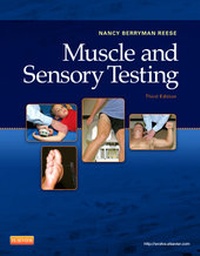
Muscle and Sensory Testing
3. Auflage
Erschienen am 1. September 2011
Buch
Spiralbindung
616 Seiten
978-1-4377-1611-5 (ISBN)
Beschreibung
If you want to excel in the physical therapy field, you'll need to first master the art of manual muscle testing. Written by a well-known PT expert, Muscle and Sensory Testing, 3rd Edition provides you with everything you need to effectively perform manual muscle and sensory tests - all in one well-organized, easy-to-follow resource. Chapters include an overview of muscle strength assessment and detail precise anatomic testing techniques for upper extremities, lower extremities, and head, neck and trunk; functional muscle tests; tests for mental status, cranial nerves and superficial reflexes; and use of observational gait analysis as a screening tool. Photographs of testing procedures, line drawings of various innervations, and video clips showing manual muscle testing procedures augment your understanding of this important skill area.
UNIQUE! Video clips on the companion Evolve website showcase techniques involving muscle tests, handheld dynamometry, sensory and neurologic testing, clinician and patient positioning, and force application.
Chapter 6: Techniques of Pediatric Muscle Testing covers the different techniques for manual infant muscle testing that help determine prognosis and treatment.
Consistent chapter layout and organization by joint and muscle system allow you to quickly and easily locate the information you need.
Instructions for performing hand-held dynamometry of major trunk and extremity muscles are clear and concise to ease your comprehension.
Chapter on functional muscle testing demonstrates positioning, examiner instructions, and expected response for patients of all ages.
Detailed neurologic exam instructions with photos help you perform accurate screening and interpret exam results.
Coverage of techniques such as gravity-resisted testing and gravity-eliminated testing clearly shows you how to perform alternative methods of manual muscle testing.
Hundreds of photos and illustrations demonstrate various techniques and landmarks to give you a clear understanding of positioning, stabilization, and common substitutions.
Clinical notes highlight useful information about particular symptoms or conditions that you may encounter in practice.
Case vignettes challenge you to apply your knowledge to real-world situations and think creatively about clinical problems.
Overview of normal gait cycle serves as a resource for identifying gait deviations and associated muscle weaknesses.
Evaluation of current research methods addresses the validity, reliability, and limitations of muscle testing techniques.
Companion Evolve website contains additional, up-to-date information on this topic, such as pediatric data on the hand-held dynamometer.
UNIQUE! New video clips on the companion Evolve website demonstrate a screening examination of the cranial nerves, a screening examination of the motor portions of the cranial nerves, and additional pediatric dynamometry tests.
EXPANDED! Chapter on techniques of functional muscle testing offers additional tests with proven validity for clients with higher level functioning, such as athletes.
UPDATED! Chapter on handheld dynamometry for muscle testing features coverage of pediatric dynamometry not found in other texts.
UNIQUE! Video clips on the companion Evolve website showcase techniques involving muscle tests, handheld dynamometry, sensory and neurologic testing, clinician and patient positioning, and force application.
Chapter 6: Techniques of Pediatric Muscle Testing covers the different techniques for manual infant muscle testing that help determine prognosis and treatment.
Consistent chapter layout and organization by joint and muscle system allow you to quickly and easily locate the information you need.
Instructions for performing hand-held dynamometry of major trunk and extremity muscles are clear and concise to ease your comprehension.
Chapter on functional muscle testing demonstrates positioning, examiner instructions, and expected response for patients of all ages.
Detailed neurologic exam instructions with photos help you perform accurate screening and interpret exam results.
Coverage of techniques such as gravity-resisted testing and gravity-eliminated testing clearly shows you how to perform alternative methods of manual muscle testing.
Hundreds of photos and illustrations demonstrate various techniques and landmarks to give you a clear understanding of positioning, stabilization, and common substitutions.
Clinical notes highlight useful information about particular symptoms or conditions that you may encounter in practice.
Case vignettes challenge you to apply your knowledge to real-world situations and think creatively about clinical problems.
Overview of normal gait cycle serves as a resource for identifying gait deviations and associated muscle weaknesses.
Evaluation of current research methods addresses the validity, reliability, and limitations of muscle testing techniques.
Companion Evolve website contains additional, up-to-date information on this topic, such as pediatric data on the hand-held dynamometer.
UNIQUE! New video clips on the companion Evolve website demonstrate a screening examination of the cranial nerves, a screening examination of the motor portions of the cranial nerves, and additional pediatric dynamometry tests.
EXPANDED! Chapter on techniques of functional muscle testing offers additional tests with proven validity for clients with higher level functioning, such as athletes.
UPDATED! Chapter on handheld dynamometry for muscle testing features coverage of pediatric dynamometry not found in other texts.
Weitere Details
Auflage
3rd Revised edition
Sprache
Englisch
Verlagsort
Philadelphia
USA
Verlagsgruppe
Elsevier - Health Sciences Division
Zielgruppe
Für höhere Schule und Studium
Editions-Typ
Überarbeitete Ausgabe
Illustrationen
Approx. 680 illustrations (100 in full color)
Maße
Höhe: 276 mm
Breite: 216 mm
ISBN-13
978-1-4377-1611-5 (9781437716115)
Copyright in bibliographic data and cover images is held by Nielsen Book Services Limited or by the publishers or by their respective licensors: all rights reserved.
Schweitzer Klassifikation
Weitere Ausgaben
Nachauflagen
Nancy Berryman Reese
Muscle and Sensory Testing
Buch
07/2020
4. Auflage
Elsevier
106,16 €
Versand in 10-15 Tagen
Andere Ausgaben
E-Book
09/2011
3. Auflage
Saunders
62,99 €
Als Download verfügbar
Vorauflage

Nancy Berryman Reese
Muscle and Sensory Testing
Buch
05/2005
2. Auflage
Saunders
61,72 €
Artikel ist vergriffen; siehe Neuauflage
Inhalt
1: Introduction to Muscle Strength Testing
2: Techniques of Manual Muscle Testing: Upper Extremity
3: Techniques of Manual Muscle Testing: Head, Neck, and Trunk
4: Techniques of Manual Muscle Testing: Lower Extremity
5: Techniques of Functional Muscle Testing
6: Techniques of Pediatric Muscle Testing
7: Hand-held Dynamometry for Muscle Testing
8: Techniques of the Sensory Examination
9: Techniques of the Remainder of the Neurologic Examination: Coordination, Mental Status, Cranial Nerves, and Superficial Reflexes
10: Observational Gait Analysis as a Screening Tool
Appendix A: Average Joint Ranges of Motion
Appendix B: Muscle Innervations by Spinal Cord Level
Appendix C: Muscle Innervations by Peripheral Nerve
Index
2: Techniques of Manual Muscle Testing: Upper Extremity
3: Techniques of Manual Muscle Testing: Head, Neck, and Trunk
4: Techniques of Manual Muscle Testing: Lower Extremity
5: Techniques of Functional Muscle Testing
6: Techniques of Pediatric Muscle Testing
7: Hand-held Dynamometry for Muscle Testing
8: Techniques of the Sensory Examination
9: Techniques of the Remainder of the Neurologic Examination: Coordination, Mental Status, Cranial Nerves, and Superficial Reflexes
10: Observational Gait Analysis as a Screening Tool
Appendix A: Average Joint Ranges of Motion
Appendix B: Muscle Innervations by Spinal Cord Level
Appendix C: Muscle Innervations by Peripheral Nerve
Index