

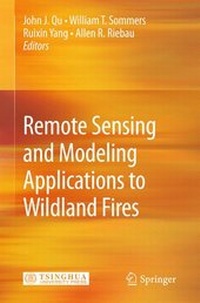
Remote Sensing Modeling and Applications to Wildland Fires
Beschreibung
Weitere Details
Weitere Ausgaben
Andere Ausgaben
Personen
Dr. John J. Qu is a faculty member of the ESGS program at the school of Computational Sciences and is Technical Director of EastFIRE Lab at George Mason University. He is also with NASA Goddard Space Flight Center to support the NPOESS Preparatory Project (NPP) mission. His major research areas are satellite remote sensing, Earth systems sciences, fire science and GIS applications.
Dr. Menas Kafatos is Dean of the school of Computational Sciences (SCS), Director of the Center for Earth Observing and Space Research (CEOSR) and Professor of Interdisciplinary Science at George Mason University. He has published numerous books, and articles on computational science, astrophysics, Earth systems science, general relativity and the foundations of quantum theory.
Inhalt
Research Needs and Programs.- Introduction of Wildland Fires.- Introduction of Joint Fire Science Program (JFSP).- Introduction of National Fire Plan.- Demographics Trends in the Eastern US and the Wildland Urban Interface: Implications for Fire Management.- Fire Weather, Climate and Air Quality for Eastern States.- A Review of Wildland Fire and Air Quality Management.- High-Resolution Numerical Models for Smoke Transport in Plumes from Wildland Fires.- Interaction between a Wildfire and a Sea-Breeze Front: Case Study and Idealized Numerical Simulations.- Estimates of Wildland Fire Emissions.- The GOFC/GOLD Fire Mapping and Monitoring theme: assessment and strategic plans.- Integrating remote sensing and surface weather-derived models to monitor the phenology of the terrestrial biosphere.- Fire Fuel Mapping in the National Park Service Northeast Region.- Remote Sensing Applications on Wildland Fires in the Eastern United States.- TBD.- Diurnal and Seasonal Cycles of Land Fires from TRMM Observations.- Fire Research in the New Jersey Pine Barrens.- An Accuracy Assessment of NFDRS dead fuel load estimates across North Carolina's Piedmont and Coastal Plain.- Numerical simulations of grassland fire behavior from the LANL - FIRETEC and NIST - WFDS models.- Physics-based Modeling of Wildland-urban Interface Fires.- Climate Change and Fire Impacts on Ecosystem Critical Nitrogen Load.- Edge Effects on Fuel Loading and Fire Spread in a Managed Northern Wisconsin Landscape.- The Need for Data Integration to Achieve Forest Sustainability: Modeling and Assessing the Impacts of Wildland Fire on Eastern Landscapes.- Fire spread regulated by weather, landscape structure, and management in Wisconsin hardwoods and New Jersey Pinelands.