

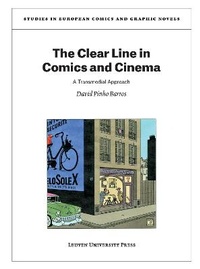
The Clear Line in Comics and Cinema
A Transmedial Approach
Erschienen am 4. Juli 2022
Buch
Softcover
266 Seiten
978-94-6270-320-9 (ISBN)
Beschreibung
Historical and theoretical analysis of the clear line style in comics and cinema
The clear line, a term coined in 1977 by Dutch essayist and artist Joost Swarte, has become shorthand in the field of comics studies for the style originally developed by Herge and the Ecole de Bruxelles. It refers to certain storytelling strategies that generate a deceptively simple, lucid, and hygienic narration: in Philippe Marion's words, it is a style made out of light, fluidity and limpid clarity.
By cataloguing and critically analysing clear line comics from historical and theoretical perspectives, this book offers a new outlook on the development of the style in the 20th and 21st centuries, especially focused on the context of the European bande dessinee. In addition, it pioneeringly expands the concept of clear line to other artistic domains by introducing and defending its transmedial use, which is particularly relevant for the understanding of the oeuvres of certain filmmakers of the 20th century working in the postwar period, such as Yasujiro Ozu in Japan, Jacques Tati in France and Frank Tashlin in the United States. The Clear Line in Comics and Cinema is therefore a key theoretical work for both bande dessinee enthusiasts and comics scholars, as well as a fundamental contribution to present-day film studies and transmedial narratology.
The clear line, a term coined in 1977 by Dutch essayist and artist Joost Swarte, has become shorthand in the field of comics studies for the style originally developed by Herge and the Ecole de Bruxelles. It refers to certain storytelling strategies that generate a deceptively simple, lucid, and hygienic narration: in Philippe Marion's words, it is a style made out of light, fluidity and limpid clarity.
By cataloguing and critically analysing clear line comics from historical and theoretical perspectives, this book offers a new outlook on the development of the style in the 20th and 21st centuries, especially focused on the context of the European bande dessinee. In addition, it pioneeringly expands the concept of clear line to other artistic domains by introducing and defending its transmedial use, which is particularly relevant for the understanding of the oeuvres of certain filmmakers of the 20th century working in the postwar period, such as Yasujiro Ozu in Japan, Jacques Tati in France and Frank Tashlin in the United States. The Clear Line in Comics and Cinema is therefore a key theoretical work for both bande dessinee enthusiasts and comics scholars, as well as a fundamental contribution to present-day film studies and transmedial narratology.
Rezensionen / Stimmen
Perfect boek voor iedereen die bereid is zich wat meer te verdiepen in de negende kunst en voor iedereen die wel eens verrast wil worden door een schrijver die je af en toe even wat anders en beter laat kijken naar strips en films. Een aanrader.Holly Moors, MoorsMagazine, dinsdag 20 september
Weitere Details
Reihe
Sprache
Englisch
Verlagsort
Leuven
Belgien
Zielgruppe
Für höhere Schule und Studium
US School Grade: College Graduate Student and over
Illustrationen
Illustrated with colour section
Maße
Höhe: 230 mm
Breite: 170 mm
Dicke: 17 mm
Gewicht
620 gr
ISBN-13
978-94-6270-320-9 (9789462703209)
Copyright in bibliographic data and cover images is held by Nielsen Book Services Limited or by the publishers or by their respective licensors: all rights reserved.
Schweitzer Klassifikation
Weitere Ausgaben
Andere Ausgaben
E-Book
07/2022
Leuven University Press
64,99 €
Als Download verfügbar
Person
David Pinho Barros is a researcher, curator and assistant professor of literary, cultural and interart studies at the Faculty of Arts and Humanities of the University of Porto.
Inhalt
Acknowledgements
Introduction
Part One: Clear Line Comics
Opening remarks
Chapter 1: Herge's clear line
From Totor to Tintin: Trace and narrative as constraints
The clear line finds its Oriental history
The clear line facing new formats
Chapter 2: The clear line of the Ecole de Bruxelles
Edgar P. Jacobs's naturalist clear line
Between individuality and standardisation: Jacques Martin, Bob De Moor and Roger Leloup
Chapter 3: The clear line after Tintin et les Picaros
The postmodernist clear line: From Tante Leny presenteert! to (A Suivre)
The neoclassical clear line: From Professor Palmboom to Blake and Mortimer 2.0
Philip, Francis and friends: Contemporary parodies and pastiches of the clear line
Closing remarks
Part Two: Clear Line Cinema
Opening remarks
Chapter 4: Cinema as a graphic-verbal medium
Film's media combination: A theoretical perspective
Film's media combination: An analytical perspective
Film's media combination: A stylistic perspective
Chapter 5: Clear line cinema
"Dire juste": Density, simplicity and stylisation in cinema
A few directions for a history of clear line cinema, from Louis Lumiere to Wes Anderson
Closing remarks
Part Three: Case Studies
Opening remarks 153
Chapter 6: Yasujiro Ozu
Ozu's clear line frame composition and storytelling strategies
Red teapot, yellow teacup: Clear line colouring in Ozu's late films
Chapter 7: Jacques Tati
This fits here, that fits there: The clear line in the Hulot comedies
Minimal sounds for maximal effects: Remarks on Tati's clear line soundscapes
Chapter 8: Frank Tashlin
Tashlin's clear line ink: Comics, advertisements and animation
The clear line at the service of comedy in Tashlin's feature films
Closing remarks
For a transmedial use of the concept of "clear line": A conclusion
Sources
Notes
Introduction
Part One: Clear Line Comics
Opening remarks
Chapter 1: Herge's clear line
From Totor to Tintin: Trace and narrative as constraints
The clear line finds its Oriental history
The clear line facing new formats
Chapter 2: The clear line of the Ecole de Bruxelles
Edgar P. Jacobs's naturalist clear line
Between individuality and standardisation: Jacques Martin, Bob De Moor and Roger Leloup
Chapter 3: The clear line after Tintin et les Picaros
The postmodernist clear line: From Tante Leny presenteert! to (A Suivre)
The neoclassical clear line: From Professor Palmboom to Blake and Mortimer 2.0
Philip, Francis and friends: Contemporary parodies and pastiches of the clear line
Closing remarks
Part Two: Clear Line Cinema
Opening remarks
Chapter 4: Cinema as a graphic-verbal medium
Film's media combination: A theoretical perspective
Film's media combination: An analytical perspective
Film's media combination: A stylistic perspective
Chapter 5: Clear line cinema
"Dire juste": Density, simplicity and stylisation in cinema
A few directions for a history of clear line cinema, from Louis Lumiere to Wes Anderson
Closing remarks
Part Three: Case Studies
Opening remarks 153
Chapter 6: Yasujiro Ozu
Ozu's clear line frame composition and storytelling strategies
Red teapot, yellow teacup: Clear line colouring in Ozu's late films
Chapter 7: Jacques Tati
This fits here, that fits there: The clear line in the Hulot comedies
Minimal sounds for maximal effects: Remarks on Tati's clear line soundscapes
Chapter 8: Frank Tashlin
Tashlin's clear line ink: Comics, advertisements and animation
The clear line at the service of comedy in Tashlin's feature films
Closing remarks
For a transmedial use of the concept of "clear line": A conclusion
Sources
Notes