

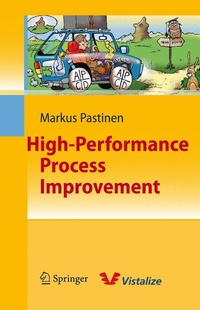
High-Performance Process Improvement
1. Auflage
Erschienen am 11. März 2010
Buch
Hardcover
XXVIII, 260 Seiten
978-3-642-10783-2 (ISBN)
Beschreibung
High-performance process improvement takes process improvement to the next ambition level. The kernel of the substance is a generic process improvement process that operates under the strictest time, quality and cost constraints. Thanks to a modular composition and robust methods the scope may range from one single person to networks with hundreds of companies. This is realized via three high-class phases:network and company analysis and synthesis, process analysis and synthesis, the implementation, including process improvement education and training and the practical realization of the improvement potential.
The presented methods contain mass customization features and a very advanced logic for optimizing the interaction of people, technology, information and material both in the process improvement process itself and the focus process.
The book is based on an extensive R&D effort and thorough practical verifications in more than 75 companies in almost any business and in all sizes.
The presented methods contain mass customization features and a very advanced logic for optimizing the interaction of people, technology, information and material both in the process improvement process itself and the focus process.
The book is based on an extensive R&D effort and thorough practical verifications in more than 75 companies in almost any business and in all sizes.

Weitere Details
Produkt-Info
GB
Sprache
Englisch
Verlagsort
Berlin
Deutschland
Zielgruppe
Professional/practitioner
Produkt-Hinweis
laminiert
Illustrationen
63 s/w Abbildungen, Literaturverzeichnisse
63 black & white illustrations, biography
Maße
Höhe: 235 mm
Breite: 155 mm
Dicke: 27 mm
Gewicht
1150 gr
ISBN-13
978-3-642-10783-2 (9783642107832)
DOI
10.1007/978-3-642-10784-9
Schweitzer Klassifikation
Weitere Ausgaben
Andere Ausgaben
Markus Pastinen
High-Performance Process Improvement
Buch
10/2014
Springer
128,39 €
Versand in 7-9 Tagen
Markus Pastinen
High-Performance Process Improvement
E-Book
03/2010
1. Auflage
Springer
96,29 €
Als Download verfügbar
Inhalt
1 High-Performance Process Improvement Fundamentals
1.1 Why is Process Improvement an Enormous Waste of Resources and Opportunities?
1.2 Why are the Process Improvement Methods Outdated?
1.3 The Critical Questions the Business Books Missed to Ask and Answer - Until Now
1.4 The Current and Prospective State of Process Improvement Methods
1.5 The Research and Development Work and Its Result
1.6 The Size of the Improvement Momentum Toyota Loses Every Day and the Momentum Your Company Could Gain Every Day
1.7 Designing High-Performance Process Improvement Methods
1.8 Defining the Performance Requirements of High-Performance Process Improvement Efforts
1.9 Summary and Concluding Remarks
2 High-Performance Process Improvement Concepts
2.1 Key Definitions
2.2 Delivery of Value
2.2.1 Delivery of Value from a Holistic Perspective
2.2.2 Delivery of Value from a Stakeholder Perspective
2.2.2.1 Customer Satisfaction
2.2.2.2 Employee Satisfaction
2.2.2.3 Owner Satisfaction
2.3 The Kernel of High-Performance Process Improvement
2.4 The Process and Total Improvement Yield
2.4.1 The Process Improvement Yield Concept
2.4.2 The Total Improvement Yield Concept
2.5 Summary and Concluding Remarks
3 Design Concepts of the High-Performance Process Improvement Process
3.1 Standardization and Manageability
3.2 Optimizing the Interaction of the Process Components
3.2.1 People
3.2.2 Technology
3.2.3 Information
3.3 Applying the Concept of Reverse Engineering
3.4 The Total Picture
3.5 Assuring the Quality of the Experts in Charge of the High-Performance Process Improvement Process
3.6 Summary and Concluding Remarks
4 Network and Company Analysis and Synthesis
4.1 Introduction
4.2 The Process Flow
4.3 The Data Collection and Analysis Criteria
4.3.1 The Functional Perspective
4.3.2 The Operational Perspective
4.3.3 The Time Space Perspective
4.3.4 Data Collection Criteria Case
4.3.5 Data Collection Concerns
4.4 The Synthesis
4.5 The T and V Values
4.6 Summary and Concluding Remarks
5 Process Analysis and Synthesis
5.1 Introduction
5.2 Overview
5.2.1 The VISTALIZER® for Consultants Concept
5.2.2 The VISTALIZER® Process Analysis and Synthesis Framework
5.3 Phase 1: Initiation and Modeling
5.3.1 Initiation of the Analysis (Phase 1.1)
5.3.2 Modeling of the Focus Process (Phase 1.2)
5.3.3 Scope Definition and Data Collection Planning (Phase 1.3)
5.4 Phase 2: Data Collection and Basic Definitions
5.4.1 Determination of the Process Performance Parameters (Phase 2.1)
5.4.1.1 Time Analysis Parameters
5.4.1.2 Quality Analysis Parameters
5.4.1.3 Cost Analysis Parameters
5.4.1.4 Examples of Chosen Analysis Parameters
5.4.2 Creation of the Impact Field (Phase 2.2)
5.4.2.1 The Supplements of the Impact Field
5.4.2.2 Examples of Impact Fields
5.4.3 Giving Priority to the Analysis Parameters (Phase 2.3)
5.4.4 Calculation of Criterion 1 and the Reliability Index of the Impact Field (Phase 2.4)
5.4.5 Planning for the External Analysis (Phase 2.5)
5.4.6 Setting the Objectives and Evaluation of the Preliminary Monetary Gains (Phase 2.6)
5.5 Phase 3: Subprocess Specific Improvement Plans
5.5.1 Analysis of the Specific Subprocesses (Phase 3.1)
5.5.1.1 Defining the Subprocess Components (Phase 3.1.1)
5.5.1.2 Identifying Improvement Objects (Phase 3.1.2)
5.5.1.3 Placing the Improvement Objects in Order of Importance (Phase 3.1.3)
5.5.1.4 Rough Analysis of Likely Causes and Potential
1.1 Why is Process Improvement an Enormous Waste of Resources and Opportunities?
1.2 Why are the Process Improvement Methods Outdated?
1.3 The Critical Questions the Business Books Missed to Ask and Answer - Until Now
1.4 The Current and Prospective State of Process Improvement Methods
1.5 The Research and Development Work and Its Result
1.6 The Size of the Improvement Momentum Toyota Loses Every Day and the Momentum Your Company Could Gain Every Day
1.7 Designing High-Performance Process Improvement Methods
1.8 Defining the Performance Requirements of High-Performance Process Improvement Efforts
1.9 Summary and Concluding Remarks
2 High-Performance Process Improvement Concepts
2.1 Key Definitions
2.2 Delivery of Value
2.2.1 Delivery of Value from a Holistic Perspective
2.2.2 Delivery of Value from a Stakeholder Perspective
2.2.2.1 Customer Satisfaction
2.2.2.2 Employee Satisfaction
2.2.2.3 Owner Satisfaction
2.3 The Kernel of High-Performance Process Improvement
2.4 The Process and Total Improvement Yield
2.4.1 The Process Improvement Yield Concept
2.4.2 The Total Improvement Yield Concept
2.5 Summary and Concluding Remarks
3 Design Concepts of the High-Performance Process Improvement Process
3.1 Standardization and Manageability
3.2 Optimizing the Interaction of the Process Components
3.2.1 People
3.2.2 Technology
3.2.3 Information
3.3 Applying the Concept of Reverse Engineering
3.4 The Total Picture
3.5 Assuring the Quality of the Experts in Charge of the High-Performance Process Improvement Process
3.6 Summary and Concluding Remarks
4 Network and Company Analysis and Synthesis
4.1 Introduction
4.2 The Process Flow
4.3 The Data Collection and Analysis Criteria
4.3.1 The Functional Perspective
4.3.2 The Operational Perspective
4.3.3 The Time Space Perspective
4.3.4 Data Collection Criteria Case
4.3.5 Data Collection Concerns
4.4 The Synthesis
4.5 The T and V Values
4.6 Summary and Concluding Remarks
5 Process Analysis and Synthesis
5.1 Introduction
5.2 Overview
5.2.1 The VISTALIZER® for Consultants Concept
5.2.2 The VISTALIZER® Process Analysis and Synthesis Framework
5.3 Phase 1: Initiation and Modeling
5.3.1 Initiation of the Analysis (Phase 1.1)
5.3.2 Modeling of the Focus Process (Phase 1.2)
5.3.3 Scope Definition and Data Collection Planning (Phase 1.3)
5.4 Phase 2: Data Collection and Basic Definitions
5.4.1 Determination of the Process Performance Parameters (Phase 2.1)
5.4.1.1 Time Analysis Parameters
5.4.1.2 Quality Analysis Parameters
5.4.1.3 Cost Analysis Parameters
5.4.1.4 Examples of Chosen Analysis Parameters
5.4.2 Creation of the Impact Field (Phase 2.2)
5.4.2.1 The Supplements of the Impact Field
5.4.2.2 Examples of Impact Fields
5.4.3 Giving Priority to the Analysis Parameters (Phase 2.3)
5.4.4 Calculation of Criterion 1 and the Reliability Index of the Impact Field (Phase 2.4)
5.4.5 Planning for the External Analysis (Phase 2.5)
5.4.6 Setting the Objectives and Evaluation of the Preliminary Monetary Gains (Phase 2.6)
5.5 Phase 3: Subprocess Specific Improvement Plans
5.5.1 Analysis of the Specific Subprocesses (Phase 3.1)
5.5.1.1 Defining the Subprocess Components (Phase 3.1.1)
5.5.1.2 Identifying Improvement Objects (Phase 3.1.2)
5.5.1.3 Placing the Improvement Objects in Order of Importance (Phase 3.1.3)
5.5.1.4 Rough Analysis of Likely Causes and Potential