

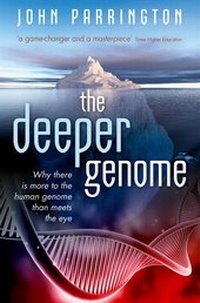
The Deeper Genome
Why there is more to the human genome than meets the eye
Erschienen am 25. August 2016
Buch
Softcover
272 Seiten
978-0-19-968874-6 (ISBN)
Beschreibung
Over a decade ago, as the Human Genome Project completed its mapping of the entire human genome, hopes ran high that we would rapidly be able to use our knowledge of human genes to tackle many inherited diseases, and understand what makes us unique among animals. But things didn't turn out that way. For a start, we turned out to have far fewer genes than originally thought - just over 20,000, the same sort of number as a fruit fly or worm. What's more, the proportion
of DNA consisting of genes coding for proteins was a mere 2%. So, was the rest of the genome accumulated 'junk'?
Things have changed since those early heady days of the Human Genome Project. But the emerging picture is if anything far more exciting. In this book, John Parrington explains the key features that are coming to light - some, such as the results of the international ENCODE programme, still much debated and controversial in their scope. He gives an outline of the deeper genome, involving layers of regulatory elements controlling and coordinating the switching on and off of genes; the impact of
its 3D geometry; the discovery of a variety of new RNAs playing critical roles; the epigenetic changes influenced by the environment and life experiences that can make identical twins different and be passed on to the next generation; and the clues coming out of comparisons with the genomes of
Neanderthals as well as that of chimps about the development our species. We are learning more about ourselves, and about the genetic aspects of many diseases. But in its complexity, flexibility, and ability to respond to environmental cues, the human genome is proving to be far more subtle than we ever imagined.
of DNA consisting of genes coding for proteins was a mere 2%. So, was the rest of the genome accumulated 'junk'?
Things have changed since those early heady days of the Human Genome Project. But the emerging picture is if anything far more exciting. In this book, John Parrington explains the key features that are coming to light - some, such as the results of the international ENCODE programme, still much debated and controversial in their scope. He gives an outline of the deeper genome, involving layers of regulatory elements controlling and coordinating the switching on and off of genes; the impact of
its 3D geometry; the discovery of a variety of new RNAs playing critical roles; the epigenetic changes influenced by the environment and life experiences that can make identical twins different and be passed on to the next generation; and the clues coming out of comparisons with the genomes of
Neanderthals as well as that of chimps about the development our species. We are learning more about ourselves, and about the genetic aspects of many diseases. But in its complexity, flexibility, and ability to respond to environmental cues, the human genome is proving to be far more subtle than we ever imagined.
Rezensionen / Stimmen
It's a game-changer and a masterpiece for anyone interested in biology. * Times Higher Education, Charalambos P Kyriacou * ... a good primer on the subtlety and complexity of the genome, especially the human genome, new facets of which emerge on a regular basis from labs around the world. * The Scientist, Bob Grant * The Deeper Genome... provides an elegant, accessible account of the profound and unexpected complexities of the human genome, and shows how many ideas developed in the 20th century are being overturned. * New Scientist, Clare Ainsworth * A compelling book that will enrich your knowledge of genetics and its potential. * New York Journal of Books * Overall, this is a faithful, engaging portrait of the twenty-first-century genome * Nature, Nathaniel Comfort * This is a brilliant book - a wonderfully entertaining history of molecular biology and the surprises and controversies of a field still very much in flux, from early explorations to the emerging realisation that the human genome may be far more sophisticated than we ever imagined. * John Mattick, Director, Garvan Institute of Medical Research *Weitere Details
Sprache
Englisch
Verlagsort
Oxford
Großbritannien
Illustrationen
26 black and white illustrations
Maße
Höhe: 194 mm
Breite: 142 mm
Dicke: 16 mm
Gewicht
202 gr
ISBN-13
978-0-19-968874-6 (9780199688746)
Copyright in bibliographic data and cover images is held by Nielsen Book Services Limited or by the publishers or by their respective licensors: all rights reserved.
Schweitzer Klassifikation
Weitere Ausgaben
Andere Ausgaben
Buch
05/2015
Oxford University Press
23,50 €
Artikel ist vergriffen; siehe Neuauflage
E-Book
05/2015
1. Auflage
OUP eBook
7,49 €
Als Download verfügbar
Person
John Parrington is an Associate Professor in Molecular and Cellular Pharmacology at the University of Oxford, and a Tutorial Fellow in Medicine at Worcester College, Oxford. He has published over 80 peer-reviewed articles in science journals including Nature, Current Biology, Journal of Cell Biology, Journal of Clinical Investigation, The EMBO Journal, Development, Developmental Biology, and Human Reproduction. He has extensive experience writing
popular science, having published articles in The Guardian, New Scientist, Chemistry World, and The Biologist. As a British Science Association Media Fellow he has worked as a science journalist at The Times for 7 weeks where he published 22 articles. He has also written science reports for the Wellcome Trust,
British Council, and Royal Society.
popular science, having published articles in The Guardian, New Scientist, Chemistry World, and The Biologist. As a British Science Association Media Fellow he has worked as a science journalist at The Times for 7 weeks where he published 22 articles. He has also written science reports for the Wellcome Trust,
British Council, and Royal Society.
Inhalt
Introduction: What are genes?
1: The Inheritors
2: Life as a Code
3: Switches and Signals
4: The Spacious Genome
5: RNA Out of the Shadows
6: It's a Jungle in There!
7: The Genome in 3D
8: The Jumping Genes
9: The Marks of Lamarck
10: Code, Non-Code, Garbage, and Junk
11: Genes and Disease
12: What Makes us Human?
13: The Genome That Became Conscious
Conclusion
Glossary
Index
1: The Inheritors
2: Life as a Code
3: Switches and Signals
4: The Spacious Genome
5: RNA Out of the Shadows
6: It's a Jungle in There!
7: The Genome in 3D
8: The Jumping Genes
9: The Marks of Lamarck
10: Code, Non-Code, Garbage, and Junk
11: Genes and Disease
12: What Makes us Human?
13: The Genome That Became Conscious
Conclusion
Glossary
Index