


The Greatest Mirror
Heavenly Counterparts in the Jewish Pseudepigrapha
Erscheint ca. am 1. November 2017
Buch
Hardcover
318 Seiten
978-1-4384-6691-0 (ISBN)
Beschreibung
A wide-ranging analysis of heavenly twin imagery in early Jewish extrabiblical texts.
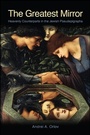
The idea of a heavenly double-an angelic twin of an earthbound human-can be found in Christian, Manichaean, Islamic, and Kabbalistic traditions. Scholars have long traced the lineage of these ideas to Greco-Roman and Iranian sources. In The Greatest Mirror, Andrei A. Orlov shows that heavenly twin imagery drew in large part from early Jewish writings. The Jewish pseudepigrapha-books from the Second Temple period that were attributed to biblical figures but excluded from the Hebrew Bible-contain accounts of heavenly twins in the form of spirits, images, faces, children, mirrors, and angels of the Presence. Orlov provides a comprehensive analysis of these traditions in their full historical and interpretive complexity. He focuses on heavenly alter egos of Enoch, Moses, Jacob, Joseph, and Aseneth in often neglected books, including Animal Apocalypse, Book of the Watchers, 2 Enoch, Ladder of Jacob, and Joseph and Aseneth, some of which are preserved solely in the Slavonic language.
The idea of a heavenly double-an angelic twin of an earthbound human-can be found in Christian, Manichaean, Islamic, and Kabbalistic traditions. Scholars have long traced the lineage of these ideas to Greco-Roman and Iranian sources. In The Greatest Mirror, Andrei A. Orlov shows that heavenly twin imagery drew in large part from early Jewish writings. The Jewish pseudepigrapha-books from the Second Temple period that were attributed to biblical figures but excluded from the Hebrew Bible-contain accounts of heavenly twins in the form of spirits, images, faces, children, mirrors, and angels of the Presence. Orlov provides a comprehensive analysis of these traditions in their full historical and interpretive complexity. He focuses on heavenly alter egos of Enoch, Moses, Jacob, Joseph, and Aseneth in often neglected books, including Animal Apocalypse, Book of the Watchers, 2 Enoch, Ladder of Jacob, and Joseph and Aseneth, some of which are preserved solely in the Slavonic language.
Rezensionen / Stimmen
"...[a] fascinating and rewarding new book ... [it] is extremely well-written, the topic is endlessly interesting, the evidence is exhaustively covered, and its author has put forward his thesis in the best manner possible." - Reading Religion"This book fills a lacuna in the understanding of a fascinating yet enigmatic collection of writings of an obscure genre of Jewish pseudepigrapha dealing with heavenly counterparts of human beings." - CHOICE
"This book is the first complete effort to show how some pseudepigraphical works develop several unique traditions about heavenly counterparts. It is particularly important for many scholars who do not have control of the Slavonic originals of the Ladder of Jacob and 2 Enoch. Orlov also draws on a broad range of unfamiliar sources, including Manichaean and Mandaean materials, which were often neglected by experts who previously investigated the heavenly counterpart imagery." - Alexander Kulik, coauthor of Biblical Pseudepigrapha in Slavonic Tradition
Weitere Details
Sprache
Englisch
Verlagsort
Albany, NY
USA
Zielgruppe
Für Beruf und Forschung
US School Grade: College Graduate Student and over
Produkt-Hinweis
Fadenheftung
Gewebe-Einband
Maße
Höhe: 231 mm
Breite: 157 mm
Dicke: 28 mm
Gewicht
635 gr
ISBN-13
978-1-4384-6691-0 (9781438466910)
Copyright in bibliographic data and cover images is held by Nielsen Book Services Limited or by the publishers or by their respective licensors: all rights reserved.
Schweitzer Klassifikation
Weitere Ausgaben
Andere Ausgaben
E-Book
09/2017
1. Auflage
De Gruyter
ab
88,99 €
Als Download verfügbar
Person
Andrei A. Orlov is Professor of Judaism and Christianity in Antiquity at Marquette University. He is the author of Dark Mirrors: Azazel and Satanael in Early Jewish Demonology and Divine Scapegoats: Demonic Mimesis in Early Jewish Mysticism, both also published by SUNY Press.
Inhalt
Preface
Abbreviations
Introduction
1. The Heavenly Counterpart Traditions in the Enochic Pseudepigrapha
2. The Heavenly Counterpart Traditions in the Mosaic Pseudepigrapha
3. The Heavenly Counterpart Traditions in the Pseudepigrapha about Jacob
4. The Heavenly Counterpart Traditions in Joseph and Aseneth
Conclusion
Notes
Bibliography
Index
Abbreviations
Introduction
1. The Heavenly Counterpart Traditions in the Enochic Pseudepigrapha
2. The Heavenly Counterpart Traditions in the Mosaic Pseudepigrapha
3. The Heavenly Counterpart Traditions in the Pseudepigrapha about Jacob
4. The Heavenly Counterpart Traditions in Joseph and Aseneth
Conclusion
Notes
Bibliography
Index