

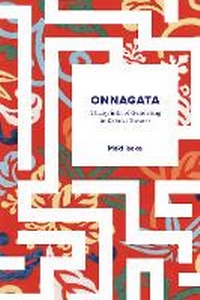
Onnagata
A Labyrinth of Gendering in Kabuki Theater
Erscheint ca. am 1. Januar 2016
Buch
Hardcover
272 Seiten
978-0-295-99510-6 (ISBN)
Beschreibung
Kabuki is well known for its exaggerated acting, flamboyant costumes and makeup, and unnatural storylines. The onnagata, usually male actors who perform the roles of women, have been an important aspect of kabuki since its beginnings in the 17th century. In a "labyrinth" of gendering, the practice of men playing women's roles has affected the manifestations of femininity in Japanese society. In this case study of how gender has been defined and redefined through the centuries, Maki Isaka examines how the onnagata's theatrical gender "impersonation" has shaped the concept and mechanisms of femininity and gender construction in Japan. The implications of the study go well beyond disciplinary and geographic cloisters.
Rezensionen / Stimmen
"A well-researched and thorough historical study of the artificial and artistic construction of femininity by onnagata that provides a great deal of information as well as many thought-provoking insights."- Akiko Kusunoki (Early Modern Women) "It is an important addition to the study of women performers in kabuki and supports the idea that onnagata is an action or performance"
- Colleen Lanki (Asian Theater Journal) "Isaka makes a number of important interventions in understanding how femininity is constructed and presented on the Japanese stage as well as in society as a whole. . . . The book's exploration of gender performance goes far beyond the worlds of dramatic literature and theatrical performance."
- Megan Ammirati (Theatre Survey) "Isaka's approach enables her to successfully situate onnagata within current discourse on gender identity. . . . Onnagata [is an] important additio[n] to the growing library of kabuki studies."
(Harvard Journal of Asiatic Studies)
Weitere Details
Reihe
Sprache
Englisch
Verlagsort
Seattle
USA
Zielgruppe
Für Beruf und Forschung
Maße
Höhe: 229 mm
Breite: 152 mm
Gewicht
522 gr
ISBN-13
978-0-295-99510-6 (9780295995106)
Copyright in bibliographic data and cover images is held by Nielsen Book Services Limited or by the publishers or by their respective licensors: all rights reserved.
Schweitzer Klassifikation
Weitere Ausgaben
Andere Ausgaben
E-Book
01/2016
1. Auflage
University of Washington Press
34,49 €
Als Download verfügbar
Person
Maki Isaka is associate professor in the Department of Asian Languages and Literatures and affiliate faculty in the Department of Gender, Women, and Sexuality Studies at the University of Minnesota. She is the author of Secrecy in Japanese Arts: "Secret Transmission" as a Mode of Knowledge.
Inhalt
Preface and Acknowledgments
Note on Textual Conventions
Part One Fundamentals: Invitation to Labyrinths of Gendering
Introduction: A Labyrinth of Onnagata
1. Geneses of a Maze: Androgyne Fatale
Part Two Femininity Inside Out: Onnagata Who Pass
2. Denial of Transience: Forfeiting the Androgynous Charm
3. Prescription for Femininity: Onnagata Who Pass
4. Canonization: Creating Onnagata Traditions
5. Femininity in Circulation: Texts in Kabuki, Kabuki in Texts
Part Three Marginalized Centers: Bodies and Personnel
6. Naturally Disciplined: Moving Real on Procrustean Beds
7. Female Onnagata in the Porous Labyrinth: The Enunciated Femininity and the Enunciating Masculinity
Part Four Origins of Onnagata: Modern Reformation
8. Toward Contemporary Onnagata: Art in Their Blood
Epilogue: The Journey Continues
Notes
Bibliography
Index
Note on Textual Conventions
Part One Fundamentals: Invitation to Labyrinths of Gendering
Introduction: A Labyrinth of Onnagata
1. Geneses of a Maze: Androgyne Fatale
Part Two Femininity Inside Out: Onnagata Who Pass
2. Denial of Transience: Forfeiting the Androgynous Charm
3. Prescription for Femininity: Onnagata Who Pass
4. Canonization: Creating Onnagata Traditions
5. Femininity in Circulation: Texts in Kabuki, Kabuki in Texts
Part Three Marginalized Centers: Bodies and Personnel
6. Naturally Disciplined: Moving Real on Procrustean Beds
7. Female Onnagata in the Porous Labyrinth: The Enunciated Femininity and the Enunciating Masculinity
Part Four Origins of Onnagata: Modern Reformation
8. Toward Contemporary Onnagata: Art in Their Blood
Epilogue: The Journey Continues
Notes
Bibliography
Index