


Francis Ford Coppola
Erscheint ca. am 8. Dezember 2014
Buch
Hardcover
176 Seiten
978-0-252-03882-2 (ISBN)
Beschreibung
Acclaimed as one of the most influential and innovative American directors, Francis Ford Coppola is also lionized as a maverick auteur at war with Hollywood's power structure and an ardent critic of the postindustrial corporate America it reflects.
However, Jeff Menne argues that Coppola exemplifies the new breed of creative corporate person and sees the director's oeuvre as vital for reimagining the corporation in the transformation of Hollywood.
Reading auteur theory as the new American business theory, Menne reveals how Coppola's vision of a new kind of company has transformed the worker into a liberated and well-utilized artist, but has also commodified individual creativity at a level unprecedented in corporate history. Coppola negotiated the contradictory roles of shrewd businessman and creative artist by recognizing the two roles are fused in a postindustrial economy.
Analyzing films like The Godfather (1970) and the overlooked Tucker: The Man and His Dream (1988) through Coppola's use of opera, Menne illustrates how Coppola developed a defining musical aesthetic while making films that reflected the idea of a corporation as family--and how his studio American Zoetrope came to represent a new brand of auteurism and the model for post-Fordist Hollywood.
However, Jeff Menne argues that Coppola exemplifies the new breed of creative corporate person and sees the director's oeuvre as vital for reimagining the corporation in the transformation of Hollywood.
Reading auteur theory as the new American business theory, Menne reveals how Coppola's vision of a new kind of company has transformed the worker into a liberated and well-utilized artist, but has also commodified individual creativity at a level unprecedented in corporate history. Coppola negotiated the contradictory roles of shrewd businessman and creative artist by recognizing the two roles are fused in a postindustrial economy.
Analyzing films like The Godfather (1970) and the overlooked Tucker: The Man and His Dream (1988) through Coppola's use of opera, Menne illustrates how Coppola developed a defining musical aesthetic while making films that reflected the idea of a corporation as family--and how his studio American Zoetrope came to represent a new brand of auteurism and the model for post-Fordist Hollywood.
Rezensionen / Stimmen
"Well researched, well written, compellingly argued. Writing intelligently and coherently about an auteur as significant and complex as Francis Coppola in a short book is more of a challenge than doing so in a more expansive format. Menne proves up to the task."--Jon Lewis, author of Whom God Wishes to Destroy: Francis Coppola and the New Hollywood "Jeff Menne has found a new angle on one of the most remarkable filmmakers of his era."--Shepherd Express
Weitere Details
Reihe
Sprache
Englisch
Verlagsort
Baltimore
USA
Zielgruppe
Für Beruf und Forschung
Illustrationen
21 black and white photographs, filmography
Maße
Höhe: 210 mm
Breite: 140 mm
Dicke: 18 mm
Gewicht
340 gr
ISBN-13
978-0-252-03882-2 (9780252038822)
Copyright in bibliographic data and cover images is held by Nielsen Book Services Limited or by the publishers or by their respective licensors: all rights reserved.
Schweitzer Klassifikation
Weitere Ausgaben
Andere Ausgaben
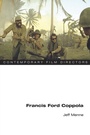
Jeff Menne
Francis Ford Coppola
E-Book
11/2014
1. Auflage
University of Illinois Press
17,99 €
Als Download verfügbar
Person
Jeff Menne is an assistant professor of screen studies and English at Oklahoma State University.