

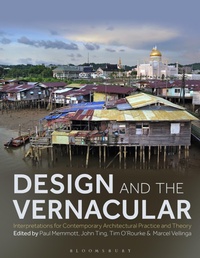
Design and the Vernacular
Interpretations for Contemporary Architectural Practice and Theory
Erschienen am 28. Dezember 2023
Buch
Hardcover
320 Seiten
978-1-350-29430-1 (ISBN)
Beschreibung
Design and the Vernacular explores the intersection between vernacular architecture, local cultures, and modernity and globalization, focussing on the vast and diverse global region of Australasia and Oceania. The relevance and role of vernacular architecture in contemporary urban planning and architectural design are examined in the context of rapid political, economic, technological, social and environmental changes, including globalization, exchanges of people, finance, material culture, and digital technologies.
Sixteen chapters by architects designers and theorists, including Indigenous writers, explore key questions about the agency of vernacular architecture in shaping contemporary building and design practice. These questions include: How have Indigenous building traditions shaped modern building practices? What can the study of vernacular architecture contribute to debates about sustainable development? And how has vernacular architecture been used to argue for postcolonial modernisation and nation-building and what has been the effect on heritage and conservation?
Such questions provide valuable case studies and lessons for architecture in other global regions -- and challenge assumptions about vernacular architecture being anachronistic and static, instead demonstrating how it can shape contemporary architecture, nation building and cultural identities.
Sixteen chapters by architects designers and theorists, including Indigenous writers, explore key questions about the agency of vernacular architecture in shaping contemporary building and design practice. These questions include: How have Indigenous building traditions shaped modern building practices? What can the study of vernacular architecture contribute to debates about sustainable development? And how has vernacular architecture been used to argue for postcolonial modernisation and nation-building and what has been the effect on heritage and conservation?
Such questions provide valuable case studies and lessons for architecture in other global regions -- and challenge assumptions about vernacular architecture being anachronistic and static, instead demonstrating how it can shape contemporary architecture, nation building and cultural identities.
Rezensionen / Stimmen
This is a welcome, timely volume drawing attention to local architectural traditions. Often overlooked, these represent generations of experience of particular places. They feature ingenious, often sustainable, solutions to local conditions. They are versatile and adaptable, and importantly today, they offer many people the scope independently to manage with climate change, being within their control, depending on local knowledge, skills and available materials. * Paul Sillitoe, Durham University, UK * The book provides objective lessons on the lifestyles and habitation of Indigenous peoples, as these were first transformed by their encounter with colonialism and then by their entry into the technologically and economically globalized world. All this makes for great reading, particularly for those unfamiliar with indigenous habitats in the Pacific region. This is a book that will excite curiosity among architecture students and students of the region, and it is one that deserves to reside in the libraries of architecture schools worldwide. * Traditional Dwellings and Settlements Review *Weitere Details
Sprache
Englisch
Verlagsort
London
Großbritannien
Verlagsgruppe
Bloomsbury Publishing PLC
Zielgruppe
Für Beruf und Forschung
Illustrationen
65 bw illus
Maße
Höhe: 260 mm
Breite: 208 mm
Dicke: 22 mm
Gewicht
903 gr
ISBN-13
978-1-350-29430-1 (9781350294301)
Copyright in bibliographic data and cover images is held by Nielsen Book Services Limited or by the publishers or by their respective licensors: all rights reserved.
Schweitzer Klassifikation
Weitere Ausgaben
Andere Ausgaben
Paul Memmott | John Ting | Tim O'Rourke
Design and the Vernacular
Interpretations for Contemporary Architectural Practice and Theory
E-Book
11/2023
1. Auflage
Bloomsbury Visual Arts
27,49 €
Als Download verfügbar
Personen
Paul Memmott is a trans-disciplinary researcher (architect/anthropologist) and the Director of the Aboriginal Environments Research Centre (AERC) and the Indigenous Design Place (IDP) at the University of Queensland, Australia.
John Ting is an architect, researcher and educator. He teaches in the architecture program at the University of Canberra, Australia.
Tim O'Rourke is Health Safety and Wellness Chair and Senior Lecturer in Architecture at the University of Queensland, Australia.
Marcel Vellinga is Professor of Anthropology of Architecture at Oxford Brookes University, UK.
John Ting is an architect, researcher and educator. He teaches in the architecture program at the University of Canberra, Australia.
Tim O'Rourke is Health Safety and Wellness Chair and Senior Lecturer in Architecture at the University of Queensland, Australia.
Marcel Vellinga is Professor of Anthropology of Architecture at Oxford Brookes University, UK.
Inhalt
List of Contributors
Introduction, Paul Memmott and Marcel Vellinga
Part 1: Design Practice and Research Methods in Applying the Vernacular to Contemporary Contexts
1. The Architectural Vernacularisation of Pacific Aid Practice - Charmaine 'Ilaiu Talei, University of Auckland, New Zealand
2. Te Whakapapa o nga Wharenui: A Genealogy of Maori Meeting Houses - Savannah Brown (Ngati Whatua ki Kaipara, Ngapuhi, Ngati Hine, Ngati Wai), Amber Ruckes (Tuhoe), Faye Mendes-Underwood (Ngapuhi, Te Rarawa), Aisea Fanamanu, Deidre Brown (Ngapuhi, Ngati Kahu) and Jason Ingham, all Waipapa Taumata Rau/University of Auckland, Aotearoa/New Zealand
3. 'Tropical Architecture': Cultural Collisions and Reverberations in the Vernacular of Aotearoa New Zealand - Jacqueline McIntosh and Bruno Marques, Victoria University of Wellington, New Zealand
4. Linguistics and Architecture, Creolistics and History, or, is Norfolk Island Architecture (a) Creole? - Joshua Nash, founding editor of Some Islands
Part 2: Bridging between Local Cultures and Influences of Modernity
5. Is Vernacular the New Modern? Reflections on Movements, Changes and Preservation in Indonesia - Gabriele Weichart, University of Vienna, Austria
6. Adaptive Uses of Traditional Windbreaks and Bough Shades for Indigenous Housing in Australia - Timothy O'Rourke, University of Queensland, Australia
7. Building on Indigenous Homelands in Arnhem Land since the 1980s: Harnessing Appropriate Technologies and Partnerships as a New Procurement Vernacular - Hannah Robertson, University of Melbourne, Australia
8. The Resurgence of Indigenous Knowledge in Adapting Vernaculars: Implications of Climate Change for Rimajol Architectural Traditions - James Miller, Western Washington University, USA
9. Papua New Guinea's Vernacular Architecture, from Relics to Reframing Culture: Kunguma and Tubusereia - R. H. Rusch, J. H. N. Amar and L. A. Armitage, all Bond University, Australia
Part 3: Bridging for Diasporic Peoples
10. Archipelagic Views: Vernacular Transformation and Inter-Colonial Agricultural Trade Networks in the Late 19th Century Asia Pacific - Amanda Achmadi, Karen Burns, and Paul Walker, all University of Melbourne, Australia
11. Hand in Hand with Crossed Top Plates: Mapping the Contribution of Chinese Carpenters to the Production and Installation of Melbourne's Prefabricated 'Singapore Cottages' - John Ting, University of Canberra, Australia
12. Diasporic Vernaculars? Different Australian Commercial Precincts - David Beynon, University of Tasmania, Australia and Ian Woodcock, University of Sydney, Australia
13. Translating Spaces: Speculative Landscape Futures for New Climate Diasporas - Lizzie Yarina, Massachusetts Institute of Technology, USA, and Penny Allan and Martin Bryant, both University of Technology Sydney, Australia
Part 4: The Vernacular in Postcolonial Modernisation, Politication and Nation-Building
14. Historic Church Vernacular in the Cook Islands: Modernization, Conservation and Change - Carolyn Hill, University of Waikato, New Zealand
15. Appropriating the Native: Shifting Definitions of the Vernacular in Twentieth-Century Philippine Architecture - Edson G. Cabalfin, Tulane University, USA
16. From Cultural Symbol to Societal Sign: The Question of the Kanak Traditional House in Present-Day New Caledonia - Louis Lagarde, University of New Caledonia, New Caledonia and Yves-Bealo Gony, IANCP, New Caledonia
Index
Introduction, Paul Memmott and Marcel Vellinga
Part 1: Design Practice and Research Methods in Applying the Vernacular to Contemporary Contexts
1. The Architectural Vernacularisation of Pacific Aid Practice - Charmaine 'Ilaiu Talei, University of Auckland, New Zealand
2. Te Whakapapa o nga Wharenui: A Genealogy of Maori Meeting Houses - Savannah Brown (Ngati Whatua ki Kaipara, Ngapuhi, Ngati Hine, Ngati Wai), Amber Ruckes (Tuhoe), Faye Mendes-Underwood (Ngapuhi, Te Rarawa), Aisea Fanamanu, Deidre Brown (Ngapuhi, Ngati Kahu) and Jason Ingham, all Waipapa Taumata Rau/University of Auckland, Aotearoa/New Zealand
3. 'Tropical Architecture': Cultural Collisions and Reverberations in the Vernacular of Aotearoa New Zealand - Jacqueline McIntosh and Bruno Marques, Victoria University of Wellington, New Zealand
4. Linguistics and Architecture, Creolistics and History, or, is Norfolk Island Architecture (a) Creole? - Joshua Nash, founding editor of Some Islands
Part 2: Bridging between Local Cultures and Influences of Modernity
5. Is Vernacular the New Modern? Reflections on Movements, Changes and Preservation in Indonesia - Gabriele Weichart, University of Vienna, Austria
6. Adaptive Uses of Traditional Windbreaks and Bough Shades for Indigenous Housing in Australia - Timothy O'Rourke, University of Queensland, Australia
7. Building on Indigenous Homelands in Arnhem Land since the 1980s: Harnessing Appropriate Technologies and Partnerships as a New Procurement Vernacular - Hannah Robertson, University of Melbourne, Australia
8. The Resurgence of Indigenous Knowledge in Adapting Vernaculars: Implications of Climate Change for Rimajol Architectural Traditions - James Miller, Western Washington University, USA
9. Papua New Guinea's Vernacular Architecture, from Relics to Reframing Culture: Kunguma and Tubusereia - R. H. Rusch, J. H. N. Amar and L. A. Armitage, all Bond University, Australia
Part 3: Bridging for Diasporic Peoples
10. Archipelagic Views: Vernacular Transformation and Inter-Colonial Agricultural Trade Networks in the Late 19th Century Asia Pacific - Amanda Achmadi, Karen Burns, and Paul Walker, all University of Melbourne, Australia
11. Hand in Hand with Crossed Top Plates: Mapping the Contribution of Chinese Carpenters to the Production and Installation of Melbourne's Prefabricated 'Singapore Cottages' - John Ting, University of Canberra, Australia
12. Diasporic Vernaculars? Different Australian Commercial Precincts - David Beynon, University of Tasmania, Australia and Ian Woodcock, University of Sydney, Australia
13. Translating Spaces: Speculative Landscape Futures for New Climate Diasporas - Lizzie Yarina, Massachusetts Institute of Technology, USA, and Penny Allan and Martin Bryant, both University of Technology Sydney, Australia
Part 4: The Vernacular in Postcolonial Modernisation, Politication and Nation-Building
14. Historic Church Vernacular in the Cook Islands: Modernization, Conservation and Change - Carolyn Hill, University of Waikato, New Zealand
15. Appropriating the Native: Shifting Definitions of the Vernacular in Twentieth-Century Philippine Architecture - Edson G. Cabalfin, Tulane University, USA
16. From Cultural Symbol to Societal Sign: The Question of the Kanak Traditional House in Present-Day New Caledonia - Louis Lagarde, University of New Caledonia, New Caledonia and Yves-Bealo Gony, IANCP, New Caledonia
Index