

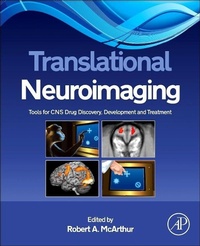
Translational Neuroimaging
Tools for CNS Drug Discovery, Development and Treatment
Erschienen am 14. Dezember 2012
Buch
Hardcover
464 Seiten
978-0-12-386945-6 (ISBN)
Beschreibung
Translational Neuroimaging: Tools for CNS Drug Discovery, Development and Treatment combines the experience of academic, clinical and industrial neuroimagers in a unique collaborative approach to provide an integrated perspective of the use of small animal and human brain imaging in developing and validating translational models and biomarkers for the study and treatment of neuropsychiatric disorders. Translational Neuroimaging: Tools for CNS Drug Discovery, Development and Treatment examines the translational role of neuroimaging in model development from preclinical animal models, to human experimental medicine, and finally to clinical studies. The focus of this book is to identify and provide common endpoints between species that can serve to inform both the clinic and the bench with the information needed to accelerate clinically-effective CNS drug discovery. This book covers methodical issues in human and animal neuroimaging translational research as well as detailed applied examples of the use of neuroimaging in neuropsychiatric disorders and the development of drugs for their treatment. Translational Neuroimaging: Tools for CNS Drug Discovery, Development and Treatment appeals to non-clinical and clinical neuroscientists working in and studying neuropsychiatric disorders and their treatment as well as providing the novice researcher or researcher outside of his/her expertise the opportunity to understand the background of translational research and the use of imaging in this field.
Rezensionen / Stimmen
"This book examines how neuroimaging can play a role in translational research by developing preclinical models and ultimately clinical studies for drug discovery." --Doody.com, October 17, 2013"Researchers in imaging technology, neurology, and mental health sciences introduce fundamental concepts of neuroimaging, the various modalities being used, how it is being used to study central nervous system (CNS) disorders, and specifically how it is being used to discover and develop drugs for such disorders." --Reference & Research Book News, October 2013
Weitere Details
Sprache
Englisch
Verlagsort
San Diego
USA
Verlagsgruppe
Elsevier Science Publishing Co Inc
Zielgruppe
Für Beruf und Forschung
Primary Market: Researchers in the biopharmaceutical industry and academic who actively work on CNS drug treatment studies, often found in molecular biology, pharmacology, neuroscience, and psychiatry departments drug delivery groups, as well as, researchers using animal models to study drug development and therapeutics.
Secondary Market: Graduate students, postdocs and professors at medical schools studying translational medicine.
Produkt-Hinweis
Fadenheftung
Gewebe-Einband
Maße
Höhe: 241 mm
Breite: 197 mm
Dicke: 27 mm
Gewicht
1122 gr
ISBN-13
978-0-12-386945-6 (9780123869456)
Copyright in bibliographic data and cover images is held by Nielsen Book Services Limited or by the publishers or by their respective licensors: all rights reserved.
Schweitzer Klassifikation
Weitere Ausgaben
Andere Ausgaben
Robert A. McArthur
Translational Neuroimaging
Tools for CNS Drug Discovery, Development and Treatment
E-Book
10/2012
Academic Press
149,00 €
Als Download verfügbar
Person
Dr. McArthur began his professional career investigating the role of serotonin on feeding behaviour at the Clarke Institute of Psychiatry in Toronto, Canada. This interest led him to complete a PhD in the psychopharmacology of feeding behaviour and macronutrient selection with John Blundell at the University of Leeds, Leeds, UK.
In 1981 he joined Beecham Pharmaceuticals to work on adrenergic involvement in energy expenditure and obesity. In 1983 Dr McArthur began working on M1 functional agonists for the treatment of Alzheimer disease and was responsible for demonstrating the initial procognitive effects of Sabcomeline. Following the merger of Beecham with SmithKline French, Dr McArthur was appointed Business Development Executive at I.T.E.M-Labo, Paris working with Roger Porsolt in behavioural pharmacology contract research. In 1992, Robert was appointed Head of Behavioral Pharmacology at Farmitalia Carlo Erba, later Pharmacia in Milan. His lab was responsible for the preclinical behavioural pharmacology of Sabcomeline (Alzheimer's and schizophrenia); Safinamide (epilepsy and Parkinson's); Reboxetine (depression); Cabergoline (Parkinson's); Nicergoline (Mild Cognitive Impairment); and Amperozide (alcoholism).
He is listed as an inventor in 19 issued patents and applications of which he is the principal inventor in 3. In 1998, Robert transferred to the Pharmacia and Upjohn Company in Kalamazoo, Michigan where as senior behavioural pharmacologist responsible, he worked on mutant mouse characterizations, the establishment of a primate unit assessing cognitive changes in monkeys (CANTAB), and development of anxiety models in marmosets. Soon after the merger of Pharmacia and Upjohn with Monsanto-Searle, Robert returned to Europe where in 2001 he founded the consulting company, McArthur and Associates GmbH in Basel.
Robert has since worked on a series of projects for both large Pharma as well as biotechs, including further primate work in Parkinson's, development of behavioural pharmacology expertise, novel target validation, due diligence, medical writing, strategy evaluation, scientific advisor and as an expert witness. Dr McArthur has pursued his academic interests in translational neuroscience. In 2003, Robert was appointed as a visiting Associate Research Professor in the Department of Neuroscience (Division of Behavioural Neuroscience) at the Karolinska Institute in Stockholm.
He has written and co-edited extensively on the subject of the clinical and translational relevance of animal models of CNS disorders. He has authored 43 peer-reviewed papers, 13 book chapters, co-author on 1 book and senior editor of a three-volume set on translational value of animal models for CNS drug discovery. He has served as section editor (CNS) for Current Opinion in Investigational Drugs and is on the editorial board of Drugs of the Future. In 2009 he was appointed an independent scientific expert evaluator for the European FP7-Health call.
In 1981 he joined Beecham Pharmaceuticals to work on adrenergic involvement in energy expenditure and obesity. In 1983 Dr McArthur began working on M1 functional agonists for the treatment of Alzheimer disease and was responsible for demonstrating the initial procognitive effects of Sabcomeline. Following the merger of Beecham with SmithKline French, Dr McArthur was appointed Business Development Executive at I.T.E.M-Labo, Paris working with Roger Porsolt in behavioural pharmacology contract research. In 1992, Robert was appointed Head of Behavioral Pharmacology at Farmitalia Carlo Erba, later Pharmacia in Milan. His lab was responsible for the preclinical behavioural pharmacology of Sabcomeline (Alzheimer's and schizophrenia); Safinamide (epilepsy and Parkinson's); Reboxetine (depression); Cabergoline (Parkinson's); Nicergoline (Mild Cognitive Impairment); and Amperozide (alcoholism).
He is listed as an inventor in 19 issued patents and applications of which he is the principal inventor in 3. In 1998, Robert transferred to the Pharmacia and Upjohn Company in Kalamazoo, Michigan where as senior behavioural pharmacologist responsible, he worked on mutant mouse characterizations, the establishment of a primate unit assessing cognitive changes in monkeys (CANTAB), and development of anxiety models in marmosets. Soon after the merger of Pharmacia and Upjohn with Monsanto-Searle, Robert returned to Europe where in 2001 he founded the consulting company, McArthur and Associates GmbH in Basel.
Robert has since worked on a series of projects for both large Pharma as well as biotechs, including further primate work in Parkinson's, development of behavioural pharmacology expertise, novel target validation, due diligence, medical writing, strategy evaluation, scientific advisor and as an expert witness. Dr McArthur has pursued his academic interests in translational neuroscience. In 2003, Robert was appointed as a visiting Associate Research Professor in the Department of Neuroscience (Division of Behavioural Neuroscience) at the Karolinska Institute in Stockholm.
He has written and co-edited extensively on the subject of the clinical and translational relevance of animal models of CNS disorders. He has authored 43 peer-reviewed papers, 13 book chapters, co-author on 1 book and senior editor of a three-volume set on translational value of animal models for CNS drug discovery. He has served as section editor (CNS) for Current Opinion in Investigational Drugs and is on the editorial board of Drugs of the Future. In 2009 he was appointed an independent scientific expert evaluator for the European FP7-Health call.
Inhalt
Preface
Chapter 1: Neuroimaging Modalities: Description, Comparisons, Strengths and Weaknesses
Chapter 2: Magnetic Resonance Imaging as a Tool for Modelling Drug Treatment of CNS Disorders: Strengths and Weaknesses
Chapter 3: Small Animal Imaging as a Tool For Modelling CNS disorders: Strengths and Weaknesses
Chapter 4: Structural Magnetic Resonance Imaging as a Biomarker for the Diagnosis, Progression, and Treatment of Alzheimer's Disease
Chapter 5: Positron Emission Tomography in Alzheimer's disease: Diagnosis and Use as Biomarker Endpoints
Chapter 6: Rethinking the Contribution of Neuroimaging to Translation in Schizophrenia.
Chapter 7: Neuroimaging as a Translational Tool in Animal and Human Models of Schizophrenia
Chapter 8: Functional Magnetic Resonance Imaging as a Biomarker for the Diagnosis, Progression and Treatment of Autistic Spectrum Disorders
Chapter 9: Translational Neuroimaging for Drug Discovery and Development in Autism Spectrum Disorders: Guidance from Clinical Imaging and Preclinical Research
Chapter 10: Neuroimaging as a Biomarker for the Diagnosis, Progression and Treatment of Substance Abuse Disorder
Chapter 11: Translational Neuroimaging: Substance Abuse Disorders
Chapter 12: Neuroimaging Approaches to the Understanding of Depression and the Identification of Novel Antidepressants
Chapter 1: Neuroimaging Modalities: Description, Comparisons, Strengths and Weaknesses
Chapter 2: Magnetic Resonance Imaging as a Tool for Modelling Drug Treatment of CNS Disorders: Strengths and Weaknesses
Chapter 3: Small Animal Imaging as a Tool For Modelling CNS disorders: Strengths and Weaknesses
Chapter 4: Structural Magnetic Resonance Imaging as a Biomarker for the Diagnosis, Progression, and Treatment of Alzheimer's Disease
Chapter 5: Positron Emission Tomography in Alzheimer's disease: Diagnosis and Use as Biomarker Endpoints
Chapter 6: Rethinking the Contribution of Neuroimaging to Translation in Schizophrenia.
Chapter 7: Neuroimaging as a Translational Tool in Animal and Human Models of Schizophrenia
Chapter 8: Functional Magnetic Resonance Imaging as a Biomarker for the Diagnosis, Progression and Treatment of Autistic Spectrum Disorders
Chapter 9: Translational Neuroimaging for Drug Discovery and Development in Autism Spectrum Disorders: Guidance from Clinical Imaging and Preclinical Research
Chapter 10: Neuroimaging as a Biomarker for the Diagnosis, Progression and Treatment of Substance Abuse Disorder
Chapter 11: Translational Neuroimaging: Substance Abuse Disorders
Chapter 12: Neuroimaging Approaches to the Understanding of Depression and the Identification of Novel Antidepressants