

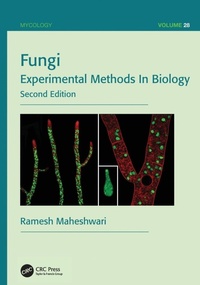
Fungi
Experimental Methods In Biology, Second Edition
2. Auflage
Erschienen am 16. November 2016
Buch
Softcover
358 Seiten
978-1-138-19925-5 (ISBN)
Beschreibung
Fungi are now at the forefront of research on mechanisms in gene silencing, biological rhythm, mating processes, biogenesis of intracellular organelles, adaptations to hostile habitats, structure of natural populations, and speciation. Because of their small genomes, fungi are being used in "systems biology" to understand the connections between genes, proteins, and metabolic and signaling pathways. The ease with which yeasts and fungi can be cultivated in simple nutritive media has also made these eukaryotic organisms the choice material for basic and applied research.
Fungi: Experimental Methods in Biology, Second Edition presents the latest information on fungal biology generated through advances in genetics, molecular biology, and biochemistry. It gives an account of real experiments that have been carried out on the diverse lifestyles of these organisms. Following in the footsteps of its highly-praised predecessor, this book continues to be a comprehensive review of the state of our knowledge about how fungi function.
Examining both unicellular and multicellular fungi, this accessible book covers:
Special features of fungi
Interaction of fungi with other organisms
Use of fungi as sources of chemicals for human health and welfare
Model fungi in research
Gene manipulation
Adaptations
Natural populations
Throughout, the book draws attention to unsolved questions and to the opportunities offered by the diversity of fungi. Written by a prominent mycologist, it provides an excellent introduction and reference for beginning researchers as well as for experienced professionals.
What's New in This Edition:
New chapters on spores' dormancy, germination, and uses; fungi as scavengers; and fungi as chemical factories
All chapters substantially revised, updated, and rewritten, in particular The Hyphal Mode of Life, Fungi as Symbiotic Partners, and Fungi as Plant Pathogens
New material on the use of yeast for functional analysis of genomes; the use of Neurospora in cytogenetics and genes controlling conidiation; and the identification of the clock gene
A new glossary to reinforce important concepts
Fungi: Experimental Methods in Biology, Second Edition presents the latest information on fungal biology generated through advances in genetics, molecular biology, and biochemistry. It gives an account of real experiments that have been carried out on the diverse lifestyles of these organisms. Following in the footsteps of its highly-praised predecessor, this book continues to be a comprehensive review of the state of our knowledge about how fungi function.
Examining both unicellular and multicellular fungi, this accessible book covers:
Special features of fungi
Interaction of fungi with other organisms
Use of fungi as sources of chemicals for human health and welfare
Model fungi in research
Gene manipulation
Adaptations
Natural populations
Throughout, the book draws attention to unsolved questions and to the opportunities offered by the diversity of fungi. Written by a prominent mycologist, it provides an excellent introduction and reference for beginning researchers as well as for experienced professionals.
What's New in This Edition:
New chapters on spores' dormancy, germination, and uses; fungi as scavengers; and fungi as chemical factories
All chapters substantially revised, updated, and rewritten, in particular The Hyphal Mode of Life, Fungi as Symbiotic Partners, and Fungi as Plant Pathogens
New material on the use of yeast for functional analysis of genomes; the use of Neurospora in cytogenetics and genes controlling conidiation; and the identification of the clock gene
A new glossary to reinforce important concepts
Rezensionen / Stimmen
"... Following in the footsteps of its highly-praised predecessor, this book continues to be a comprehensive review of the state of our knowledge about how fungi function."-Northeastern Naturalist, December 2012
Praise for the First Edition:"...an important volume. ...a comprehensive review of the state of our knowledge about how fungi function as individuals, populations, and members of the global economy of nature. Maheshwari has done an exemplary job. ...the integration of information from such a broad area and the general clarity of presentation found in this volume deserve wide readership among mycologists, plant pathologists, geneticists, and molecular biologists."
-David S. Yohalem, East Malling Research, Kent, UK
"The book is simply written and easy to digest, which is aided by the consistent editorial style throughout the book."
-N. Louise Glass, Mycopathologia, 2006
"The most important feature of the book is its comprehensive nature.... This book, in describing the modernization of mycology that has come from advances in biochemistry, genetics, and molecular biology, will serve as an excellent introduction and reference for students and investigators having a background in these subjects and a particular interest in the fungi.... As such, the book sets an agenda for fungal research in the 21st century."
-Rowland H. Davis, University of California, Irvine
"It should prove useful both for undergraduate students and postgraduate researchers."
-David J. Adams, Microbiology Today
Weitere Details
Reihe
Auflage
2nd edition
Sprache
Englisch
Verlagsort
London
Großbritannien
Verlagsgruppe
Taylor & Francis Ltd
Zielgruppe
Für höhere Schule und Studium
Für Beruf und Forschung
Mycologists, microbiologists, plant pathologists, geneticists, biochemists, and molecular biologists in universities and in biotechnology and pharmaceutical companies; undergraduate and postgraduate students in these fields.
Illustrationen
200 s/w Abbildungen, 5 farbige Abbildungen, 17 s/w Tabellen
17 Tables, black and white; 5 Illustrations, color; 200 Illustrations, black and white
Maße
Höhe: 254 mm
Breite: 178 mm
Dicke: 20 mm
Gewicht
681 gr
ISBN-13
978-1-138-19925-5 (9781138199255)
Copyright in bibliographic data and cover images is held by Nielsen Book Services Limited or by the publishers or by their respective licensors: all rights reserved.
Schweitzer Klassifikation
Weitere Ausgaben
Andere Ausgaben
E-Book
04/2016
2. Auflage
CRC Press
72,49 €
Als Download verfügbar
E-Book
04/2016
2. Auflage
CRC Press
72,49 €
Als Download verfügbar
Buch
09/2011
2. Auflage
CRC Press
205,10 €
Versand in 15-20 Tagen
Person
Ramesh Maheshwari received his PhD degree from the University of Wisconsin-Madison. He did his postdoctoral work at the University of Michigan-Ann Arbor and at Stanford University, California. He has held academic appointment as a professor of biochemistry at the Indian Institute of Science in Bangalore. He is the author of Fungi: Experimental Methods in Biology and over 100 scientific papers on fungal and plant physiology. The thrust of his research over a span of 35 years was on the physiology and enzymes of thermophilic fungi and the genetics and ecology of Neurospora.
Inhalt
The Unique Features of Fungi: The Hyphal Mode of Life. The Multinuclear Condition. Spores: Their Dormancy, Germination, and Uses. Fungi in Biosphere and Human Health: Fungi as Scavengers. Fungi as Symbiotic Partners. Fungi as Plant Pathogens. Fungi as Chemical Factories. Gene Silencing: Transformation and Discovery of Gene-Silencing Phenomena. Model Organisms: Yeast: A Unicellular Paradigm for Complex Biological Processes. Neurospora: A Gateway to Biology. Aspergillus nidulans: A Model for Study of Form and Asexual Reproduction. Ustilago maydis and Other Fungi as Models of Sexual Reproduction. Adaptations: Photoresponses and Circadian Rhythm. Thermophilic Fungi: Eukaryotic Life at High Temperature. Populations: Species-Their Diversity and Populations. Senescence. A Glossary of Mycological and Interdisciplinary Terms. Appendix: Naming, Defining, and Broadly Classifying Fungi. Index.