

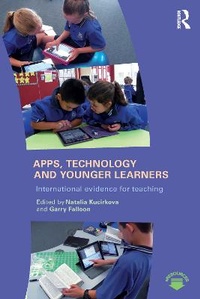
Apps, Technology and Younger Learners
International evidence for teaching
Erschienen am 21. Oktober 2016
Buch
Hardcover
306 Seiten
978-1-138-92787-2 (ISBN)
Beschreibung
This book provides an in-depth analysis of the challenges, potential and theoretical possibilities of apps and considers the processes of change for education and home learning environments. Drawing together a diverse team of international contributors, it addresses the specific features, context of use and content of apps to uncover the importance of these tools for young children's learning.
Apps, Technology and Younger Learners focuses on ways that apps support early years and primary school learning, connect various learning spaces and engage children in a range of edutainment and knowledge-building activities. In each chapter, the current state of knowledge and key research questions in the field for future study are identified, with clear messages provided at the end of each chapter.
Focusing on empirical studies and strong theoretical frameworks, this book covers four key parts:
Understanding the learning potential of children's apps;
Key app challenges;
Empirical evidence;
Future avenues.
This book is an essential guide for educators, post-graduate students, researchers and all those interested in the advantages or challenges that may result from integrating apps into early education.
Apps, Technology and Younger Learners focuses on ways that apps support early years and primary school learning, connect various learning spaces and engage children in a range of edutainment and knowledge-building activities. In each chapter, the current state of knowledge and key research questions in the field for future study are identified, with clear messages provided at the end of each chapter.
Focusing on empirical studies and strong theoretical frameworks, this book covers four key parts:
Understanding the learning potential of children's apps;
Key app challenges;
Empirical evidence;
Future avenues.
This book is an essential guide for educators, post-graduate students, researchers and all those interested in the advantages or challenges that may result from integrating apps into early education.
Weitere Details
Sprache
Englisch
Verlagsort
London
Großbritannien
Verlagsgruppe
Taylor & Francis Ltd
Zielgruppe
Für Beruf und Forschung
Illustrationen
52 s/w Photographien bzw. Rasterbilder, 10 s/w Zeichnungen, 24 s/w Tabellen
24 Tables, black and white; 10 Line drawings, black and white; 52 Halftones, black and white
Maße
Höhe: 234 mm
Breite: 156 mm
Gewicht
760 gr
ISBN-13
978-1-138-92787-2 (9781138927872)
Copyright in bibliographic data and cover images is held by Nielsen Book Services Limited or by the publishers or by their respective licensors: all rights reserved.
Schweitzer Klassifikation
Weitere Ausgaben
Andere Ausgaben
Natalia Kucirkova | Garry Falloon
Apps, Technology and Younger Learners
International evidence for teaching
E-Book
11/2016
Routledge
63,49 €
Als Download verfügbar
Natalia Kucirkova | Garry Falloon
Apps, Technology and Younger Learners
International evidence for teaching
E-Book
11/2016
Routledge
62,99 €
Als Download verfügbar
Natalia Kucirkova | Garry Falloon
Apps, Technology and Younger Learners
International evidence for teaching
Buch
10/2016
Routledge
69,90 €
Versand in 10-20 Tagen
Personen
Natalia Kucirkova is Senior Lecturer in Childhood, Youth and Education Studies at Manchester Metropolitan University, UK.
Garry Falloon is Associate Professor in the School of Curriculum and Pedagogy at the University of Waikato, New Zealand.
Garry Falloon is Associate Professor in the School of Curriculum and Pedagogy at the University of Waikato, New Zealand.
Inhalt
Part 1: Understanding the learning potential of children's apps
1. Apps and learning: A sociocultural perspective
Roger Saeljoe
2. Learning from apps in the home: Parents and play
Jenny Radesky & Barry Zuckerman
3. First principles of teaching reading with e-Books in the primary grades
Kathleeen Roskos
Part 2: Key app challenges
4. Reading between the lines: Market scan and analysis of language and literacy-focused children's apps
Sarah E. Vaala
5 Teaching and learning with tablets: A case study of 21st century skills and new learning
Nicola Yelland
6. App Maps: Evaluating children's iPad software for 21st century literacy learning
Karen E. Wohlwend and Jennifer Rowsell
7. Touch design and narrative interpretation: A social semiotic approach to picture book apps
Sumin Zhao and Len Unsworth
8. Put their learning in their hands: Apps supporting self-regulated learning
Julie Mueller, Karin Archer, Eileen Wood and Domenica De Pasquale
Part 3: Empirical evidence
9. The use of tablet technology to support development of early mathematical skills: A cross-cultural comparison
Nicola J Pitchford and Laura Outhwaite
10. "Makes learning easier - they're active": Using apps in early years mathematics
Nigel Calder
11. Adults and children make meaning together with E-books
Kathrin Rees, Susan Rvachew and Aparna Nadig
12. Literacy teaching with tablets in bilingual primary classrooms: The Malta Tablet study
Charles l. Mifsud and Louisa Grech
13. iPad-supported learning and development for a child with mild cerebral palsy
Elaine Khoo
14. Enhancing science learning with BYOD (Bring Your Own Device) in a primary school in Hong Kong
Yanjie Song and Wai Ying Ku
15. Bringing Pudsey to Life: Young children's use of augmented reality apps
Jackie Marsh and Dylan Yamada-Rice
16. Young Children in an Education Context: Apps, cultural agency and expanding communicative repertoires
Karen Daniels
Part 4: Future Avenues
17. Digital play: Conceptualising the relation between real, augmented and virtual realities
Marilyn Fleer
18. iPads, apps and student thinking skill development
Garry Falloon
19. Trans- and intra- apps: innovating the app market and use
Natalia Kucirkova
20. A model of mobile knowledge building with apps for pre-service teacher education
Kevin Burden
1. Apps and learning: A sociocultural perspective
Roger Saeljoe
2. Learning from apps in the home: Parents and play
Jenny Radesky & Barry Zuckerman
3. First principles of teaching reading with e-Books in the primary grades
Kathleeen Roskos
Part 2: Key app challenges
4. Reading between the lines: Market scan and analysis of language and literacy-focused children's apps
Sarah E. Vaala
5 Teaching and learning with tablets: A case study of 21st century skills and new learning
Nicola Yelland
6. App Maps: Evaluating children's iPad software for 21st century literacy learning
Karen E. Wohlwend and Jennifer Rowsell
7. Touch design and narrative interpretation: A social semiotic approach to picture book apps
Sumin Zhao and Len Unsworth
8. Put their learning in their hands: Apps supporting self-regulated learning
Julie Mueller, Karin Archer, Eileen Wood and Domenica De Pasquale
Part 3: Empirical evidence
9. The use of tablet technology to support development of early mathematical skills: A cross-cultural comparison
Nicola J Pitchford and Laura Outhwaite
10. "Makes learning easier - they're active": Using apps in early years mathematics
Nigel Calder
11. Adults and children make meaning together with E-books
Kathrin Rees, Susan Rvachew and Aparna Nadig
12. Literacy teaching with tablets in bilingual primary classrooms: The Malta Tablet study
Charles l. Mifsud and Louisa Grech
13. iPad-supported learning and development for a child with mild cerebral palsy
Elaine Khoo
14. Enhancing science learning with BYOD (Bring Your Own Device) in a primary school in Hong Kong
Yanjie Song and Wai Ying Ku
15. Bringing Pudsey to Life: Young children's use of augmented reality apps
Jackie Marsh and Dylan Yamada-Rice
16. Young Children in an Education Context: Apps, cultural agency and expanding communicative repertoires
Karen Daniels
Part 4: Future Avenues
17. Digital play: Conceptualising the relation between real, augmented and virtual realities
Marilyn Fleer
18. iPads, apps and student thinking skill development
Garry Falloon
19. Trans- and intra- apps: innovating the app market and use
Natalia Kucirkova
20. A model of mobile knowledge building with apps for pre-service teacher education
Kevin Burden