

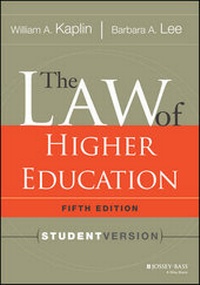
The Law of Higher Education
Student Version
5. Auflage
Erschienen am 18. März 2014
Buch
Softcover
944 Seiten
978-1-118-03662-4 (ISBN)
Beschreibung
Based on the fifth edition of the indispensable guide to the laws that bear on the conduct of higher education, this student edition provides an up-to-date textbook, reference, and guide for coursework in higher education law and programs preparing higher education administrators for leadership roles. This student edition contains a glossary of key terms and an appendix on how to read legal material for the non-law student. Each chapter is introduced by a discussion of key terms and ideas the students will encounter.
Weitere Details
Weitere Ausgaben
Nachauflagen
William A. Kaplin | Barbara A. Lee | Neal H. Hutchens
The Law of Higher Education: Student Version
Student Version
Buch
03/2020
6. Auflage
Jossey-Bass
95,90 €
Artikel ist vergriffen; siehe Neuauflage
Vorauflage
Buch
08/2007
4. Auflage
Jossey-Bass
83,90 €
Artikel ist vergriffen; siehe Neuauflage
Personen
WILLIAM A. KAPLIN is professor of law emeritus at The Catholic University of America, Washington, DC, where he also served as special counsel to the Office of General Counsel. He is now senior fellow at the Center for Excellence in Higher Education Law and Policy, Stetson University College of Law.
BARBARA A. LEE is professor of human resource management at Rutgers University's School of Management and Labor Relations and of counsel to the law firm of Edwards Wildman Palmer. An attorney, she teaches employment law and higher education law.
Together they are the authors of The Law of Higher Education, now in its fifth edition, and A Legal Guide for Student Affairs Professionals.
BARBARA A. LEE is professor of human resource management at Rutgers University's School of Management and Labor Relations and of counsel to the law firm of Edwards Wildman Palmer. An attorney, she teaches employment law and higher education law.
Together they are the authors of The Law of Higher Education, now in its fifth edition, and A Legal Guide for Student Affairs Professionals.
Inhalt
Notice to Instructors vii
Notice of Web Site and Periodic Supplements for the Student Version ix
Crosswalk for the Student Version xix
Preface xxix
Acknowledgments xxxvii
The Authors xxxix
General Introduction: The Study of Higher Education Law 1
A. The Universe of Education Law 1
B. The Governance of Higher Education 3
C. Sources of Higher Education Law 3
D. The Legal Relationships Within Institutions of Higher Education 4
E. The Law/Policy Distinction 7
F. The U.S. Legal System as It Relates to Higher Education Law 7
PART ONE PERSPECTIVES AND FOUNDATIONS 9
1 Overview of Higher Education Law 11
Section 1.1 How Far the Law Reaches and How Loudly It Speaks 11
Section 1.2 Evolution of Higher Education Law 16
Section 1.3 The Governance of Higher Education 18
Section 1.4 Sources of Higher Education Law 24
Section 1.5 The Public-Private Dichotomy 33
Section 1.6 Religion and the Public-Private Dichotomy 46
Section 1.7 The Relationship Between Law and Policy 62
2 Legal Planning and Dispute Resolution 66
Section 2.1 Legal Liability 66
Section 2.2 Litigation in the Courts 71
Section 2.3 Alternative Dispute Resolution 80
Section 2.4 Institutional Management of Liability Risk 86
PART TWO THE COLLEGE AND ITS GOVERNING BOARD AND STAFF 91
3 The College's Authority and Liability 93
Section 3.1 The Question of Authority 93
Section 3.2 Institutional Tort Liability 97
Section 3.3 Institutional Contract Liability 125
Section 3.4 Institutional Liability for Violating Federal Constitutional Rights (Section 1983 Liability) 129
4 The College and Its Employees 136
Section 4.1 Overview of Employment Relationships 136
Section 4.2 Employment Contracts 138
Section 4.3 Collective Bargaining 140
Section 4.4 Personal Liability of Employees 144
Section 4.5 Employment Discrimination 159
Section 4.6 Affirmative Action 192
Section 4.7 Application of Nondiscrimination Laws to Religious Institutions 203
PART THREE THE COLLEGE AND ITS FACULTY 211
5 Special Issues in Faculty Employment 213
Section 5.1 Overview 213
Section 5.2 Faculty Contracts 214
Section 5.3 Faculty Collective Bargaining 226
Section 5.4 Application of Nondiscrimination Laws to Faculty Employment Decisions 231
Section 5.5 Affirmative Action in Faculty Employment Decisions 239
Section 5.6 Standards and Criteria for Faculty Employment Decisions 243
Section 5.7 Procedures for Faculty Employment Decisions 253
6 Faculty Academic Freedom and Freedom of Expression 275
Section 6.1 General Concepts and Principles 275
Section 6.2 Academic Freedom in Teaching 307
Section 6.3 Academic Freedom in Research and Publication 327
Section 6.4 Academic Freedom in Religious Colleges and Universities 338
PART FOUR THE COLLEGE AND ITS STUDENTS 341
7 The Student-Institution Relationship 343
Section 7.1 The Legal Status of Students 343
Section 7.2 Admissions 376
Section 7.3 Financial Aid 424
Section 7.4 Student Housing 446
Section 7.5 Campus Computer Networks 461
Section 7.6 Campus Security 476
Section 7.7 Other Support Services 490
Section 7.8 Student Records 495
8 Student Academic Issues 507
Section 8.1 Overview 507
Section 8.2 Grading and Academic Standards 508
Section 8.3 Online Programs 516
Section 8.4 Academic Accommodations for Students with Disabilities 519
Section 8.5 Sexual Harassment of Students by Faculty Members 533
Section 8.6 Academic Dismissals and Other Academic Sanctions 553
9 Student Disciplinary Issues 569
Section 9.1 Disciplinary and Grievance Systems 569
Section 9.2 Disciplinary Rules and Regulations 580
Section 9.3 Procedures for Suspension, Dismissal, and Other Sanctions 587
Section 9.4 Student Protests and Freedom of Speech 602
Section 9.5 Speech Codes and the Problem of Hate Speech 624
10 Rights and Responsibilities of Student Organizations and Their Members 637
Section 10.1 Student Organizations 637
Section 10.2 Fraternities and Sororities 672
Section 10.3 The Student Press 685
Section 10.4 Athletics Teams and Clubs 704
PART FIVE THE COLLEGE AND THE OUTSIDE WORLD 747
11 The College and Government 749
Section 11.1 Local Government Regulation 749
Section 11.2 State Government Regulation 766
Section 11.3 Federal Government Regulation 779
Section 11.4 Federal Aid-to-Education Programs 794
Section 11.5 Civil Rights Compliance 797
12 The College and External Private Entities 816
Section 12.1 The Education Associations 816
Section 12.2 Business Partners 823
APPENDICES
A. Constitution of the United States of America: Provisions of Particular Interest to Postsecondary Education 833
B. The American Court System 839
C. Reading and Analyzing Court Opinions 843
D. Glossary of Legal Terms 847
Bibliography 855
Statute Index 865
Case Index 871
Subject Index 885
Notice of Web Site and Periodic Supplements for the Student Version ix
Crosswalk for the Student Version xix
Preface xxix
Acknowledgments xxxvii
The Authors xxxix
General Introduction: The Study of Higher Education Law 1
A. The Universe of Education Law 1
B. The Governance of Higher Education 3
C. Sources of Higher Education Law 3
D. The Legal Relationships Within Institutions of Higher Education 4
E. The Law/Policy Distinction 7
F. The U.S. Legal System as It Relates to Higher Education Law 7
PART ONE PERSPECTIVES AND FOUNDATIONS 9
1 Overview of Higher Education Law 11
Section 1.1 How Far the Law Reaches and How Loudly It Speaks 11
Section 1.2 Evolution of Higher Education Law 16
Section 1.3 The Governance of Higher Education 18
Section 1.4 Sources of Higher Education Law 24
Section 1.5 The Public-Private Dichotomy 33
Section 1.6 Religion and the Public-Private Dichotomy 46
Section 1.7 The Relationship Between Law and Policy 62
2 Legal Planning and Dispute Resolution 66
Section 2.1 Legal Liability 66
Section 2.2 Litigation in the Courts 71
Section 2.3 Alternative Dispute Resolution 80
Section 2.4 Institutional Management of Liability Risk 86
PART TWO THE COLLEGE AND ITS GOVERNING BOARD AND STAFF 91
3 The College's Authority and Liability 93
Section 3.1 The Question of Authority 93
Section 3.2 Institutional Tort Liability 97
Section 3.3 Institutional Contract Liability 125
Section 3.4 Institutional Liability for Violating Federal Constitutional Rights (Section 1983 Liability) 129
4 The College and Its Employees 136
Section 4.1 Overview of Employment Relationships 136
Section 4.2 Employment Contracts 138
Section 4.3 Collective Bargaining 140
Section 4.4 Personal Liability of Employees 144
Section 4.5 Employment Discrimination 159
Section 4.6 Affirmative Action 192
Section 4.7 Application of Nondiscrimination Laws to Religious Institutions 203
PART THREE THE COLLEGE AND ITS FACULTY 211
5 Special Issues in Faculty Employment 213
Section 5.1 Overview 213
Section 5.2 Faculty Contracts 214
Section 5.3 Faculty Collective Bargaining 226
Section 5.4 Application of Nondiscrimination Laws to Faculty Employment Decisions 231
Section 5.5 Affirmative Action in Faculty Employment Decisions 239
Section 5.6 Standards and Criteria for Faculty Employment Decisions 243
Section 5.7 Procedures for Faculty Employment Decisions 253
6 Faculty Academic Freedom and Freedom of Expression 275
Section 6.1 General Concepts and Principles 275
Section 6.2 Academic Freedom in Teaching 307
Section 6.3 Academic Freedom in Research and Publication 327
Section 6.4 Academic Freedom in Religious Colleges and Universities 338
PART FOUR THE COLLEGE AND ITS STUDENTS 341
7 The Student-Institution Relationship 343
Section 7.1 The Legal Status of Students 343
Section 7.2 Admissions 376
Section 7.3 Financial Aid 424
Section 7.4 Student Housing 446
Section 7.5 Campus Computer Networks 461
Section 7.6 Campus Security 476
Section 7.7 Other Support Services 490
Section 7.8 Student Records 495
8 Student Academic Issues 507
Section 8.1 Overview 507
Section 8.2 Grading and Academic Standards 508
Section 8.3 Online Programs 516
Section 8.4 Academic Accommodations for Students with Disabilities 519
Section 8.5 Sexual Harassment of Students by Faculty Members 533
Section 8.6 Academic Dismissals and Other Academic Sanctions 553
9 Student Disciplinary Issues 569
Section 9.1 Disciplinary and Grievance Systems 569
Section 9.2 Disciplinary Rules and Regulations 580
Section 9.3 Procedures for Suspension, Dismissal, and Other Sanctions 587
Section 9.4 Student Protests and Freedom of Speech 602
Section 9.5 Speech Codes and the Problem of Hate Speech 624
10 Rights and Responsibilities of Student Organizations and Their Members 637
Section 10.1 Student Organizations 637
Section 10.2 Fraternities and Sororities 672
Section 10.3 The Student Press 685
Section 10.4 Athletics Teams and Clubs 704
PART FIVE THE COLLEGE AND THE OUTSIDE WORLD 747
11 The College and Government 749
Section 11.1 Local Government Regulation 749
Section 11.2 State Government Regulation 766
Section 11.3 Federal Government Regulation 779
Section 11.4 Federal Aid-to-Education Programs 794
Section 11.5 Civil Rights Compliance 797
12 The College and External Private Entities 816
Section 12.1 The Education Associations 816
Section 12.2 Business Partners 823
APPENDICES
A. Constitution of the United States of America: Provisions of Particular Interest to Postsecondary Education 833
B. The American Court System 839
C. Reading and Analyzing Court Opinions 843
D. Glossary of Legal Terms 847
Bibliography 855
Statute Index 865
Case Index 871
Subject Index 885