

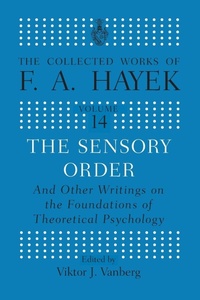
The Sensory Order and Other Writings on the Foundations of Theoretical Psychology
And other Writings on the Foundations of Theoretical Psychology
1. Auflage
Erschienen am 30. September 2020
Buch
Softcover
404 Seiten
978-0-367-66774-0 (ISBN)
Beschreibung
The Sensory Order, first published in 1952, sets forth F. A. Hayek's classic theory of mind in which he describes the mental mechanism that classifies perceptions that cannot be accounted for by physical laws. Hayek's substantial contribution to theoretical psychology has been addressed in the work of Thomas Szasz, Gerald Edelman, and Joaquin Fuster.
Rezensionen / Stimmen
"A most encouraging example of a sustained attempt to bring together information, inference, and hypothesis in the several fields of biology, psychology, and philosophy."- Quarterly Review of BiologyWeitere Details
Reihe
Sprache
Englisch
Verlagsort
London
Großbritannien
Verlagsgruppe
Taylor & Francis Ltd
Zielgruppe
Für höhere Schule und Studium
Produkt-Hinweis
Broschur/Paperback
Klebebindung
Maße
Höhe: 229 mm
Breite: 152 mm
Dicke: 22 mm
Gewicht
549 gr
ISBN-13
978-0-367-66774-0 (9780367667740)
Copyright in bibliographic data and cover images is held by Nielsen Book Services Limited or by the publishers or by their respective licensors: all rights reserved.
Schweitzer Klassifikation
Weitere Ausgaben
Andere Ausgaben
F.A Hayek | Viktor J. Vanberg
The Sensory Order and Other Writings on the Foundations of Theoretical Psychology
E-Book
07/2017
1. Auflage
Routledge
61,99 €
Als Download verfügbar
F.A Hayek | Viktor J. Vanberg
The Sensory Order and Other Writings on the Foundations of Theoretical Psychology
E-Book
07/2017
1. Auflage
Routledge
61,99 €
Als Download verfügbar
F.A Hayek | Viktor J. Vanberg
The Sensory Order and Other Writings on the Foundations of Theoretical Psychology
And other Writings on the Foundations of Theoretical Psychology
Buch
07/2017
1. Auflage
Routledge
207,00 €
Versand in 15-20 Tagen
Personen
F. A. Hayek (1899-1992), recipient of the Medal of Freedom in 1991 and co-winner of the Nobel Memorial Prize in Economics in 1974, taught at the University of London, the University of Chicago, and the University of Freiburg.
Viktor J. Vanberg is Professor Emeritus of Freiburg University and a senior research fellow of the Walter Eucken Institut in Freiburg.
Viktor J. Vanberg is Professor Emeritus of Freiburg University and a senior research fellow of the Walter Eucken Institut in Freiburg.
Inhalt
Preface
Introduction
I. The Nature of the Problem
1. What is Mind?
2. The Phenomenal and the Physical World
3. Stimulus, Impulse, and the Theory of the Specific Energy of the Nerves
4. Differences in Quality are Differences in the Effects
5. The Unitary Character of the Sensory Order
6. The Order of Sensory Qualities not Confined to Conscious Experience
7. The Denial or Disregard of Our Problem by Behaviorism
8. The 'Absolute' Qualities of Sensations a Phantom-Problem
II. An Outline of the Theory
1. The Principle of the Explanation
2. The Sensory Order in its Static and in its Dynamic Aspects
3. The Principle of Classification
4. Multiple Classification
5. The Central Thesis
III. The Nervous System as an Instrument of Classification
1. An Inventory of the Physiological Data
2. Simplifying Assumptions on which the Operation of the Principle will be Discussed
3. Elementary Forms of Classification
4. Complex Forms of Classification
5. The Classification of the Relation Between Classes
6. The Universal Character of the Process of Classification: Gestalt Phenomena and Abstract Concepts
IV. Sensation and Behaviour
1. Sensations and the Organism
2. Evolution and the Hierarchal Order of the Nervous System
3. From Specific Reflex to Generalized Evaluation
4. Proprioception of Low-Level Responses
5. Postures and Movements Connected with Perception
6. Patterns of Motor Responses
7. Biogenic Needs and Drives
8. Emotions and the James-Lange Theory
V. The Structure of the Mental Order
1. Pre-Sensory Experience or 'Linkages'
2. The Gradual Formation of a 'Map' Reproducing Relations Between Events in the Environment
3. The 'Map' and the 'Model'
4. Associative Processes
5. Mechanical and Purposive Behaviour
6. The Model-Object Relationship
VI. Consciousness and Conceptual Thought
1. Conscious and Unconscious Mental Processes
2. Criteria of Consciousness
3. The Common Space-Time Framework
4. Attention
5. The Functions of Consciousness
6. 'Concrete' and 'Abstract'
7. Conceptual Thought
VII. Confirmations and Verification of the Theory
1. Observed Facts for which the Theory Accounts
2. Older Theories Comprised as Special Cases
3. New Experiments Suggested
4. Possibilities of Experimental Refutation
VIII. Philosophical Consequences
1. Pre-Sensory Experience and Pure Empiricism
2. Phenomenalism and the Inconstancy of Sensory Qualities
3. Dualisms and Materialism
4. The Nature of Explanation
5. Explanation of the Principle
6. The Limits of Explanation
7. The Division of the Sciences and the 'Freedom of the Will'
Bibliography
Index
Introduction
I. The Nature of the Problem
1. What is Mind?
2. The Phenomenal and the Physical World
3. Stimulus, Impulse, and the Theory of the Specific Energy of the Nerves
4. Differences in Quality are Differences in the Effects
5. The Unitary Character of the Sensory Order
6. The Order of Sensory Qualities not Confined to Conscious Experience
7. The Denial or Disregard of Our Problem by Behaviorism
8. The 'Absolute' Qualities of Sensations a Phantom-Problem
II. An Outline of the Theory
1. The Principle of the Explanation
2. The Sensory Order in its Static and in its Dynamic Aspects
3. The Principle of Classification
4. Multiple Classification
5. The Central Thesis
III. The Nervous System as an Instrument of Classification
1. An Inventory of the Physiological Data
2. Simplifying Assumptions on which the Operation of the Principle will be Discussed
3. Elementary Forms of Classification
4. Complex Forms of Classification
5. The Classification of the Relation Between Classes
6. The Universal Character of the Process of Classification: Gestalt Phenomena and Abstract Concepts
IV. Sensation and Behaviour
1. Sensations and the Organism
2. Evolution and the Hierarchal Order of the Nervous System
3. From Specific Reflex to Generalized Evaluation
4. Proprioception of Low-Level Responses
5. Postures and Movements Connected with Perception
6. Patterns of Motor Responses
7. Biogenic Needs and Drives
8. Emotions and the James-Lange Theory
V. The Structure of the Mental Order
1. Pre-Sensory Experience or 'Linkages'
2. The Gradual Formation of a 'Map' Reproducing Relations Between Events in the Environment
3. The 'Map' and the 'Model'
4. Associative Processes
5. Mechanical and Purposive Behaviour
6. The Model-Object Relationship
VI. Consciousness and Conceptual Thought
1. Conscious and Unconscious Mental Processes
2. Criteria of Consciousness
3. The Common Space-Time Framework
4. Attention
5. The Functions of Consciousness
6. 'Concrete' and 'Abstract'
7. Conceptual Thought
VII. Confirmations and Verification of the Theory
1. Observed Facts for which the Theory Accounts
2. Older Theories Comprised as Special Cases
3. New Experiments Suggested
4. Possibilities of Experimental Refutation
VIII. Philosophical Consequences
1. Pre-Sensory Experience and Pure Empiricism
2. Phenomenalism and the Inconstancy of Sensory Qualities
3. Dualisms and Materialism
4. The Nature of Explanation
5. Explanation of the Principle
6. The Limits of Explanation
7. The Division of the Sciences and the 'Freedom of the Will'
Bibliography
Index