


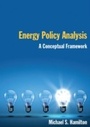
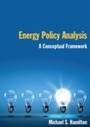
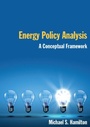
Energy Policy Analysis: A Conceptual Framework
A Conceptual Framework
1. Auflage
Erschienen am 15. November 2012
Buch
Hardcover
256 Seiten
978-0-7656-2381-2 (ISBN)
Beschreibung
Presented in nontechnical terms, this book offers a unique and powerful conceptual framework for analysis of energy technologies (standard and alternative) in terms of their respective dollar costs, environmental costs, and national security costs. Energy technologies examined include coal, nuclear, oil, natural gas, solar, wind, geothermal, hydropower, biomass and biogas, energy conservation and efficiency, ocean power, hydrogen, electric power and transmission, and transportation. This three-point framework allows examination of issues and problems associated with implementation of U.S. energy policies in the context of major social goals (such as growth and equity), with treatment of conflicts and trade-offs between energy development and other social values (such as health and safety, cultural, historical, and aesthetic values). These are the key political issues for policy makers formulating national energy policy and decisions makers implementing it.
Weitere Details
Sprache
Englisch
Verlagsort
London
Großbritannien
Verlagsgruppe
Taylor & Francis Ltd
Zielgruppe
Für höhere Schule und Studium
Für Beruf und Forschung
Illustrationen
Illustrations
Maße
Höhe: 246 mm
Breite: 174 mm
Gewicht
408 gr
ISBN-13
978-0-7656-2381-2 (9780765623812)
Copyright in bibliographic data and cover images is held by Nielsen Book Services Limited or by the publishers or by their respective licensors: all rights reserved.
Schweitzer Klassifikation
Weitere Ausgaben
Andere Ausgaben
E-Book
12/2014
1. Auflage
Routledge
55,49 €
Als Download verfügbar
E-Book
12/2014
1. Auflage
Routledge
55,49 €
Als Download verfügbar
Buch
11/2012
1. Auflage
Routledge
69,37 €
Versand in 15-20 Tagen
Person
Authored by Hamilton, Michael S
Inhalt
Chapter 1 A Framework for Analysis of Energy Choices; Chapter 2 Coal; Chapter 3 Nuclear; Chapter 4 Oil and Natural Gas; Chapter 5 Solar; Chapter 6 Wind; Chapter 7 Geothermal; Chapter 8 Hydroelectricity; Chapter 9 Biomass; Chapter 10 Conservation and Efficiency; Chapter 11 Ocean; Chapter 12 Hydrogen; Chapter 13 Transportation and Electricity Transmission; Chapter 14 Conclusion;