

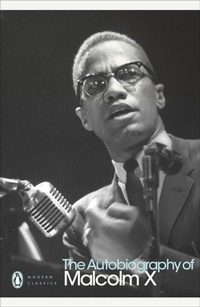
The Autobiography of Malcolm X
Erschienen am 1. März 2001
Buch
Softcover
528 Seiten
978-0-14-118543-9 (ISBN)
Beschreibung
Malcolm X's The Autobiography of Malcolm X was written in collaboration with Alex Haley, author of Roots, and includes an introduction by Paul Gilroy, author of The Black Atlantic, in Penguin Modern Classics.
From hustling, drug addiction and armed violence in America's black ghettos Malcolm X turned, in a dramatic prison conversion, to the puritanical fervour of the Black Muslims. As their spokesman he became identified in the white press as a terrifying teacher of race hatred; but to his direct audience, the oppressed American blacks, he brought hope and self-respect. This autobiography (written with Alex Haley) reveals his quick-witted integrity, usually obscured by batteries of frenzied headlines, and the fierce idealism which led him to reject both liberal hypocrisies and black racialism.
Vilified by his critics as an anti-white demagogue, Malcolm X gave a voice to unheard African-Americans, bringing them pride, hope and fearlessness, and remains an inspirational and controversial figure.
Malcolm X (1925-65), born Malcolm Little in Omaha, and also known as El-Hajj Malik El-Shabazz, lost both his parents at a young age. Leaving school early, he soon became part of Harlem's underworld, and in 1946 he was sentenced to ten years' imprisonment. It was in prison that Malcolm X converted to Islam. Paroled in 1952, he became an outspoken defender of Muslim doctrines, formed the Organization of Afro-American Unity in 1963, and had received considerable publicity by the time of his assassination in 1965.
If you enjoyed The Autobiography of Malcolm X, you might like Nelson Mandela's No Easy Walk to Freedom, also available in Penguin Modern Classics.
'This extraordinary autobiography is a brilliant, painful, important book'
The New York Times
From hustling, drug addiction and armed violence in America's black ghettos Malcolm X turned, in a dramatic prison conversion, to the puritanical fervour of the Black Muslims. As their spokesman he became identified in the white press as a terrifying teacher of race hatred; but to his direct audience, the oppressed American blacks, he brought hope and self-respect. This autobiography (written with Alex Haley) reveals his quick-witted integrity, usually obscured by batteries of frenzied headlines, and the fierce idealism which led him to reject both liberal hypocrisies and black racialism.
Vilified by his critics as an anti-white demagogue, Malcolm X gave a voice to unheard African-Americans, bringing them pride, hope and fearlessness, and remains an inspirational and controversial figure.
Malcolm X (1925-65), born Malcolm Little in Omaha, and also known as El-Hajj Malik El-Shabazz, lost both his parents at a young age. Leaving school early, he soon became part of Harlem's underworld, and in 1946 he was sentenced to ten years' imprisonment. It was in prison that Malcolm X converted to Islam. Paroled in 1952, he became an outspoken defender of Muslim doctrines, formed the Organization of Afro-American Unity in 1963, and had received considerable publicity by the time of his assassination in 1965.
If you enjoyed The Autobiography of Malcolm X, you might like Nelson Mandela's No Easy Walk to Freedom, also available in Penguin Modern Classics.
'This extraordinary autobiography is a brilliant, painful, important book'
The New York Times
Weitere Details
Reihe
Sprache
Englisch
Verlagsort
London
Großbritannien
Verlagsgruppe
Penguin Books Ltd
Produkt-Hinweis
Paperback
Maße
Höhe: 200 mm
Breite: 130 mm
Dicke: 32 mm
Gewicht
390 gr
ISBN-13
978-0-14-118543-9 (9780141185439)
Copyright in bibliographic data and cover images is held by Nielsen Book Services Limited or by the publishers or by their respective licensors: all rights reserved.
Schweitzer Klassifikation
Personen
Inhalt
Nightmare; mascot; "homeboy"; Laura; harlemite; Detroit red; hustler; trapped; caught; satan; saved; saviour; minister Malcolm X; Black Muslims; Icarus; out; Mecca; El-Hajj Malik El-Shabazz; 1965.