

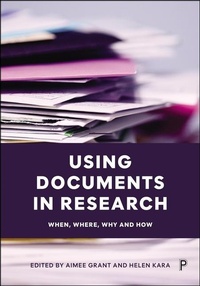
Using Documents in Research
When, Where, Why and How
1. Auflage
Erscheint ca. am 27. Januar 2026
Buch
Softcover
224 Seiten
978-1-4473-7493-0 (ISBN)
Beschreibung
Documents are a rich yet often overlooked source of research data, offering unique insights across disciplines. This book provides a clear and practical guide to working with a wide variety of documents - including historical and contemporary, hard copy and digital - alone and in teams. Featuring contributions from leading international scholars, it unpacks the decisions researchers make when finding, selecting and analysing documents.
Organised into four sections, the book examines how researchers engage with seemingly mundane materials, explore documents in popular culture, apply multi-modal research techniques, and develop innovative approaches to dissemination. Each chapter offers real-world case studies, illustrating diverse research questions, theoretical perspectives and analytical methods.
Key features include:
- Step-by-step guidance on applying document analysis methods in research;
- Diverse case studies showcasing practical applications across fields;
- Engaging and accessible explanations that clarify complex approaches.
Filling a crucial gap in the methods literature, this essential text equips students and researchers with the tools to harness the full potential of documents in research.
Organised into four sections, the book examines how researchers engage with seemingly mundane materials, explore documents in popular culture, apply multi-modal research techniques, and develop innovative approaches to dissemination. Each chapter offers real-world case studies, illustrating diverse research questions, theoretical perspectives and analytical methods.
Key features include:
- Step-by-step guidance on applying document analysis methods in research;
- Diverse case studies showcasing practical applications across fields;
- Engaging and accessible explanations that clarify complex approaches.
Filling a crucial gap in the methods literature, this essential text equips students and researchers with the tools to harness the full potential of documents in research.
Rezensionen / Stimmen
"Using Documents in Research is a fine book containing insights on how valuable documents can be for conducting various kinds of studies." Hani Morgan, University of Southern Mississippi "A fascinating resource for researchers seeking to use documents for original research. The case studies illustrate a range of disciplines and topics, providing valuable insight into the rationale, methodology and methods of this rich and often overlooked data." Helen Lomax, Sheffield Hallam University"This collection doesn't just teach document analysis - it revolutionizes it. From conflict zones to digital archives, these scholars push methodological boundaries, equipping researchers with cutting-edge skills for today's complex documentary landscape." Narelle Lemon, Edith Cowan University and Explore & Create Co.
Weitere Details
Auflage
First Edition
Sprache
Englisch
Verlagsort
Bristol
Großbritannien
Verlagsgruppe
Bristol University Press
Zielgruppe
Für höhere Schule und Studium
Illustrationen
6 s/w Abbildungen, 7 s/w Tabellen
Not illustrated
Maße
Höhe: 170 mm
Breite: 244 mm
Dicke: 17 mm
Gewicht
410 gr
ISBN-13
978-1-4473-7493-0 (9781447374930)
Copyright in bibliographic data and cover images is held by Nielsen Book Services Limited or by the publishers or by their respective licensors: all rights reserved.
Schweitzer Klassifikation
Weitere Ausgaben
Andere Ausgaben
Buch
ca. 01/2026
1. Auflage
Policy Press
129,50 €
Noch nicht erschienen
E-Book
01/2026
1. Auflage
Policy Press
42,99 €
Als Download verfügbar
Personen
Aimee Grant is Senior Lecturer in Public Health and a Wellcome Trust Career Development Fellow, researching gender, disability and health, at Swansea University.
Helen Kara is a researcher, author, teacher, and speaker specialising in creative research methods, radical research ethics and creative academic writing.
Helen Kara is a researcher, author, teacher, and speaker specialising in creative research methods, radical research ethics and creative academic writing.
Inhalt
1. Introduction (Aimee Grant & Helen Kara)
2. Documentary Theatre as Participatory Social Research (Katarzyna Niziolek)
3. Music and sound in documents: a case study of music and asylum history (Rosemary Golding)
4. Folklore in Asian Martial Arts: Using Documents to Test the Theory of Martial Creation (George Jennings)
5. Raising voices suppressed by NDAs: Using government inquiry documents in research to help foreground secret stories (Dr Victoria Pagan)
6. Identity documents through historical ethnography (Jose Ragas)
7. From Public Document to Engaging Experiences: Arts-Based Research and Knowledge Translation with the Royal Commission into Aged Care (Abigail Winter, Sarah Johnstone, Jen Seevinck, TJ Thomson, & Evonne Miller)
8. Reflections on using charity annual reporting data to consider questions of representation (Helen Abnett)
9. Unequal Bureaucracies in Practice: Analysing Documents using Institutional Ethnography (Orla Meadhbh Murray)
10. Using documents in research during periods of conflict and political turbulence (Anna J. Davis)
11. Impactful inquiry: How insider knowledge enhances the real-world relevance of research with documents (Ella Houston)
12. The Social Conditions of Possibility: Reading Medical Records as Documents of Practice (Max Edward Perry)
13. Curating COVID-19: creating an illustrated digital archive with diary and interview research data (Kate Carruthers Thomas)
14. Conclusion (Helen Kara and Aimee Grant)
Bibliography
2. Documentary Theatre as Participatory Social Research (Katarzyna Niziolek)
3. Music and sound in documents: a case study of music and asylum history (Rosemary Golding)
4. Folklore in Asian Martial Arts: Using Documents to Test the Theory of Martial Creation (George Jennings)
5. Raising voices suppressed by NDAs: Using government inquiry documents in research to help foreground secret stories (Dr Victoria Pagan)
6. Identity documents through historical ethnography (Jose Ragas)
7. From Public Document to Engaging Experiences: Arts-Based Research and Knowledge Translation with the Royal Commission into Aged Care (Abigail Winter, Sarah Johnstone, Jen Seevinck, TJ Thomson, & Evonne Miller)
8. Reflections on using charity annual reporting data to consider questions of representation (Helen Abnett)
9. Unequal Bureaucracies in Practice: Analysing Documents using Institutional Ethnography (Orla Meadhbh Murray)
10. Using documents in research during periods of conflict and political turbulence (Anna J. Davis)
11. Impactful inquiry: How insider knowledge enhances the real-world relevance of research with documents (Ella Houston)
12. The Social Conditions of Possibility: Reading Medical Records as Documents of Practice (Max Edward Perry)
13. Curating COVID-19: creating an illustrated digital archive with diary and interview research data (Kate Carruthers Thomas)
14. Conclusion (Helen Kara and Aimee Grant)
Bibliography