

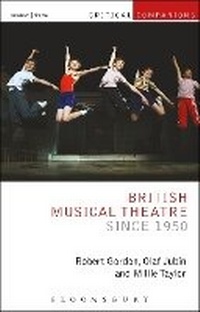
British Musical Theatre since 1950
Erschienen am 8. September 2016
Buch
Softcover
288 Seiten
978-1-4725-8436-6 (ISBN)
Beschreibung
This critical introduction to British musical theatre since 1950 is the first book to discuss its post-war developments from the perspective of British - as opposed to American - popular culture. The genre is situated within the historical context of post-war British society in order to explore the range of forms through which significant sociocultural moments are represented.
Introductory chapters analyse the way British musicals have responded to social change, the forms of popular theatre and music from which they have developed and their originality in elaborating new narrative strategies since the seventies. A key feature of the book is its close readings of twelve key works, from Salad Days (1954) and Oliver! (1960) to global smash hits such as Les Miserables (1985) and The Phantom of the Opera (1986) and beyond, including the latest critical and box-office success Matilda (2011). Also analysed are British favourites (Blood Brothers, 1983), cult shows (The Rocky Horror Show, 1975) and musicals with a pre-existing fan-base, such as Mamma Mia! (1999).
Introductory chapters analyse the way British musicals have responded to social change, the forms of popular theatre and music from which they have developed and their originality in elaborating new narrative strategies since the seventies. A key feature of the book is its close readings of twelve key works, from Salad Days (1954) and Oliver! (1960) to global smash hits such as Les Miserables (1985) and The Phantom of the Opera (1986) and beyond, including the latest critical and box-office success Matilda (2011). Also analysed are British favourites (Blood Brothers, 1983), cult shows (The Rocky Horror Show, 1975) and musicals with a pre-existing fan-base, such as Mamma Mia! (1999).
Rezensionen / Stimmen
Pleasingly, although each of the authors is an academic, they do not wear their learning to[o] heavily and this volume could easily please a general reader as well as students ... All in, this is a readable overview of its subject and a welcome addition to the bookshelves of anybody with an interest in British musicals. -- Philip Fisher * British Theatre Guide * This academic yet highly accessible text ... [offers] a detailed and relevant account of the industry from this side of the pond ... A demanding yet rewarding read ... There's much to enjoy for both the academic and the general theatre historian. * London Theatre *Weitere Details
Reihe
Sprache
Englisch
Verlagsort
London
Großbritannien
Verlagsgruppe
Bloomsbury Publishing PLC
Zielgruppe
Für Beruf und Forschung
Für höhere Schule und Studium
Illustrationen
15 bw illus
Maße
Höhe: 216 mm
Breite: 138 mm
Gewicht
336 gr
ISBN-13
978-1-4725-8436-6 (9781472584366)
Copyright in bibliographic data and cover images is held by Nielsen Book Services Limited or by the publishers or by their respective licensors: all rights reserved.
Schweitzer Klassifikation
Weitere Ausgaben
Andere Ausgaben
Robert Gordon | Olaf Jubin | Millie Taylor
British Musical Theatre since 1950
E-Book
09/2016
1. Auflage
Methuen Drama
30,99 €
Als Download verfügbar
Robert Gordon | Olaf Jubin | Millie Taylor
British Musical Theatre since 1950
E-Book
09/2016
1. Auflage
Methuen Drama
30,99 €
Als Download verfügbar
Personen
Robert Gordon is Professor of Theatre and Performance at Goldsmiths, University of London, UK and Director of the Pinter Research Centre in Performance and Creative Writing. He has published books on Stoppard and Harold Pinter, on modern acting theories and edited The Oxford Handbook of Sondheim Studies; he is co-editor of The Oxford Handbook of the British Musical.
Olaf Jubin is Reader in Media Studies and Musical Theatre at Regent's University London, UK, and a Visiting Lecturer on the M.A. in Musical Theatre at Goldsmiths College, University of London, UK. He has written and co-edited several books on musical theatre and the mass media and is co-editor of The Oxford Handbook of the British Musical.
Millie Taylor is Professor of Musical Theatre at the University of Winchester, UK. She worked as a freelance musical director and, for almost twenty years, toured Britain and Europe with a variety of musicals including West Side Story, Rocky Horror Show, Little Shop of Horrors and Sweeney Todd. Her publications include Singing for Musicals: A Practical Guide (2008), Musical Theatre, Realism and Entertainment (2012), and with Dominic Symonds the edited collection Gestures of Music Theatre: The Performativity of Song and Dance (2014).
Olaf Jubin is Reader in Media Studies and Musical Theatre at Regent's University London, UK, and a Visiting Lecturer on the M.A. in Musical Theatre at Goldsmiths College, University of London, UK. He has written and co-edited several books on musical theatre and the mass media and is co-editor of The Oxford Handbook of the British Musical.
Millie Taylor is Professor of Musical Theatre at the University of Winchester, UK. She worked as a freelance musical director and, for almost twenty years, toured Britain and Europe with a variety of musicals including West Side Story, Rocky Horror Show, Little Shop of Horrors and Sweeney Todd. Her publications include Singing for Musicals: A Practical Guide (2008), Musical Theatre, Realism and Entertainment (2012), and with Dominic Symonds the edited collection Gestures of Music Theatre: The Performativity of Song and Dance (2014).
Inhalt
List of Illustrations
Introduction
Part I: Musicals and Social Change (Robert Gordon)
1.1 British Theatre and Society after the Second World War
1.2 Innovation and Nostalgia: Camp in the Post-War British Musical
Case Study 1: Salad Days
1.3 Rock and Roll and the Theatre Revolution
1.4 The Play with Music: Political Theatre and Working-Class Culture
Case Study 2: Blood Brothers
1.5 The Impact of Oliver!
1.6 After Jesus Christ Superstar: Globalization and Cultural Specificity
Case Study 3: Billy Elliot
1.7 Global and Local: The Family Musical
Case Study 4: Matilda - The Musical
Part II: British Popular Culture and Musical Theatre (Millie Taylor)
2.1 Nostalgia in Character and Dramatic Form
Case Study 5: Oh What a Lovely War!
2.2 Reflecting Multiculturalism
Case Study 6: Bombay Dreams
2.3 Changing Signification in Popular Music
Case Study 7: Oliver!
Case Study 8: The Rocky Horror Show
Conclusion to Part Two
Part III: Narrative and Story-Telling in the British Musical since 1970 (Olaf Jubin)
Preamble
Introduction
3.1 Concept Recordings: When What You See is What You Have Heard
Case Study 9: Jesus Christ Superstar
3.2 Sung-Through Shows: When the Spoken Word is Shunned
3.3 Stage Adaptations of Novels: When the Written Word Becomes Theatrical Action
Case Study 10: Les Miserables
Case Study 11: The Phantom of the Opera
3.4 Original Stories: When the Content is Unknown
3.5 Jukebox Musicals: When You Know All the Songs
Case Study 12: Mamma Mia!
3.6 Stage Adaptation of Films: When the Cinematic Becomes the Theatrical
Conclusion
Timeline
Notes
Selective Bibliography
Discography
Filmography
Index
Introduction
Part I: Musicals and Social Change (Robert Gordon)
1.1 British Theatre and Society after the Second World War
1.2 Innovation and Nostalgia: Camp in the Post-War British Musical
Case Study 1: Salad Days
1.3 Rock and Roll and the Theatre Revolution
1.4 The Play with Music: Political Theatre and Working-Class Culture
Case Study 2: Blood Brothers
1.5 The Impact of Oliver!
1.6 After Jesus Christ Superstar: Globalization and Cultural Specificity
Case Study 3: Billy Elliot
1.7 Global and Local: The Family Musical
Case Study 4: Matilda - The Musical
Part II: British Popular Culture and Musical Theatre (Millie Taylor)
2.1 Nostalgia in Character and Dramatic Form
Case Study 5: Oh What a Lovely War!
2.2 Reflecting Multiculturalism
Case Study 6: Bombay Dreams
2.3 Changing Signification in Popular Music
Case Study 7: Oliver!
Case Study 8: The Rocky Horror Show
Conclusion to Part Two
Part III: Narrative and Story-Telling in the British Musical since 1970 (Olaf Jubin)
Preamble
Introduction
3.1 Concept Recordings: When What You See is What You Have Heard
Case Study 9: Jesus Christ Superstar
3.2 Sung-Through Shows: When the Spoken Word is Shunned
3.3 Stage Adaptations of Novels: When the Written Word Becomes Theatrical Action
Case Study 10: Les Miserables
Case Study 11: The Phantom of the Opera
3.4 Original Stories: When the Content is Unknown
3.5 Jukebox Musicals: When You Know All the Songs
Case Study 12: Mamma Mia!
3.6 Stage Adaptation of Films: When the Cinematic Becomes the Theatrical
Conclusion
Timeline
Notes
Selective Bibliography
Discography
Filmography
Index