

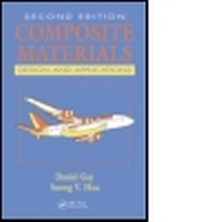
Composite Materials
Design and Applications, Second Edition
2. Auflage
Erschienen am 25. April 2007
Buch
Hardcover
568 Seiten
978-1-4200-4519-2 (ISBN)
Beschreibung
Responding to the need for a single reference source on the design and applications of composites, Composite Materials: Design and Applications, Second Edition provides an authoritative examination of the composite materials used in current industrial applications and delivers much needed practical guidance to those working in this rapidly developing area of engineering. This updated second edition extends its coverage to include original methods of analysis for various types of materials such as composite beams. The authors now also include an entire chapter devoted to thick laminated composites. The first section describes the properties, fabrication process, and applications of composite materials. The second section describes the mechanics of composites, such as the elastic anisotropic properties and mechanical properties of thin laminates. The third section discusses orthotropic coefficients that may be used for design, including the Hill-Tsai failure criterion. The final section provides 40 case studies with complete solutions that illustrate the types of challenges encountered in modern engineering practice.
This timely resource delivers unique analysis and design solutions needed to conceptualize and design components made from composites. It is an indispensable guide for students and practicing engineers working with composite materials.
This timely resource delivers unique analysis and design solutions needed to conceptualize and design components made from composites. It is an indispensable guide for students and practicing engineers working with composite materials.
Weitere Details
Auflage
2nd New edition
Sprache
Englisch
Verlagsort
Bosa Roca
USA
Verlagsgruppe
Taylor & Francis Inc
Zielgruppe
Für Beruf und Forschung
Advanced undergraduates and beginning graduate students as well as practitioners working in the composites industry.
Editions-Typ
Neue Ausgabe
Illustrationen
451 s/w Abbildungen
451 Illustrations, black and white
Maße
Höhe: 246 mm
Breite: 174 mm
Gewicht
1134 gr
ISBN-13
978-1-4200-4519-2 (9781420045192)
Copyright in bibliographic data and cover images is held by Nielsen Book Services Limited or by the publishers or by their respective licensors: all rights reserved.
Schweitzer Klassifikation
Weitere Ausgaben
Nachauflagen
Buch
07/2014
3. Auflage
CRC Press
177,78 €
Artikel ist vergriffen; siehe Neuauflage
Vorauflage

Buch
12/2002
1. Auflage
CRC Press
111,35 €
Artikel ist vergriffen; siehe Neuauflage
Personen
Inhalt
PRINCIPLES OF CONSTRUCTION
Composite Materials, Interest, and Properties
What is Composite Material?
Fibers and Matrix
What Can Be Made Using Composite Materials?
Typical Examples of Interest on the Use of Composite Materials
Examples on Replacing Conventional Solutions with Composites
Principle Physical Properties
Fabrication Processes
Molding Processes
Other Forming Processes
Practical Hints on Manufacturing Processes
Ply Properties
Isotropy and Anisotropy
Characteristics of the Reinforcement-Matrix Mixture
Unidirectional Ply
Woven Fabrics
Mats and Reinforced Matrices
Multidimensional Fabrics
Metal Matrix Composites
Tests
Sandwich Structures
What Is a Sandwich Structure?
Simplified Flexure
A Few Special Aspects
Fabrication and Design Problems
Nondestructive Quality Control
Conception and Design
Design of a Composite Piece
The Laminate
Failure of Laminates
Sizing of the Laminate
Joining and Assembly
Riveting and Bolting
Bonding
Inserts
Composite Materials and Aerospace Construction
Aircraft
Helicopters
Propeller Blades for Airplanes
Turbine Blades in Composites
Space Applications
Composite Materials for Other Applications
Composite Materials and the Manufacturing of Automobiles
Composites in Naval Construction
Sports and Recreation
Other Applications
MECHANICAL BEHAVIOR OF LAMINATED MATERIALS
Anisotropic Elastic Media
Review of Notations
Orthotropic Materials
Transversely Isotropic Materials
Elastic Constants of Unidirectional Composites
Longitudinal Modulus
Poisson Coefficient
Transverse Modulus
Shear Modulus
Thermoelastic Properties
Elastic Constants of a Ply Along an Arbitrary Direction
Compliance Coefficients
Stiffness Coefficients
Case of Thermomechanical Loading
Mechanical Behavior of Thin Laminated Plates
Laminate with Midplane Symmetry
Laminate without Midplane Symmetry
Elastic Coefficients
Elastic Coefficients in an Orthotropic Material
Elastic Coefficients for a Transversely Isotropic Material
Case of a Ply
The Hill-Tsai Failure Criterion
Isotropic Material: Von Mises Criterion
Orthotropic Material: Hill-Tsai Criterion
Variation of Resistance of a Unidirectional Ply With Respect to the Direction of Loading
Composite Beams in Flexure
Flexure of Symmetric Beams with Isotropic Phases
Case of Any Cross Section (Asymmetric)
Composite Beams in Torsion
Uniform Torsion
Location of the Torsion Center
Flexure of Thick Composite Plates
Preliminary Remarks
Displacement Field
Strains
Constitutive Relations
Equilibrium Equations
Technical Formulation for Bending
Examples
APPLICATIONS
Applications
Level 1
Level 2
Level 3
APPENDICES, BIBLIOGRAPHY, AND INDEX
Appendix 1
Appendix 2
Bibliography Index
Composite Materials, Interest, and Properties
What is Composite Material?
Fibers and Matrix
What Can Be Made Using Composite Materials?
Typical Examples of Interest on the Use of Composite Materials
Examples on Replacing Conventional Solutions with Composites
Principle Physical Properties
Fabrication Processes
Molding Processes
Other Forming Processes
Practical Hints on Manufacturing Processes
Ply Properties
Isotropy and Anisotropy
Characteristics of the Reinforcement-Matrix Mixture
Unidirectional Ply
Woven Fabrics
Mats and Reinforced Matrices
Multidimensional Fabrics
Metal Matrix Composites
Tests
Sandwich Structures
What Is a Sandwich Structure?
Simplified Flexure
A Few Special Aspects
Fabrication and Design Problems
Nondestructive Quality Control
Conception and Design
Design of a Composite Piece
The Laminate
Failure of Laminates
Sizing of the Laminate
Joining and Assembly
Riveting and Bolting
Bonding
Inserts
Composite Materials and Aerospace Construction
Aircraft
Helicopters
Propeller Blades for Airplanes
Turbine Blades in Composites
Space Applications
Composite Materials for Other Applications
Composite Materials and the Manufacturing of Automobiles
Composites in Naval Construction
Sports and Recreation
Other Applications
MECHANICAL BEHAVIOR OF LAMINATED MATERIALS
Anisotropic Elastic Media
Review of Notations
Orthotropic Materials
Transversely Isotropic Materials
Elastic Constants of Unidirectional Composites
Longitudinal Modulus
Poisson Coefficient
Transverse Modulus
Shear Modulus
Thermoelastic Properties
Elastic Constants of a Ply Along an Arbitrary Direction
Compliance Coefficients
Stiffness Coefficients
Case of Thermomechanical Loading
Mechanical Behavior of Thin Laminated Plates
Laminate with Midplane Symmetry
Laminate without Midplane Symmetry
Elastic Coefficients
Elastic Coefficients in an Orthotropic Material
Elastic Coefficients for a Transversely Isotropic Material
Case of a Ply
The Hill-Tsai Failure Criterion
Isotropic Material: Von Mises Criterion
Orthotropic Material: Hill-Tsai Criterion
Variation of Resistance of a Unidirectional Ply With Respect to the Direction of Loading
Composite Beams in Flexure
Flexure of Symmetric Beams with Isotropic Phases
Case of Any Cross Section (Asymmetric)
Composite Beams in Torsion
Uniform Torsion
Location of the Torsion Center
Flexure of Thick Composite Plates
Preliminary Remarks
Displacement Field
Strains
Constitutive Relations
Equilibrium Equations
Technical Formulation for Bending
Examples
APPLICATIONS
Applications
Level 1
Level 2
Level 3
APPENDICES, BIBLIOGRAPHY, AND INDEX
Appendix 1
Appendix 2
Bibliography Index