

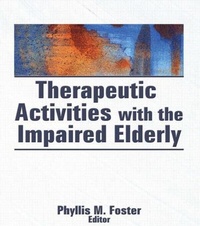
Therapeutic Activities With the Impaired Elderly
1. Auflage
Erschienen am 1. Januar 1986
Buch
Hardcover
216 Seiten
978-0-86656-566-0 (ISBN)
Beschreibung
This highly practical volume presents valuable insights for all professionals who provide activities for the impaired elderly. It will serve as a helpful resource for both those who work directly with the aged in institutional settings, as well for those who train activities counselors.Therapeutic Activities With the Impaired Elderly addresses a number of pertinent issues and provides useful information on designing and implementing recreation and socialization programs, memory improvement classes, sign language activities, and leisure education and counseling.
Weitere Details
Sprache
Englisch
Verlagsort
New York
USA
Verlagsgruppe
Taylor & Francis Inc
Zielgruppe
Für höhere Schule und Studium
Für Beruf und Forschung
Professional Practice & Development
Produkt-Hinweis
Fadenheftung
Gewebe-Einband
Maße
Höhe: 223 mm
Breite: 157 mm
Dicke: 20 mm
Gewicht
499 gr
ISBN-13
978-0-86656-566-0 (9780866565660)
Copyright in bibliographic data and cover images is held by Nielsen Book Services Limited or by the publishers or by their respective licensors: all rights reserved.
Schweitzer Klassifikation
Weitere Ausgaben
Andere Ausgaben
Phyllis M. Foster
Therapeutic Activities With the Impaired Elderly
E-Book
12/2013
1. Auflage
Routledge
59,49 €
Als Download verfügbar
Phyllis M. Foster
Therapeutic Activities With the Impaired Elderly
E-Book
12/2013
1. Auflage
Routledge
58,99 €
Als Download verfügbar
Person
Foster, Phyllis M.
Inhalt
Contents
Therapeutic Individual Activities
Therapeutic Group Activities
Planning and Leading Activity Groups
"Worth Repeating" Activities and Resources Reference List for Activities Workers With the Elderly
Effects of Institutionalization Upon Residents of Extended Care Facilities
A Protocol for Recreation and Socialization Programs for the Aged
A Humanistic Approach to Old-Old People: A General Model
"Worth Repeating" Reality Orientation: Full Circle
"Who Did You Used to Be?" The Psychological Process of Aging's Impact on Institutionalization: Implications for Activities
"Sign Language Through Discussion" . . . An Innovative Activity
They Need Us, We Need Them: A Study of the Benefits of Intergenerational Contact
The Effects of Reminiscing on the Perceived Control and Social Relations of Institutionalized Elderly
The Design and Implementation of Memory Improvement Classes in the Adult Day Care Setting
The Effects of Pet Facilitative Therapy on Patients and Staff in an Adult Day Care Center
Living With Dying: A Model for Helping Nursing Home Residents and Staff Deal With Death
The Relationship Between Nursing Home Residents' Perceptions of Nursing Staff and Quality of Nursing Home Care
Is Laughter the Best Medicine? A Study of the Effects of Humor on Perceived Pain and Affect
The Interface of Activity and Psychopharmacological Agents
Self Medication as a Form of Self Control in an Intermediate Care Facility: Preliminary Data
Therapeutic Individual Activities
Therapeutic Group Activities
Planning and Leading Activity Groups
"Worth Repeating" Activities and Resources Reference List for Activities Workers With the Elderly
Effects of Institutionalization Upon Residents of Extended Care Facilities
A Protocol for Recreation and Socialization Programs for the Aged
A Humanistic Approach to Old-Old People: A General Model
"Worth Repeating" Reality Orientation: Full Circle
"Who Did You Used to Be?" The Psychological Process of Aging's Impact on Institutionalization: Implications for Activities
"Sign Language Through Discussion" . . . An Innovative Activity
They Need Us, We Need Them: A Study of the Benefits of Intergenerational Contact
The Effects of Reminiscing on the Perceived Control and Social Relations of Institutionalized Elderly
The Design and Implementation of Memory Improvement Classes in the Adult Day Care Setting
The Effects of Pet Facilitative Therapy on Patients and Staff in an Adult Day Care Center
Living With Dying: A Model for Helping Nursing Home Residents and Staff Deal With Death
The Relationship Between Nursing Home Residents' Perceptions of Nursing Staff and Quality of Nursing Home Care
Is Laughter the Best Medicine? A Study of the Effects of Humor on Perceived Pain and Affect
The Interface of Activity and Psychopharmacological Agents
Self Medication as a Form of Self Control in an Intermediate Care Facility: Preliminary Data