


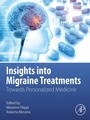
Insights into Migraine Treatments
Towards Personalized Medicine
Erscheint ca. am 2. Februar 2026
Buch
Softcover
250 Seiten
978-0-443-23649-5 (ISBN)
Beschreibung
Insights into Migraine Treatments offers a comprehensive overview to guide the selection of the most appropriate therapy for each patient within the landscape of migraine care. It explores the full spectrum of available treatments and their mechanisms of action, while addressing the challenges of individualized therapeutic decision-making. By presenting essential data on efficacy, safety, and biomarkers of treatment response, this book serves as a practical resource for tailoring interventions to patient-specific needs. With its solution-oriented approach, it is a valuable reference for clinicians and researchers striving to advance migraine management.
Covering topics from the clinical characteristics of migraine to acute therapies, pharmacological and non-pharmacological preventive strategies, and clinical, neuroimaging, and neurophysiological biomarkers, this book is designed to meet the complex and evolving needs of migraine patients.
Covering topics from the clinical characteristics of migraine to acute therapies, pharmacological and non-pharmacological preventive strategies, and clinical, neuroimaging, and neurophysiological biomarkers, this book is designed to meet the complex and evolving needs of migraine patients.
Weitere Details
Sprache
Englisch
Verlagsort
San Diego
USA
Verlagsgruppe
Elsevier Science Publishing Co Inc
Zielgruppe
Für Beruf und Forschung
Maße
Höhe: 234 mm
Breite: 191 mm
Dicke: 20 mm
Gewicht
654 gr
ISBN-13
978-0-443-23649-5 (9780443236495)
Copyright in bibliographic data and cover images is held by Nielsen Book Services Limited or by the publishers or by their respective licensors: all rights reserved.
Schweitzer Klassifikation
Weitere Ausgaben
Andere Ausgaben
E-Book
12/2025
Elsevier
165,00 €
Als Download verfügbar
Personen
Massimo Filippi, MD, is Full Professor of Neurology at Vita-Salute San Raffaele University, Director of the Residency School in Neurology, President of the Bacherlor's Degree in Physiotherapy, Chair of the Neurology and Neurorehabilitation Units, Director of the MS Center, Director of the Neurophysiology Service, and Director of the Neuroimaging Research Unit at IRCCS Scientific Institute San Raffaele, Milan. His research activity has always focused on the definition of the mechanisms underlying various neurological conditions, including multiple sclerosis, neurodegenerative disorders, and migraine. As Director of the of the Neuroimaging Research Unit, he coordinated the MRI acquisition and analysis of several large-scale international MRI-monitored trials of multiple sclerosis. He is member of various national and international Scientific Societies and Boards and for some of them, he holds or has held institutional roles. He is Editor-in-Chief of the Journal of Neurology, Associate Editor of Human Brain Mapping, Radiology, and Neurological Sciences. Roberta Messina, MD, PhD, is a neurologist with expertise in the evaluation of headache patients, as well as in the analysis of MRI. She is a post-doctoral researcher at the Neuroimaging Research Unit and a headache specialist at the Headache Center at IRCCS Scientific Institute San Raffaele, Milan. Her main interests are studying biomarkers of headache patients? responses to treatments, and the use of MRI techniques in primary headache disorders. She has applied MRI techniques to study the mechanisms underlying migraine pathophysiology, yielding new insights into brain alterations associated with migraine. She has collaborated in national and international studies assessing the efficacy, safety, and mechanisms of actions of novel treatments employed for migraine prevention. She is the Italian representative in the Juniors Committee of the International Headache Society and part of its Education Committee. She is on the Editorial Board of the Journal of Headache and Pain.
Inhalt
1. Clinical manifestations of migraine
2. Why, when and how to treat migraine patients?
3. Acute treatments: NSAIDs, ergot alkaloids, triptans and ditans
4. Acute treatments: neuromodulation and peripheral nerve blocks
5. Oral preventive treatments: antidepressants, antihypertensives, anticonvulsants, beta blockers and calcium channel blockers
6. Preventive treatments: Onabotulinumtoxin A and peripheral nerve blocks
7. Non-pharmacological approaches in migraine prevention: neuromodulation, nutraceuticals and behavioral approaches
8. Why target the CGRP pathway?
9. Gepants
10. Anti-CGRP monoclonal antibodies
11. Biomarkers of treatment response
12. Migraine treatments: What have we learned from neuroimaging?
13. Migraine treatments: What have we learned from neurophysiology?
14. Treatments to use in special circumstances: children, pregnancy, elderly
15. Unmet needs and future perspective
2. Why, when and how to treat migraine patients?
3. Acute treatments: NSAIDs, ergot alkaloids, triptans and ditans
4. Acute treatments: neuromodulation and peripheral nerve blocks
5. Oral preventive treatments: antidepressants, antihypertensives, anticonvulsants, beta blockers and calcium channel blockers
6. Preventive treatments: Onabotulinumtoxin A and peripheral nerve blocks
7. Non-pharmacological approaches in migraine prevention: neuromodulation, nutraceuticals and behavioral approaches
8. Why target the CGRP pathway?
9. Gepants
10. Anti-CGRP monoclonal antibodies
11. Biomarkers of treatment response
12. Migraine treatments: What have we learned from neuroimaging?
13. Migraine treatments: What have we learned from neurophysiology?
14. Treatments to use in special circumstances: children, pregnancy, elderly
15. Unmet needs and future perspective