

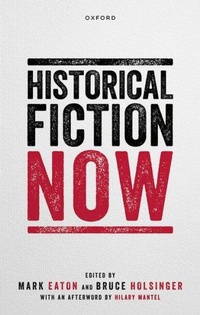
Historical Fiction Now
Erschienen am 17. August 2023
Buch
Hardcover
240 Seiten
978-0-19-887703-5 (ISBN)
Beschreibung
Historical Fiction Now brings together prominent authors, scholars, and critics of historical fiction to explore the genre's character, fortunes, and potential in the twenty-first century.
Gathering together the voices of novelists, critics, academics, and several authors writing across these categories, the volume explores the nature of reading, writing, and writing about historical fiction in the present moment while meditating on some of the myriad contexts of the genre.
What inspires writers to choose particular moments, events, and personalities as the subjects of their fictional imaginings, and with what implications for their readers' understanding of the present? How do contemporary scholars approach the making and reception of historical fiction, and how do these approaches resonate with writers' own preoccupations in the process of invention? What might scholars of a genre with a long and complex history learn from its contemporary practitioners? Conversely, how do novelists understand their own historical fictions (if at all) in relation to the theoretical and critical traditions shaping the work of their academic colleagues?
The collection features an original essay by Hilary Mantel on the making of the Wolf Hall trilogy as well as contributions from internationally known novelists such as George Saunders, Namwali Serpell, Maaza Mengiste, and Tea Obreht, among others.
Gathering together the voices of novelists, critics, academics, and several authors writing across these categories, the volume explores the nature of reading, writing, and writing about historical fiction in the present moment while meditating on some of the myriad contexts of the genre.
What inspires writers to choose particular moments, events, and personalities as the subjects of their fictional imaginings, and with what implications for their readers' understanding of the present? How do contemporary scholars approach the making and reception of historical fiction, and how do these approaches resonate with writers' own preoccupations in the process of invention? What might scholars of a genre with a long and complex history learn from its contemporary practitioners? Conversely, how do novelists understand their own historical fictions (if at all) in relation to the theoretical and critical traditions shaping the work of their academic colleagues?
The collection features an original essay by Hilary Mantel on the making of the Wolf Hall trilogy as well as contributions from internationally known novelists such as George Saunders, Namwali Serpell, Maaza Mengiste, and Tea Obreht, among others.
Weitere Details
Sprache
Englisch
Verlagsort
Oxford
Großbritannien
Zielgruppe
Für Beruf und Forschung
Illustrationen
6 Illustrations
Maße
Höhe: 220 mm
Breite: 148 mm
Dicke: 25 mm
Gewicht
419 gr
ISBN-13
978-0-19-887703-5 (9780198877035)
Copyright in bibliographic data and cover images is held by Nielsen Book Services Limited or by the publishers or by their respective licensors: all rights reserved.
Schweitzer Klassifikation
Weitere Ausgaben
Andere Ausgaben
Personen
Mark Eaton is a Professor of English at Azusa Pacific University and an Associate Research Professor of American Literature at Claremont Graduate University. He is the author of Religion and American Literature Since 1950 (2020).
Bruce Holsinger is the Linden Kent Memorial Professor of English at the University of Virginia. He is the author of Music, Body, and Desire in Medieval Culture: Hildegard of Bingen to Chaucer (2001), The Premodern Condition: Medievalism and the Making of Theory (2005), Neomedievalism, Neoconservatism, and the War on Terror (2007), and The Parchment Inheritance: Animals, Archives, and the Making of Culture from Herodotus to the Digital Age (2022). He is also the author of two historical novels: A Burnable Book (2014) and The Invention of Fire (2015). His most recent novels are The Gifted School (2019) and The Displacements (2022).
Bruce Holsinger is the Linden Kent Memorial Professor of English at the University of Virginia. He is the author of Music, Body, and Desire in Medieval Culture: Hildegard of Bingen to Chaucer (2001), The Premodern Condition: Medievalism and the Making of Theory (2005), Neomedievalism, Neoconservatism, and the War on Terror (2007), and The Parchment Inheritance: Animals, Archives, and the Making of Culture from Herodotus to the Digital Age (2022). He is also the author of two historical novels: A Burnable Book (2014) and The Invention of Fire (2015). His most recent novels are The Gifted School (2019) and The Displacements (2022).
Inhalt
Bruce Holsinger: Introduction: Historical Fiction Now
I. Inventions
1: George Saunders: Ghosts in a Graveyard
2: Sophie Coulombeau: Naming Names: Reflections on Referentiality in Hilary Mantel's Wolf Hall Trilogy
3: David Ebershoff: Looking for the Danish Girl
4: Michael Lackey: Using Versus Doing History in the Contemporary Biographical Novel
II. Archives
5: Katherine Howe: Real Witches, Real Life
6: Tiya Miles: Gardens of Memory: Ghosts, Grounds, and the Archives
7: Geraldine Brooks: Pilgrim's Progress: Researching The Secret Chord
8: Namwali Serpell: The Afronaut Archives: Reports from a Future Zambia
9: Bruce Holsinger: Historical Fiction and the Fine Art of Error
III. Genres
10: Gavin Jones: Historical Fiction, World-building, and the Short Story
11: Maaza Mengiste: War in a Woman's Voice
12: Mark Eaton: Alternate-history Novels and Other Counterfactual Fictions
13: Tea Obreht: Last Camp
14: Jessie Burton: Historical Impressionism and Signs of Life: The Blessing and Burden of Writing the Past
15: Jane Kamensky: Novelties: A Historian's Field Notes from Fiction
16: Naomi J. Williams: Sorting Fact from Fiction: A Novelist Researches the Laperouse Expedition
17: Kirstin Chen: Am I Chinese Enough to Tell this Story?
The late Hilary Mantel: Afterword: I Met a Man Who Wasn't There
I. Inventions
1: George Saunders: Ghosts in a Graveyard
2: Sophie Coulombeau: Naming Names: Reflections on Referentiality in Hilary Mantel's Wolf Hall Trilogy
3: David Ebershoff: Looking for the Danish Girl
4: Michael Lackey: Using Versus Doing History in the Contemporary Biographical Novel
II. Archives
5: Katherine Howe: Real Witches, Real Life
6: Tiya Miles: Gardens of Memory: Ghosts, Grounds, and the Archives
7: Geraldine Brooks: Pilgrim's Progress: Researching The Secret Chord
8: Namwali Serpell: The Afronaut Archives: Reports from a Future Zambia
9: Bruce Holsinger: Historical Fiction and the Fine Art of Error
III. Genres
10: Gavin Jones: Historical Fiction, World-building, and the Short Story
11: Maaza Mengiste: War in a Woman's Voice
12: Mark Eaton: Alternate-history Novels and Other Counterfactual Fictions
13: Tea Obreht: Last Camp
14: Jessie Burton: Historical Impressionism and Signs of Life: The Blessing and Burden of Writing the Past
15: Jane Kamensky: Novelties: A Historian's Field Notes from Fiction
16: Naomi J. Williams: Sorting Fact from Fiction: A Novelist Researches the Laperouse Expedition
17: Kirstin Chen: Am I Chinese Enough to Tell this Story?
The late Hilary Mantel: Afterword: I Met a Man Who Wasn't There