

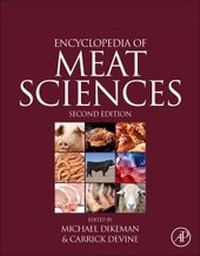
Encyclopedia of Meat Sciences
3-volume set
2. Auflage
Erschienen am 19. August 2014
Buch
1712 Seiten
978-0-12-384731-7 (ISBN)
Beschreibung
The Encyclopedia of Meat Sciences, Second Edition, Three Volume Set prepared by an international team of experts, is a reference work that covers all important aspects of meat science from stable to table. Its topics range from muscle physiology, biochemistry (including post mortem biochemistry), and processing procedures to the processes of tenderization and flavor development, various processed meat products, animal production, microbiology and food safety, and carcass composition. It also considers animal welfare, animal genetics, genomics, consumer issues, ethnic meat products, nutrition, the history of each species, cooking procedures, human health and nutrition, and waste management.
Fully up-to-date, this important reference work provides an invaluable source of information for both researchers and professional food scientists. It appeals to all those wanting a one-stop guide to the meat sciences.
Fully up-to-date, this important reference work provides an invaluable source of information for both researchers and professional food scientists. It appeals to all those wanting a one-stop guide to the meat sciences.
Rezensionen / Stimmen
Praise for the Previous Edition:"...a very worthwhile addition to any biological sciences library...would not be out of place in the office of the manager and/or technical director of a meat plant. ...We strongly recommend it to anyone with more than a passing interest in meat, as a primary source." --Meat Science, 2005
Weitere Details
Auflage
2nd edition
Sprache
Englisch
Verlagsort
San Diego
USA
Verlagsgruppe
Elsevier Science Publishing Co Inc
Zielgruppe
Für höhere Schule und Studium
Für Beruf und Forschung
Academic and laboratory researchers, economic and nutritional policy makers, graduate and undergraduate meat science students.
Maße
Höhe: 276 mm
Breite: 216 mm
Gewicht
6040 gr
ISBN-13
978-0-12-384731-7 (9780123847317)
Copyright in bibliographic data and cover images is held by Nielsen Book Services Limited or by the publishers or by their respective licensors: all rights reserved.
Schweitzer Klassifikation
Weitere Ausgaben
Nachauflagen
M. Dikeman
Encyclopedia of Meat Sciences
Buch
10/2023
3. Auflage
Academic Press
2.290,16 €
Versand in 15-20 Tagen
Andere Ausgaben
Carrick Devine | M. Dikeman
Encyclopedia of Meat Sciences
E-Book
07/2014
2. Auflage
Academic Press
ab
1.770,00 €
Als Download verfügbar
Vorauflage
Buch
08/2004
Academic Press
2.618,56 €
Vom Verlag/Hersteller zurückgezogen
Personen
Carrick Devine, born in Blenheim, New Zealand, studied at Canterbury University in New Zealnd where he obtained an MSc in Marine Biology and then a PhD at the University of Otago Medical School in 1969, studying physiology/pharmacology of smooth muscle and its innervation. Following a post doctoral period at Presbyterian University of Pennsylvania Medical Center working on smooth muscle, he returned to New Zealand and worked with striated muscle - i.e. meat - at the Meat Industry Research Institute of New Zealand, becoming sector leader. He has been involved in the development of electrical stimulation for meat tenderness, quality assurance procedures to ensure that appropriate levels of tenderness are attained, establishing neurological indices of humaneness of slaughter procedures using microdialysis probes, to harmonise western and halal slaughter methods and developing protocols to reduce preslaughter stress of cattle and sheep. He now works on biosensors at the bioengineering sector of Hortresearch and is presently engaged on a collaborative project with the MIRINZ Centre of Agresearch to measure meat tenderness on-line using near infrared spectroscopy. He obtained a DSc in 1991 and is a Fellow of the Royal Society of New Zealand and the New Zealand Institute of Chemistry. Michael E. Dikeman; Born in the state of Kansas, USA. Received B.S. and Ph.D. degrees from Kansas State University and M.S.degree from Michigan State University. Professor at Kansas State University from 1970 to present. He teaches courses ranging from beginning animal/meat science to graduate level. His research interests include effects of genetics and management systems for livestock production on carcass composition and meat quality. He has particular interests in postmortem technology to enhance meat quality, and in effects of meat cookery on tenderness. He received the Meats Research Award from the American Society of Animal Science. He served as President of the American Meat Science Association, and the Federation of American Societies of Food Animal Sciences.
Inhalt
Additives
Animal Breeding and Genetics
Animal health risk analysis
Automation in the meat industry
Bacon production
Biofilm formation
Biomethane Production and Cleanup
Biopreservation
Biotechnology in meat animal production
Boar Taint: Biological Causes and Practical Means to Alleviate It
By-products
Canning
Carcass chilling and boning
Carcass Composition, Muscle Structure, and Contraction
Chemical analysis
Chemical analysis for specific components
Chemical and physical characteristics of meat
Chemistry and physics of comminuted products
Classification of carcasses
Connective Tissue: Structure, Function, and Influence on Meat Quality
Conversion of muscle to meat
Cooking of meat
Curing
Cutting and boning
Double-muscled animals
Drying
Economics
Electrical stimulation
Environmental Contaminants
Environmental impact of meat production
Equipment cleaning
Ethnic meat products
Exsanguination
Extrusion technology
Fermentation
Fish inspection
Foodborne zoonoses
Foreign bodies
Functional foods
Genome projects
Growth of meat animals
Ham production
Hazard Analysis Critical Control Point and Self-Regulation
Human nutrition
Irradiation
Laboratory accreditation
Manure/Waste Management
Measurement of meat quality
Meat, Animal, Poultry and Fish Production and Management
Meat-Borne Hazards, Concepts and Methods for Mitigating Risks Related to
Meat marketing
Meat pricing systems
Meat research institutions
Meat species determination
Mechanically recovered meat
Microbial contamination
Microbiological analysis
Microbiological safety of meat
Microorganisms and resistance to antibiotics, the ubiquity of
Minced meats
Modelling in meat science
Muscle Fiber Types and Meat Quality
Nutrient claims on packaging
Nutrition of meat animals
On-line measurement of meat composition
On-line measurement of meat quality
Packaging
Parasites Present in Meat and Viscera of Land Farmed Animals
Patenting products, processes and apparatuses
Physical measurements
Potential chemical hazards associated with meat
Prediction of Meat Attributes from Intact Muscle using Near-Infrared Spectroscopy
Preservation methods of Animal Products
Preslaughter handling
Processing equipment
Professional organizations
Proteomic Technologies and Their Applications in the Meat Industry
Quality management
Refrigeration and freezing technology
Religious slaughter
Residues in meat and meat products
Risk analysis and Quantitative Risk Management
Sausage casings
Sausages, types of
Sensory and meat quality, Optimisation of
Sensory Assessment of Meat
Slaughter, Ethics, and the Law
Slaughter-line operation
Smoking
Species of meat animals
Spoilage, factors affecting
Stunning
Stunning and Killing of Farmed Fish: How to put it into Practice?
Sustainable Muscle Foods Industry
Tenderising mechanisms
Tenderising mechanisms
Tenderness Measurement
Thermophysical properties
Animal Breeding and Genetics
Animal health risk analysis
Automation in the meat industry
Bacon production
Biofilm formation
Biomethane Production and Cleanup
Biopreservation
Biotechnology in meat animal production
Boar Taint: Biological Causes and Practical Means to Alleviate It
By-products
Canning
Carcass chilling and boning
Carcass Composition, Muscle Structure, and Contraction
Chemical analysis
Chemical analysis for specific components
Chemical and physical characteristics of meat
Chemistry and physics of comminuted products
Classification of carcasses
Connective Tissue: Structure, Function, and Influence on Meat Quality
Conversion of muscle to meat
Cooking of meat
Curing
Cutting and boning
Double-muscled animals
Drying
Economics
Electrical stimulation
Environmental Contaminants
Environmental impact of meat production
Equipment cleaning
Ethnic meat products
Exsanguination
Extrusion technology
Fermentation
Fish inspection
Foodborne zoonoses
Foreign bodies
Functional foods
Genome projects
Growth of meat animals
Ham production
Hazard Analysis Critical Control Point and Self-Regulation
Human nutrition
Irradiation
Laboratory accreditation
Manure/Waste Management
Measurement of meat quality
Meat, Animal, Poultry and Fish Production and Management
Meat-Borne Hazards, Concepts and Methods for Mitigating Risks Related to
Meat marketing
Meat pricing systems
Meat research institutions
Meat species determination
Mechanically recovered meat
Microbial contamination
Microbiological analysis
Microbiological safety of meat
Microorganisms and resistance to antibiotics, the ubiquity of
Minced meats
Modelling in meat science
Muscle Fiber Types and Meat Quality
Nutrient claims on packaging
Nutrition of meat animals
On-line measurement of meat composition
On-line measurement of meat quality
Packaging
Parasites Present in Meat and Viscera of Land Farmed Animals
Patenting products, processes and apparatuses
Physical measurements
Potential chemical hazards associated with meat
Prediction of Meat Attributes from Intact Muscle using Near-Infrared Spectroscopy
Preservation methods of Animal Products
Preslaughter handling
Processing equipment
Professional organizations
Proteomic Technologies and Their Applications in the Meat Industry
Quality management
Refrigeration and freezing technology
Religious slaughter
Residues in meat and meat products
Risk analysis and Quantitative Risk Management
Sausage casings
Sausages, types of
Sensory and meat quality, Optimisation of
Sensory Assessment of Meat
Slaughter, Ethics, and the Law
Slaughter-line operation
Smoking
Species of meat animals
Spoilage, factors affecting
Stunning
Stunning and Killing of Farmed Fish: How to put it into Practice?
Sustainable Muscle Foods Industry
Tenderising mechanisms
Tenderising mechanisms
Tenderness Measurement
Thermophysical properties