


Must We Defend Nazis?
Hate Speech, Pornography, and the New First Amendment
Erschienen am 1. Januar 1997
Buch
Hardcover
238 Seiten
978-0-8147-1858-2 (ISBN)
Beschreibung
In Must We Defend Nazis?, Richard Delgado and Jean Stefancic set out to liberate speech from its current straight-jacket.
Over the past hundred years, almost all of American law has matured from the mechanical jurisprudence approach--which held that cases could be solved on the basis of legal rules and logic alone--to that of legal realism--which maintains that legal reasoning must also take into account social policy, common sense, and experience. But in the area of free speech, the authors argue, such archaic formulas as the prohibition against content regulation, the maxim that the cure for bad speech is more speech, and the speech/act distinction continue to reign, creating a system which fails to take account of the harms speech can cause to disempowered, marginalized people.
Focusing on the issues of hate-speech and pornography, this volume examines the efforts of reformers to oblige society and law to take account of such harms. It contends that the values of free expression and equal dignity stand in reciprocal relation. Speech in any sort of meaningful sense requires equal dignity, equal access, and equal respect on the parts of all of the speakers in a dialogue; free speech, in other words, presupposes equality. The authors argue for a system of free speech which takes into account nuance, context-sensitivity, and competing values such as human dignity and equal protection of the law.
Over the past hundred years, almost all of American law has matured from the mechanical jurisprudence approach--which held that cases could be solved on the basis of legal rules and logic alone--to that of legal realism--which maintains that legal reasoning must also take into account social policy, common sense, and experience. But in the area of free speech, the authors argue, such archaic formulas as the prohibition against content regulation, the maxim that the cure for bad speech is more speech, and the speech/act distinction continue to reign, creating a system which fails to take account of the harms speech can cause to disempowered, marginalized people.
Focusing on the issues of hate-speech and pornography, this volume examines the efforts of reformers to oblige society and law to take account of such harms. It contends that the values of free expression and equal dignity stand in reciprocal relation. Speech in any sort of meaningful sense requires equal dignity, equal access, and equal respect on the parts of all of the speakers in a dialogue; free speech, in other words, presupposes equality. The authors argue for a system of free speech which takes into account nuance, context-sensitivity, and competing values such as human dignity and equal protection of the law.
Weitere Details
Sprache
Englisch
Verlagsort
New York
USA
Zielgruppe
Für höhere Schule und Studium
Für Beruf und Forschung
Maße
Höhe: 229 mm
Breite: 152 mm
ISBN-13
978-0-8147-1858-2 (9780814718582)
Copyright in bibliographic data and cover images is held by Nielsen Book Services Limited or by the publishers or by their respective licensors: all rights reserved.
Schweitzer Klassifikation
Weitere Ausgaben
Andere Ausgaben
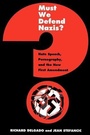
Richard Delgado | Jean Stefancic
Must We Defend Nazis?
Hate Speech, Pornography, and the New First Amendment
E-Book
01/1997
New York University Press
142,99 €
Als Download verfügbar
Personen
Richard Delgado is John J. Sparkman Chair of Law at the University
of Alabama and one of the founders of critical race theory. His books include The Latino/a Condition: A Critical Reader (co-edited with Jean Stefancic; New York University Press) and The Rodrigo Chronicles (New York University Press). Jean Stefancic is
Professor and Clement Research Affiliate at the University of Alabama School of
Law. Her books include No Mercy: How Conservative Think
Tanks and Foundations Changed America's Social Agenda and How Lawyers Lose Their Way: A Profession Fails Its Creative Minds.
of Alabama and one of the founders of critical race theory. His books include The Latino/a Condition: A Critical Reader (co-edited with Jean Stefancic; New York University Press) and The Rodrigo Chronicles (New York University Press). Jean Stefancic is
Professor and Clement Research Affiliate at the University of Alabama School of
Law. Her books include No Mercy: How Conservative Think
Tanks and Foundations Changed America's Social Agenda and How Lawyers Lose Their Way: A Profession Fails Its Creative Minds.