

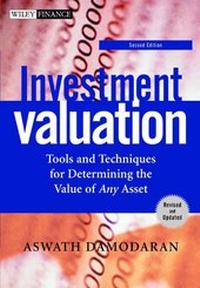
Investment Valuation
Tools and Techniques for Determining the Value of Any Asset
2. Auflage
Erschienen am 5. Februar 2002
Buch
Hardcover
1008 Seiten
978-0-471-41488-9 (ISBN)
Beschreibung
A thoroughly revised, updated, and expanded new edition of the bestselling guide
Valuation is at the heart of any investment decision. But asset pricing is becoming increasingly complex in today's financial markets. Fortunately, the number-one guide to valuation among investors and students of the financial markets, is now available in a fully revised and updated second edition. Investment Valuation, Second Edition provides a comprehensive introduction to the full range of modern valuation models and shows how to choose the right one for virtually every conceivable asset valuation scenario, including real options, start-up firms, unconventional assets, private equity, and real estate. This revised edition includes ten new chapters along with new case study examples, and thorough coverage of new valuation tools designed for markets that pose uniquely complex problems, including dot-coms, financial service firms, and telecommunication companies. Thanks to increased interactive tie-ins with online databases, spreadsheets, and other supporting tools, this Second Edition gives readers access to numerous real-time valuation exercises.
Aswath Damodaran, PhD (New York, NY), is Associate Professor of Finance at New York University's Stern School of Business. He is the author of Applied Corporate Finance (Wiley: 0-471-33042-6)
Valuation is at the heart of any investment decision. But asset pricing is becoming increasingly complex in today's financial markets. Fortunately, the number-one guide to valuation among investors and students of the financial markets, is now available in a fully revised and updated second edition. Investment Valuation, Second Edition provides a comprehensive introduction to the full range of modern valuation models and shows how to choose the right one for virtually every conceivable asset valuation scenario, including real options, start-up firms, unconventional assets, private equity, and real estate. This revised edition includes ten new chapters along with new case study examples, and thorough coverage of new valuation tools designed for markets that pose uniquely complex problems, including dot-coms, financial service firms, and telecommunication companies. Thanks to increased interactive tie-ins with online databases, spreadsheets, and other supporting tools, this Second Edition gives readers access to numerous real-time valuation exercises.
Aswath Damodaran, PhD (New York, NY), is Associate Professor of Finance at New York University's Stern School of Business. He is the author of Applied Corporate Finance (Wiley: 0-471-33042-6)
Weitere Details
Reihe
Auflage
2., Auflage
Sprache
Englisch
Verlagsort
New York
USA
Verlagsgruppe
John Wiley and Sons Ltd
Zielgruppe
Für höhere Schule und Studium
Für Beruf und Forschung
Editions-Typ
Überarbeitete Ausgabe
Illustrationen
Ill.
Maße
Höhe: 26.1 cm
Breite: 18.5 cm
Dicke: 51 mm
Gewicht
1928 gr
ISBN-13
978-0-471-41488-9 (9780471414889)
Schweitzer Klassifikation
Weitere Ausgaben
Nachauflagen
Buch
04/2012
3. Auflage
Wiley
129,00 €
Artikel ist vergriffen; siehe Neuauflage
Vorauflage

Buch
10/1995
Wiley
69,24 €
Artikel ist vergriffen; siehe Neuauflage
Person
ASWATH DAMODARAN is Professor of Finance at New York University's Leonard N. Stern School of Business. He has been the recipient of numerous awards for outstanding teaching, including the NYU university-wide Distinguished Teaching Award, and was named one of the nation's top business school teachers by Business Week in 1994. In addition, Damodaran teaches training courses in corporate finance and valuation at many leading investment banks. His publications include Damodaran on Valuation; Investment Valuation; Corporate Finance; Investment Management; and Applied Corporate Finance, all published by Wiley, and The Dark Side of Valuation.
Inhalt
Introduction to Valuation.
Approaches to Valuation.
Understanding Financial Statements.
The Basics of Risk.
Option Pricing Theory and Models.
Market Efficiency--Definition, Tests and Evidence.
Riskless Rates and Risk Premiums.
Estimating Risk Parameters and Costs of Financing.
Measuring Earnings.
From Earnings to Cash Flows.
Estimating Growth.
Closure in Valuation: Estimating Terminal Value.
Dividend Discount Models.
Free Cash Flow to Equity Discount Models.
Firm Valuation: Cost of Capital and Adjusted Present Value Approaches.
Estimating Equity Value per Share.
Fundamental Principles of Relative Valuation.
Earnings Multiples.
Book Value Multiples.
Revenue Multiples and Sector-Specific Multiples.
Valuing Financial Service Firms.
Valuing Firms with Negative Earnings.
Valuing Young or Start-Up Firms.
Valuing Private Firms.
Acquisitions and Takeovers.
Valuing Real Estate.
Valuing Other Assets.
The Option to Delay and Valuation Implications.
The Option to Expand and to Abandon Valuation Implications.
Valuing Equity in Distressed Firms.
Value Enhancement: A Discounted Cash Flow Valuation Framework.
Value Enhancement: Economic Value Added, Cash Flow Return On Investment, and Other Tools.
Valuing Bonds.
Valuing Futures and Forward Contracts.
Overview and Conclusion.
References.<p<Index.
Approaches to Valuation.
Understanding Financial Statements.
The Basics of Risk.
Option Pricing Theory and Models.
Market Efficiency--Definition, Tests and Evidence.
Riskless Rates and Risk Premiums.
Estimating Risk Parameters and Costs of Financing.
Measuring Earnings.
From Earnings to Cash Flows.
Estimating Growth.
Closure in Valuation: Estimating Terminal Value.
Dividend Discount Models.
Free Cash Flow to Equity Discount Models.
Firm Valuation: Cost of Capital and Adjusted Present Value Approaches.
Estimating Equity Value per Share.
Fundamental Principles of Relative Valuation.
Earnings Multiples.
Book Value Multiples.
Revenue Multiples and Sector-Specific Multiples.
Valuing Financial Service Firms.
Valuing Firms with Negative Earnings.
Valuing Young or Start-Up Firms.
Valuing Private Firms.
Acquisitions and Takeovers.
Valuing Real Estate.
Valuing Other Assets.
The Option to Delay and Valuation Implications.
The Option to Expand and to Abandon Valuation Implications.
Valuing Equity in Distressed Firms.
Value Enhancement: A Discounted Cash Flow Valuation Framework.
Value Enhancement: Economic Value Added, Cash Flow Return On Investment, and Other Tools.
Valuing Bonds.
Valuing Futures and Forward Contracts.
Overview and Conclusion.
References.<p<Index.