

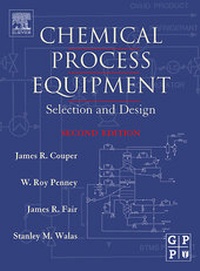
Chemical Process Equipment
Selection and Design
2. Auflage
Erschienen am 20. Januar 2005
Buch
Hardcover
840 Seiten
978-0-7506-7510-9 (ISBN)
Beschreibung
Comprehensive and practical guide to the selection and design of a wide range of chemical process equipment. Emphasis is placed on real-world process design and performance of equipment. Provides examples of successful applications, with numerous drawings, graphs, and tables to show the functioning and performance of the equipment. Equipment rating forms and manufacturers' questionnaires are collected to illustrate the data essential to process design. Includes a chapter on equipment cost and addresses economic concerns.
Rezensionen / Stimmen
"...chemical engineers working on smaller-volume products made by batch/semibatch processes should have this encyclopedic volume on their bookshelves alongside Perry's Chemical Engineer's Handbook...an extremely useful summary of rules of thumb is given." --Organic Process Research and Development Journal 2005"This is an excellent book that can serve as the text for an undergraduate course in plant design. It will also be very useful as a sourcebook for process-design engineers that work for smaller companies that do not have their own process equipment design standards. The new authors have done an outstanding job in updating and expanding the original book by Professor Walas." --Chemical Engineering, March 2006
Weitere Details
Auflage
2nd edition
Sprache
Englisch
Verlagsort
Oxford
Großbritannien
Verlagsgruppe
Elsevier Science & Technology
Zielgruppe
Für höhere Schule und Studium
Practicing chemical engineers (e.g., process engineer, design engineer) in chemical, petroleum, pharmaceutical, and plastics industries as well as consulting engineers and company libraries
SECONDARY MARKET: University and polytechnic (dept. of chemical engineering and continuing ed. dept.) courses (process design or design), and school libraries
Editions-Typ
Neue Ausgabe
Maße
Höhe: 279 mm
Breite: 216 mm
Gewicht
2105 gr
ISBN-13
978-0-7506-7510-9 (9780750675109)
Copyright in bibliographic data and cover images is held by Nielsen Book Services Limited or by the publishers or by their respective licensors: all rights reserved.
Schweitzer Klassifikation
Weitere Ausgaben
Nachauflagen
Buch
4. Auflage
Butterworth-Heinemann
117,29 €
Artikel wird leider nicht erscheinen
Andere Ausgaben
E-Book
05/2014
2. Auflage
Gulf Professional Publishing
180,00 €
Als Download verfügbar
Vorauflage

Buch
12/1988
Butterworth-Heinemann
54,31 €
Artikel ist vergriffen; siehe Neuauflage
Personen
James R. Couper, D.Sc. is Professor Emeritus, Dept. of Chemical Engineering, Unviersity of Arkansas, Fayetteville, AR. W. Roy Penney, Ph.D., Professor Emeritus, Dept. of Chemical Engineering, University of Arkansas, Fayetteville, AR, has taught graduate courses in Fluid Mixing for the last 25 years and he taught the AIChE "Industrial Fluid Mixing? course for 15 years. He spent 25 years in industry where he was involved in experimental and design work involving fluid mixing equipment. For the last 30 years he has had an academic career where he taught and researched fluid mixing technology. He consulted in the area of fluid mixing for several companies, including Chemineer, Dow Corning, Conoco, Unique Tire, Energy Transfer Partners et al. Dr. Penney is author or coauthor of over 60 papers, Patents and lectures and three books. He is a Fellow of the American Institute of Chemical Engineers. He has registration as a Professional Engineer in Missouri and Arkansas.
Inhalt
List of ExamplesRules of ThumbIntroduction; FlowsheetsProcess Control; Drivers for Moving EquipmentTransfer of SolidsFlow of FluidsFluid Transport EquipmentHeat Transfer and Heat ExchangersDryers and Cooling TowersMixing and AgitationSolid-Liquid SeparationDisintegration, Agglomeration, and Size Separation of Particulate SolidsDistillation and Gas AbsorptionExtraction and LeachingAdsorption and Ion ExchangeCrystallization from Solutions and MeltsChemical ReactorsProcess VesselsOther Topics, Costs of Individual Equipment