

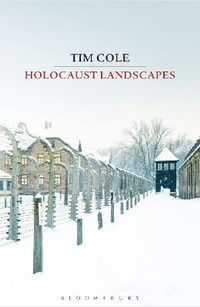
Holocaust Landscapes
Erschienen am 5. Mai 2016
Buch
Hardcover
272 Seiten
978-1-4729-0688-5 (ISBN)
Beschreibung
The theme of Tim Cole's Holocaust Landscapes concerns the geography of the Holocaust; the Holocaust as a place-making event for both perpetrators and victims.
Through concepts such as distance and proximity, Professor Cole tells the story of the Holocaust through a number of landscapes where genocide was implemented, experienced and evaded and which have subsequently been forgotten in the post-war world. Drawing on particular survivors' narratives, Holocaust Landscapes moves between a series of ordinary and extraordinary places and the people who inhabited them throughout the years of the Second World War. Starting in Germany in the late 1930s, the book shifts chronologically and geographically westwards but ends up in Germany in the final chaotic months of the war. These landscapes range from the most iconic (synagogue, ghetto, railroad, camp, attic) to less well known sites (forest, sea and mountain, river, road, displaced persons camp).
Holocaust Landscapes provides a new perspective surrounding the shifting geographies and histories of this continent-wide event.
Through concepts such as distance and proximity, Professor Cole tells the story of the Holocaust through a number of landscapes where genocide was implemented, experienced and evaded and which have subsequently been forgotten in the post-war world. Drawing on particular survivors' narratives, Holocaust Landscapes moves between a series of ordinary and extraordinary places and the people who inhabited them throughout the years of the Second World War. Starting in Germany in the late 1930s, the book shifts chronologically and geographically westwards but ends up in Germany in the final chaotic months of the war. These landscapes range from the most iconic (synagogue, ghetto, railroad, camp, attic) to less well known sites (forest, sea and mountain, river, road, displaced persons camp).
Holocaust Landscapes provides a new perspective surrounding the shifting geographies and histories of this continent-wide event.
Rezensionen / Stimmen
Fluently written and based largely on personal accounts, Holocaust Landscapes makes an important contribution to the massive scholarly literature on this event. It does so by shifting our gaze from the decision-makers in Berlin to their victims; depicting the extraordinary variety of victim experiences; making important gender distinctions; and focusing much attention on Eastern Europe. * Times Literary Supplement *Weitere Details
Sprache
Englisch
Verlagsort
London
Großbritannien
Verlagsgruppe
Bloomsbury Publishing PLC
Illustrationen
No illustrations
Maße
Höhe: 234 mm
Breite: 153 mm
Gewicht
569 gr
ISBN-13
978-1-4729-0688-5 (9781472906885)
Copyright in bibliographic data and cover images is held by Nielsen Book Services Limited or by the publishers or by their respective licensors: all rights reserved.
Schweitzer Klassifikation
Weitere Ausgaben
Andere Ausgaben
Tim Cole
Holocaust Landscapes
E-Book
05/2016
1. Auflage
Bloomsbury Continuum
16,99 €
Als Download verfügbar
Tim Cole
Holocaust Landscapes
E-Book
05/2016
1. Auflage
Bloomsbury Continuum
16,99 €
Als Download verfügbar
Person
Professor Tim Cole is Professor of Social History at Bristol University and Director of the Brigstow Institute, conducting research into what it means to be human in the twenty-first century.
His first book Images of the Holocaust (Duckworth and Routledge US) was shortlisted for the Longman/History Today Book Award. In 2003 he published Holocaust City:The Making of a Jewish Ghetto with Routledge and in 2011 Traces of the Holocaust: Journeying In and Out of the Ghettos (Continuum) which was commended by the jury of the Fraenkel Prize.
His first book Images of the Holocaust (Duckworth and Routledge US) was shortlisted for the Longman/History Today Book Award. In 2003 he published Holocaust City:The Making of a Jewish Ghetto with Routledge and in 2011 Traces of the Holocaust: Journeying In and Out of the Ghettos (Continuum) which was commended by the jury of the Fraenkel Prize.