

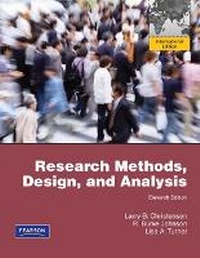
Research Methods, Design, and Analysis
International Edition
11. Auflage
Erschienen am 6. Mai 2010
Buch
Softcover
560 Seiten
978-0-205-81921-8 (ISBN)
Beschreibung
This text presents a reader-friendly introduction to the basic principles of experimental psychological research.
Research Methods, Design, and Analysis is organized so that each chapter focuses on a specific step in the research process. This text provides instruction in experimental research as well as non-experimental approaches such as ex-post facto research, correlational research, and survey research. Also included are qualitative research approaches such as ethnography and phenomenology. The current edition, while maintaining detailed coverage of the experimental method, has expanded coverage on nonexperimental methods as well as expanded coverage of data analysis.
Research Methods, Design, and Analysis is organized so that each chapter focuses on a specific step in the research process. This text provides instruction in experimental research as well as non-experimental approaches such as ex-post facto research, correlational research, and survey research. Also included are qualitative research approaches such as ethnography and phenomenology. The current edition, while maintaining detailed coverage of the experimental method, has expanded coverage on nonexperimental methods as well as expanded coverage of data analysis.
Weitere Details
Auflage
11th edition
Sprache
Englisch
Verlagsort
USA
Verlagsgruppe
Pearson Education (US)
Zielgruppe
Für höhere Schule und Studium
Maße
Höhe: 188 mm
Breite: 232 mm
Dicke: 18 mm
Gewicht
716 gr
ISBN-13
978-0-205-81921-8 (9780205819218)
Copyright in bibliographic data is held by Nielsen Book Services Limited or its licensors: all rights reserved.
Schweitzer Klassifikation
Weitere Ausgaben
Nachauflagen

Larry B. Christensen | R. Burke Johnson | Lisa A. Turner
Research Methods, Design, and Analysis: Pearson New International Edition
Buch
07/2013
11. Auflage
Pearson Education Limited
56,78 €
Artikel ist vergriffen; siehe Neuauflage
Vorauflage
Buch
07/2006
10. Auflage
Pearson
79,25 €
Artikel ist vergriffen; siehe Neuauflage
Personen
Larry Christensen, Ph.D., is currently chair of the psychology department at the University of South Alabama. Prior to accepting his current position, he was at Texas A&M University where he progressed through the ranks from Assistant to Full Professor. While at Texas A&M University, he served as director of graduate studies and developed a program of research focusing on the relationship between food and mood with a focus of attention on depression. He continues this program of research at University of South Alabama but has also expanded into the area of food cravings. Dr. Christensen has published approximately 70 scholarly research articles with the primary focus being the food-mood relationship. He has also authored or co-authored five books focusing on research methods, psychological statistics and the effect of food on mood. In addition to these accomplishments, he has served as past president of Southwestern Psychological Association, received the Phi Kappa Phi Scholar of the year award in 2001, served as a National Academy of Science study group member, was a consultant to the Texas Department of Mental Health-Mental Retardation, Research consultant to Procter and Gamble Co., and was a committee judge for the Gordon Allport Intergroup Relations Prize.
R. Burke Johnson, Ph.D.,is a research methodologist. He is a Professor in the Department of Professional Studies, at the University of South Alabama. He holds three masters degrees (psychology, sociology, and public policy). His Ph.D. is from the REMS Program (Research, Evaluation, Measurement, and Statistics) at the University of Georgia. He is author or coauthor of numerous articles and chapters, and was recently an Associate Editor for the Journal of Mixed Methods Research. He was guest editor of a special issue on mixed methods research in the journal Research in the Schools (available at http://www.msera.org/rits_131.htm) and is currently guest editor of a forthcoming special issue on this topic for the American Behavioral Scientist. He is also working with Paul Vogt on the 4th edition of the Sage Dictionary of Statistics and Methodology.
Lisa A. Turner, Ph.D.,is a Professor in the Department of Psychology at the University of South Alabama. Her Ph.D. is from the Experimental Psychology Program at the University of Alabama. She is author or coauthor of numerous articles and chapters investigating developmental and cognitive processes relevant to children with disabilities and their families.
R. Burke Johnson, Ph.D.,is a research methodologist. He is a Professor in the Department of Professional Studies, at the University of South Alabama. He holds three masters degrees (psychology, sociology, and public policy). His Ph.D. is from the REMS Program (Research, Evaluation, Measurement, and Statistics) at the University of Georgia. He is author or coauthor of numerous articles and chapters, and was recently an Associate Editor for the Journal of Mixed Methods Research. He was guest editor of a special issue on mixed methods research in the journal Research in the Schools (available at http://www.msera.org/rits_131.htm) and is currently guest editor of a forthcoming special issue on this topic for the American Behavioral Scientist. He is also working with Paul Vogt on the 4th edition of the Sage Dictionary of Statistics and Methodology.
Lisa A. Turner, Ph.D.,is a Professor in the Department of Psychology at the University of South Alabama. Her Ph.D. is from the Experimental Psychology Program at the University of Alabama. She is author or coauthor of numerous articles and chapters investigating developmental and cognitive processes relevant to children with disabilities and their families.
Inhalt
PART I: INTRODUCTION
CHAPTER 1 Introduction to Scientific Research
CHAPTER 2 Research Approaches and Methods of Data Collection
PART II: PLANNING THE RESEARCH STUDY
CHAPTER 3 Problem Identification and Hypothesis Formation
CHAPTER 4 Ethics
PART III: FOUNDATIONS OF RESEARCH
CHAPTER 5 Measuring Variables and Sampling
CHAPTER 6 Research Validity
PART IV: EXPERIMENTAL METHODS
CHAPTER 7 Control Techniques in Experimental Research
CHAPTER 8 Experimental Research Design
CHAPTER 9 Procedure for Conducting an Experiment
CHAPTER 10 Quasi-Experimental Designs
CHAPTER 11 Single-Case Research Designs
PART V: EXPLORATORY AND DESCRIPTIVE METHODS
CHAPTER 12 Survey Research
CHAPTER 13 Qualitative and Mixed Methods Research
PART VI: ANALYZING AND INTERPRETING DATA
CHAPTER 14 Descriptive statistics
CHAPTER 15 Inferential statistics
PART VII: WRITING THE RESEARCH REPORT
CHAPTER 16 Writing an APA Style Research Report
APPENDIX A: Answers to end of chapter multiple choice questions.
GLOSSARY
CHAPTER 1 Introduction to Scientific Research
CHAPTER 2 Research Approaches and Methods of Data Collection
PART II: PLANNING THE RESEARCH STUDY
CHAPTER 3 Problem Identification and Hypothesis Formation
CHAPTER 4 Ethics
PART III: FOUNDATIONS OF RESEARCH
CHAPTER 5 Measuring Variables and Sampling
CHAPTER 6 Research Validity
PART IV: EXPERIMENTAL METHODS
CHAPTER 7 Control Techniques in Experimental Research
CHAPTER 8 Experimental Research Design
CHAPTER 9 Procedure for Conducting an Experiment
CHAPTER 10 Quasi-Experimental Designs
CHAPTER 11 Single-Case Research Designs
PART V: EXPLORATORY AND DESCRIPTIVE METHODS
CHAPTER 12 Survey Research
CHAPTER 13 Qualitative and Mixed Methods Research
PART VI: ANALYZING AND INTERPRETING DATA
CHAPTER 14 Descriptive statistics
CHAPTER 15 Inferential statistics
PART VII: WRITING THE RESEARCH REPORT
CHAPTER 16 Writing an APA Style Research Report
APPENDIX A: Answers to end of chapter multiple choice questions.
GLOSSARY