

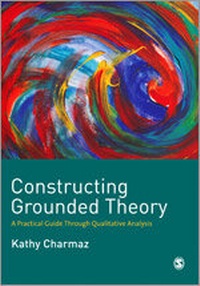
Constructing Grounded Theory
A Practical Guide through Qualitative Analysis
1. Auflage
Erschienen am 13. Januar 2006
Buch
Hardcover
224 Seiten
978-0-7619-7352-2 (ISBN)
Beschreibung
`Grounded theory is a highly influential way of working with qualitative data and Kathy Charmaz is a major player, both innovative and fluent. This book is a model student text: lively, carefully argued and full of vivid illustrations. Beginning students and professional researchers will find it to be required reading' - David Silverman, Professor Emeritus, Sociology Department, Goldsmiths College and Visiting Professor, Management Department, King's College, University of London
Kathy Charmaz is one of the world's leading theorists and exponents of grounded theory. In this important and essential new textbook, she introduces the reader to the craft of using grounded theory in social research, and provides a clear, step-by-step guide for those new to the field.
Using worked examples throughout, this book also maps out an alternative vision of grounded theory to that put forward by its founding thinkers, Glaser and Strauss. To Charmaz, grounded theory must move on from its positivist origins and must incorporate many of the methods and questions posed by constructivists over the past twenty years to become a more nuanced and reflexive practice.
Essential reading for students, new researchers and seasoned social scientists alike, this book is one of those rare things, a textbook that is both accessible to those new to the field but also one that has important things to say about the nature of social enquiry itself.
Kathy Charmaz is one of the world's leading theorists and exponents of grounded theory. In this important and essential new textbook, she introduces the reader to the craft of using grounded theory in social research, and provides a clear, step-by-step guide for those new to the field.
Using worked examples throughout, this book also maps out an alternative vision of grounded theory to that put forward by its founding thinkers, Glaser and Strauss. To Charmaz, grounded theory must move on from its positivist origins and must incorporate many of the methods and questions posed by constructivists over the past twenty years to become a more nuanced and reflexive practice.
Essential reading for students, new researchers and seasoned social scientists alike, this book is one of those rare things, a textbook that is both accessible to those new to the field but also one that has important things to say about the nature of social enquiry itself.
Rezensionen / Stimmen
"I love this book. It is the second time I have used it for this course. The doctoral students also find it very useful understanding the grounded theory method."-Mary Ann Jezewski, University at Buffalo, SUNY -- Mary Ann Jezewski "Constructing Grounded Theory is an outstanding handbook for students and seasoned researchers alike who are using or seeking to understand better the application of qualitative methods of data analysis. This deceptively slim volume is extraordinarily dense and packed with down-to-earth advice, living up to its sub-title as 'a practical guide.'" -- Marie L. Radford * Science Direct * "The excellent articles are well written and accessible."
This handbook is a wonderful resource for scholars, researchers, students, and professionals about a method and theory that has an exceptional potential to 'ignite the mind.'" -- G.K. Hearn * Choice *
Weitere Details
Reihe
Sprache
Englisch
Verlagsort
Thousand Oaks
USA
Zielgruppe
Für höhere Schule und Studium
Produkt-Hinweis
Gewebe-Einband
Maße
Höhe: 242 mm
Breite: 170 mm
Gewicht
518 gr
ISBN-13
978-0-7619-7352-2 (9780761973522)
Copyright in bibliographic data and cover images is held by Nielsen Book Services Limited or by the publishers or by their respective licensors: all rights reserved.
Schweitzer Klassifikation
Weitere Ausgaben
Nachauflagen
Kathy Charmaz
Constructing Grounded Theory
Buch
03/2014
2. Auflage
SAGE Publications Ltd
217,78 €
Artikel ist vergriffen; siehe Neuauflage
Person
Kathy Charmaz was Professor Emerita of Sociology and the former director of the Faculty Writing Program at Sonoma State University. She joined the first cohort of doctoral students at the University of California, San Francisco, where she studied with Anselm Strauss. She wrote in the areas of social psychology, medical sociology, qualitative methods, and grounded theory, and over her career wrote, coauthored, or coedited 14 books, including two award-winning works: Good Days, Bad Days; The Self in Illness and Time, and Constructing Grounded Theory.
She received the George Herbert Mead award for lifetime achievement from the Society for the Study of Symbolic Interaction, the Leo G. Reeder award for distinguished contributions from the Medical Sociology Section of the American Sociological Association and the Lifetime Achievement award from the International Congress of Qualitative Inquiry. Professor Charmaz also gave workshops on qualitative methods, grounded theory, symbolic interactionism, and scholarly writing around the globe.
She received the George Herbert Mead award for lifetime achievement from the Society for the Study of Symbolic Interaction, the Leo G. Reeder award for distinguished contributions from the Medical Sociology Section of the American Sociological Association and the Lifetime Achievement award from the International Congress of Qualitative Inquiry. Professor Charmaz also gave workshops on qualitative methods, grounded theory, symbolic interactionism, and scholarly writing around the globe.
Inhalt
An Invitation to Grounded Theory
Gathering Rich Data
Coding in Grounded Theory Practice
Memo-Writing
Theoretical Sampling, Saturation and Sorting
Reconstructing Theory in Grounded Theory Studies
Writing the Draft
Reflecting on the Research Process
Gathering Rich Data
Coding in Grounded Theory Practice
Memo-Writing
Theoretical Sampling, Saturation and Sorting
Reconstructing Theory in Grounded Theory Studies
Writing the Draft
Reflecting on the Research Process