

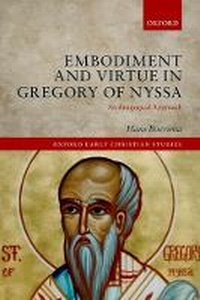
Embodiment and Virtue in Gregory of Nyssa
An Anagogical Approach
Erschienen am 12. März 2015
Buch
Softcover
304 Seiten
978-0-19-872823-8 (ISBN)
Beschreibung
Embodiment in the theology of Gregory of Nyssa is a much-debated topic. Hans Boersma argues that this-worldly realities of time and space, which include embodiment, are not the focus of Gregory's theology. Instead, embodiment plays a distinctly subordinate role. The key to his theology, Boersma suggests, is anagogy, going upward in order to participate in the life of God.
This book looks at a variety of topics connected to embodiment in Gregory's thought: time and space; allegory; gender, sexuality, and virginity; death and mourning; slavery, homelessness, and poverty; and the church as the body of Christ. In each instance, Boersma maintains, Gregory values embodiment only inasmuch as it enables us to go upward in the intellectual realm of the heavenly future.
Boersma suggests that for Gregory embodiment and virtue serve the anagogical pursuit of otherworldly realities. Countering recent trends in scholarship that highlight Gregory's appreciation of the goodness of creation, this book argues that Gregory looks at embodiment as a means for human beings to grow in virtue and so to participate in the divine life.
It is true that, as a Christian thinker, Gregory regards the creator-creature distinction as basic. But he also works with the distinction between spirit and matter. And Nyssen is convinced that in the hereafter the categories of time and space will disappear-while the human body will undergo an inconceivable transformation. This book, then, serves as a reminder of the profoundly otherworldly cast of Gregory's theology.
This book looks at a variety of topics connected to embodiment in Gregory's thought: time and space; allegory; gender, sexuality, and virginity; death and mourning; slavery, homelessness, and poverty; and the church as the body of Christ. In each instance, Boersma maintains, Gregory values embodiment only inasmuch as it enables us to go upward in the intellectual realm of the heavenly future.
Boersma suggests that for Gregory embodiment and virtue serve the anagogical pursuit of otherworldly realities. Countering recent trends in scholarship that highlight Gregory's appreciation of the goodness of creation, this book argues that Gregory looks at embodiment as a means for human beings to grow in virtue and so to participate in the divine life.
It is true that, as a Christian thinker, Gregory regards the creator-creature distinction as basic. But he also works with the distinction between spirit and matter. And Nyssen is convinced that in the hereafter the categories of time and space will disappear-while the human body will undergo an inconceivable transformation. This book, then, serves as a reminder of the profoundly otherworldly cast of Gregory's theology.
Rezensionen / Stimmen
The detailed observations about the significance of Gregorys anagogical theology of participatory virtue are enjoyably articulated and engage a broad cross-section of his writings. * Grant Bayliss, Scottish Journal of Theology *Weitere Details
Reihe
Sprache
Englisch
Verlagsort
Oxford
Großbritannien
Zielgruppe
Für höhere Schule und Studium
Für Beruf und Forschung
Maße
Höhe: 233 mm
Breite: 180 mm
Dicke: 16 mm
Gewicht
472 gr
ISBN-13
978-0-19-872823-8 (9780198728238)
Copyright in bibliographic data and cover images is held by Nielsen Book Services Limited or by the publishers or by their respective licensors: all rights reserved.
Schweitzer Klassifikation
Weitere Ausgaben
Andere Ausgaben
Buch
02/2013
Oxford University Press
132,72 €
Versand in 15-20 Tagen
Person
Hans Boersma holds the J.I. Packer Chair of Theology at Regent College in Vancouver, Canada. Before coming to Regent in 2005, he taught for six years at Trinity Western University in nearby Langley. Boersma holds a doctorate from the University of Utrecht. His articles have appeared in numerous journals. His publications include Violence, Hospitality, and the Cross: Reappropriating the Atonement Tradition (Baker Academic), which won the 2005 Christianity Today best theological book of the year award; Nouvelle Theologie and Sacramental Ontology: A Return to Mystery (OUP, 2009); and Heavenly Participation: The Weaving of a Sacramental Tapestry (Eerdmans, 2011).
Inhalt
Introduction ; 1. Measured Body ; 2. Textual Body ; 3. Gendered Body ; 4. Dead Body ; 5. Oppressed Body ; 6. Ecclesial Body ; 7. Virtuous Body ; Epilogue