

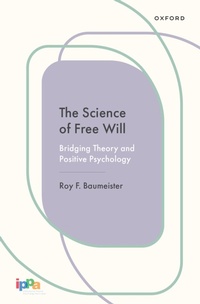
The Science of Free Will
Bridging Theory and Positive Psychology
Erschienen am 23. Dezember 2024
Buch
Hardcover
224 Seiten
978-0-19-769352-0 (ISBN)
Beschreibung
This groundbreaking book sheds new scientific light on the age-old question of free will. Humankind evolved to flourish by creating a new kind of society, which required an advanced mind capable of recognizing possibilities and making good choices. No other animal operates amid economic marketplaces, shared moral principles, legal systems, religious and political institutions, and the like.
Rather than getting bogged down in philosophical debates, The Science of Free Will surges ahead to explain how this marvelous, newly evolved mental system works. Some actions are freer than others, so how does one recognize and take advantage of this freedom? Key features involve grounding actions in time and pondering multiple possible futures--indeed understanding one's life as a story, in which one's actions link past, present, and future-and conscious thoughts, including logical reasoning, planning, and overriding one's first impulse. Understanding free will in this fashion reveals both the powers and the limits of the human mind.
Rather than getting bogged down in philosophical debates, The Science of Free Will surges ahead to explain how this marvelous, newly evolved mental system works. Some actions are freer than others, so how does one recognize and take advantage of this freedom? Key features involve grounding actions in time and pondering multiple possible futures--indeed understanding one's life as a story, in which one's actions link past, present, and future-and conscious thoughts, including logical reasoning, planning, and overriding one's first impulse. Understanding free will in this fashion reveals both the powers and the limits of the human mind.
Weitere Details
Reihe
Sprache
Englisch
Verlagsort
New York
USA
Zielgruppe
Für Beruf und Forschung
Produkt-Hinweis
Fadenheftung
Gewebe-Einband
Maße
Höhe: 236 mm
Breite: 163 mm
Dicke: 28 mm
Gewicht
454 gr
ISBN-13
978-0-19-769352-0 (9780197693520)
Copyright in bibliographic data and cover images is held by Nielsen Book Services Limited or by the publishers or by their respective licensors: all rights reserved.
Schweitzer Klassifikation
Weitere Ausgaben
Andere Ausgaben
E-Book
09/2024
OUP eBook
39,49 €
Als Download verfügbar
E-Book
09/2024
OUP eBook
39,49 €
Als Download verfügbar
Person
Roy F. Baumeister is Professor of Psychology at The University of Queensland. He has received several awards for distinguished career contributions. His book Willpower (with John Tierney) was a New York Times bestseller.
Inhalt
1 Why Does Free Will Matter?
2 What Should a Scientific Theory of Free Will Look Like?
3 Why Free Will Evolved
4 The Time Dimension: Free Will Links Past, Present, and Future
5 Free Will in the Flesh: Three Agents
6 Does Free Will Mean Random Action?
7 Wanting Comes First
8 What Is Choice? Understanding the Multi-Maybe Future
9 Do Conscious Thoughts Cause Behavior?
10 How Conscious Thoughts Cause Behavior
11 Meaning Changes Everything
12 Free Will Is No Free Lunch
13 Free Will Gone Rogue: The Mystery of Self-Defeating Behavior
14 What Free Will Feels Like
15 Whether People Believe in Free Will or Not
16 How Children Acquire Free Will
17 Owning Your Actions as an Individual
18 How Free Will Operates, in Practice
19 Desire to Have or Use Free Will? The Question of Innate Drive for Control
20 Positive Psychology and Free Will
21 Summing Up and Looking Ahead
2 What Should a Scientific Theory of Free Will Look Like?
3 Why Free Will Evolved
4 The Time Dimension: Free Will Links Past, Present, and Future
5 Free Will in the Flesh: Three Agents
6 Does Free Will Mean Random Action?
7 Wanting Comes First
8 What Is Choice? Understanding the Multi-Maybe Future
9 Do Conscious Thoughts Cause Behavior?
10 How Conscious Thoughts Cause Behavior
11 Meaning Changes Everything
12 Free Will Is No Free Lunch
13 Free Will Gone Rogue: The Mystery of Self-Defeating Behavior
14 What Free Will Feels Like
15 Whether People Believe in Free Will or Not
16 How Children Acquire Free Will
17 Owning Your Actions as an Individual
18 How Free Will Operates, in Practice
19 Desire to Have or Use Free Will? The Question of Innate Drive for Control
20 Positive Psychology and Free Will
21 Summing Up and Looking Ahead